|
|
 |
|
|
Tishah B'Av (תִּשְׁעָה בְּאָב, the "ninth [day] of [the month of] Av") is an annual fast day of mourning that recalls the many tragedies that have befallen the Jewish people over the centuries, some of which coincidentally(?) have occurred on the ninth day of the Hebrew month of Av. In particular, the following tragedies are all said to have occurred on this very day:
|
|
|
|
|
|
- The LORD decreed that the original generation rescued from Egypt would die out in the desert and be deprived from entering the Promised Land because of the Sin of the Spies (Num. 13-14)
- The destruction of the First Temple (Babylonians, 586 B.C.)
- The destruction of the Second Temple (Romans, 70 A.D.)
- In 135 A.D. the Jews rebelled against Roman rule under the false Messiah Simon bar Kochba and were destroyed by Hadrian in the battle at Betar.
- The Gemara relates that Turnus Rufus, a Roman officer, plowed the area of the Temple under. Rambam (Maimonides) added that all the homes in Jerusalem were likewise ploughed under at this time.
- The expulsion of the Jews from England in 1290
- The expulsion of the Jews from Spain in 1492
|
|
|
|
|
|
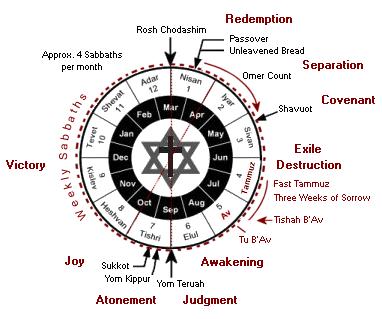
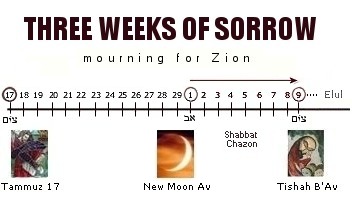
Tishah B'Av is the low point of a three week period of mourning, starting with the fast of the 17th of Tammuz (undertaken to recall the first breach in the walls of Jerusalem by the Babylonians before the First Temple was destroyed). During this three week period, weddings and parties are forbidden. It is a time for solemn reflection and mourning for Israel.
|
|
|
|
|
Tishah B'Av resembles a shivah (mourning for the dead). On this 25-hour fast day (sundown to sundown), you cannot bathe, eat, drink, laugh, or adorn yourself (on the eve of the fast, it is customary to eat a boiled egg sprinkled with ashes in silence). As a mourner you enter the synagogue and take off your shoes; you sit on low stools or on the floor. No greetings are exchanged. The parochet (the curtain over the Ark) is usually removed before the fast and a drape of black cloth is substituted for it. Services at the synagogue include the reciting of the acrostic portions of Lamentations and the singing of dirges called kinnot (קִינוֹת).
|
|
|
|
On the Jewish calendar, 21 days (running from the 17th of Tammuz through the 9th of Av) are set apart to commemorate the three weeks of tragedy that immediately preceded the destruction of the Holy Temple and the exile of the Jewish people from the Promised Land. In Jewish tradition, these are called yemei bein ha-metzarim (יְמֵי בֵּין הַמְּצָרִים), "the days between the straights," a phrase taken directly from the doleful Book of Lamentations: "Judah has gone into exile ... her pursuers have all overtaken her in the midst of her distresses" (בֵּין הַמְּצָרִים).
|
|
|
|
|
|
Note that the word "distress" (i.e., metzar: מֵצַר) comes from a root word (i.e., tzarah: צָרָה) that means to "make narrow or restricted" (the Yiddish word "tsuris" comes from this root), whereas the word for "deliverance" or "salvation" (i.e., yeshuah: יְשׁוּעָה) means to "make wide" or "make sufficient." These two ideas can be seen in a verse from the Psalms: "Out of my distress (מִן־הַמֵּצַר) I called on the LORD; the LORD answered me and set me in a wide open place" (Psalm 118:5). Among other things, deliverance (salvation) is always a transition from bondage to freedom...
|
|
|
|
On the Jewish calendar, Tishah B'Av is "sandwiched" between the two times Moses received the tablets of the covenant, first during Shavuot and later, after a period of repentance, during Yom Kippur. This means that just two months after celebrating the Sinai revelation, we mourn for the destruction of the Temple and the beginning of our long exile; and two months later still, we celebrate national atonement and the restoration of the covenant during Yom Kippur. All this is prophetic, of course, since Shavuot recalls the ascension of our LORD and the giving of the Ruach HaKodesh (Holy Spirit); Tishah B'Av foretells of Israel's long exile and the "age of grace" extended to the Gentiles; and Yom Kippur foretells the coming atonement of the Jewish people at the end of the age, when Israel accepts Yeshua as their great High Priest of the New Covenant (Jer. 30:24).
|
|
|
|
|
|
|
|
|
Nine Days of Mourning
|
|
|
|
During the final nine days of the Three Weeks of Sorrow - beginning with Rosh Chodesh Av (i.e., Av 1) and ending on Tishah B'Av (i.e., Av 9) - observant Jews will begin emotionally preparing for the fast of Av. Typically marriages are not held during this time, and many Jews deliberately refrain from ostensibly pleasurable activities, such as listening to music, dancing, taking vacations, and sometimes even shaving. In fact, most Orthodox Jews will refrain from any activity that might require the recitation of the Shehecheyanu blessing.
Among observant Jews, Tishah B'Av is regarded as the saddest day of the Jewish year (even sadder than Yom Kippur) since it was on this date that the LORD decreed that the original generation rescued from Egypt be denied entrance into the Promised Land because of the Sin of the Spies. This event was considered prophetic of other tragedies of Jewish history (based on the principle: מַעֲשֵׂה אֲבוֹת סִימָן לַבָּנִים / ma'aseh avot siman labanim: "The deeds of the fathers are signs for the children"), and indeed on precisely this date both of the Temples were destroyed and the Jewish people suffered exile. The purpose of the nine days of mourning is to instill a sense of teshuvah (repentance) in preparation for the 25 hour fast of on the Ninth of Av.
|
|
|
 |
|
|
|
Shabbat Chazon - שַׁבַּת חַזוֹן
|
|
|
|
The Sabbath that immediately precedes Tishah B'Av is called "Shabbat Chazon" (the "Sabbath of vision") since the Haftarah that is read comes from the vision of the prophet Isaiah regarding the coming destruction of the Temple:
"Hear, O heavens and give ear, O earth,
For the LORD has spoken;
Though I brought up and raised My children,
They have rebelled against me." (Isa. 1:2)
When it was first recorded, Isaiah's vision of the destruction to come was still future, and the Jews still had a chance to repent before the great tragedy befell them. However, since they refused to do teshuvah (turn back to God), calamity overtook them. Today the Haftarah is traditionally chanted to the same haunting melody as Megilat Eichah (Lamentations), written by the prophet Jeremiah, who was an eyewitness to the destruction and fall of Judah and Jerusalem.
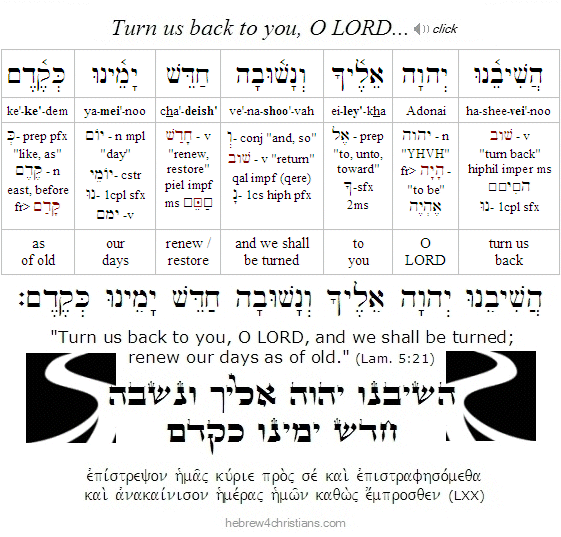
During the last nine days of the Three Weeks of Sorrow it is common to confess the sins in our lives that likewise contribute to the lack of God's Presence in our midst. Hashivenu Adonai, elecha vena-shuvah; chadesh yamenu kekedem: "Turn us back to You, O LORD, and we shall be turned; renew our days as of old" (Lam. 5:21).
Though Shabbat Chazon is a time of mourning, it is also a time for hope. The Torah reading for Shabbat Chazon is always the portion of Devarim. In this portion, Moses details the victorious battles with Sihon the king of Amorites and Og the king of Bashan. Because it signifies God's victory, the sages recommend envisioning the future Temple that will be built by the Mashiach at this time. According to Jewish tradition, after the Messiah comes and restores Israel, Tishah B'Av will become one of the happiest days of the year (may He arrive soon and in our days).
|
|
|
|
Torah Readings for Tishah B'Av
|
|
|
|
|
Tishah B'Av allows us to express heartfelt grief over the loss of Zion and therefore over the fraility of our human condition. During this time it is appropriate to grieve over our sins and to shed tears that attest to lev nishbar v'nikdeh, a "broken and crushed heart" (Psalm 51:17). Indeed, during the entire "Three Weeks of Sorrow" we read selections from the prophets that forewarn of the coming destruction of the Temple (i.e., churban: חֻרְבָּן) and the subsequent exile of the Jewish people (i.e., galut: גָּלוּת). During this time of the year, we listen to the lamentations of the prophet Jeremiah crying out for our repentance...
During Tishah B'Av synagogue services, the lights are dimmed and the Aron Hakodesh (Holy Ark) is draped in black (in some synagogues the parochet (curtain) is removed as a sign of mourning). The crowns with tinkling bells are removed from Torah scrolls. Congregants remove their leather shoes and do not greet each other. The cantor leads the prayers readings in a low, mournful voice. The cantillation for the Scripture readings are set to elegiac, sorrowful melodies.
|
|
|
|
|
|
|
|
In the morning service, the Torah portion of Deut. 4:25-40 is read (Moses' prophecy regarding Israel's future iniquity and exile) followed by the Haftarah of Jer. 8:13-9:24 which describes the desolation of Zion. After this, various kinot ("elegies" or sad poems) are often recited. Note that Yeshua foretold that the Temple would be destroyed because the Jewish leaders did not know the time of their visitation (see Luke 19:41-44).
הֲשִׁיבֵנוּ יְהוָה אֵלֶיךָ וְנָשׁוּבָה
חַדֵּשׁ יָמֵינוּ כְּקֶדֶם
ha·shee·vei'·noo · Adonai · ei·ley'·kha · ve·na·shoo'·vah,
cha·deish · yah·mey'·noo · ke·ke'·dem

"Turn us back to yourself, O LORD, so that we may return to you;
renew our days as of old" (Lam. 5:21)

Hebrew Study Card
Note that the word "distress" (i.e., metzar: מֵצַר) comes from a root word (i.e., tzarah: צָרָה) that means to "make narrow or restricted" (the Yiddish word "tsuris" comes from this root), whereas the word for "deliverance" or "salvation" (i.e., yeshuah: יְשׁוּעָה) means to "make wide" or "make sufficient." These two ideas can be seen in a verse from the Psalms: "Out of my distress (מִן־הַמֵּצַר) I called on the LORD; the LORD answered me and set me in a wide open place" (Psalm 118:5). Among other things, deliverance (salvation) is always a transition from bondage to freedom...
|
|
|
|
|
|
Blessing before Reading Lamentations:
|
|
|
|
בָּרוּךְ אַתָּה יהוה אֱלהֵנוּ מֶלֶךְ הָעוֹלָם
אֲשֶׁר עָשָׂנוּ אֲסִירֵי תִּקְוָה
ba·rookh · at·tah · Adonai · E·lo·hei'·noo · me'·lekh · ha·o·lam,
a·sher · a·sa'·noo · a·see·rei · teek·vah

"Blessed art You, LORD our God, King of the universe,
who has made us captives of hope."
|
|
|
|
Fasts Surrounding the Destruction of the Temple
|
|
|
|
There are four fast days (tzomot) on the Jewish calendar, based on Zechariah 8:19. Each of these fast days is related to some aspect of the loss of the Jewish Temple. The sages reckoned the months based on Nisan as the first month, and therefore identified the four fasts as follows:
|
|
|
|
The Darkest Day of the Calendar
|
|
|
|
You might think that Yom Kippur is the darkest day of the Jewish year, since there is an extended period of teshuvah (repentance) during the preceding month of Elul that culminates in a prolonged fast with a lengthy confession of sins (viduy) at the synagogue. Actually, Yom Kippur is considered the holiest day of the year, but there is still the hope of obtaining forgiveness (selichah) through one's teshuvah. It is the day of atonement or forgiveness for the preceding year's sins, and it is also a time of judgment for the coming year... It is a sad time, of course, since it involves chesbon hanefesh (soul searching) about the sins you've committed, and this often involves feelings of regret and even shame. However Yom Kippur is not tragic like Tisha B'Av, since Tisha B'Av represents the judgment and punishment that God actually carried out....
We need to pray for the eyes of Jewish people to be open to the freedom and love of the Messiah Yeshua....the One who said, "destroy this Temple, and in three days I will raise it up" (John 2:19-22). Yeshua (Jesus) alone is the everlasting answer to our need for forgiveness, even in the light of the tragic.
|
|
|
|
Pray for the Peace of Jerusalem
|
|
|
|
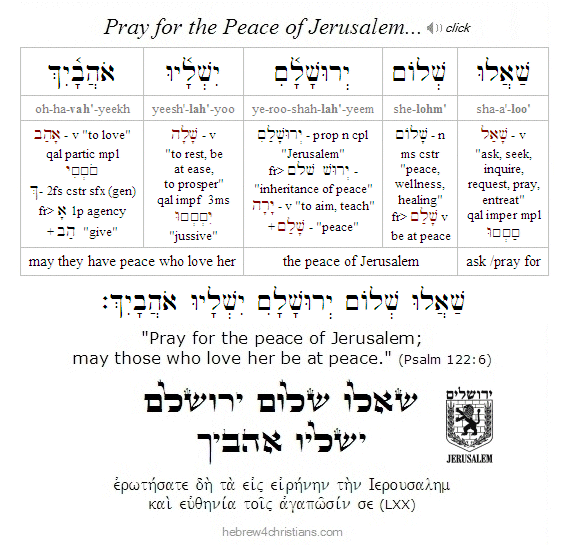
In this connection, let me ask you a simple question. If the King of the Jews is our hope and lives inside our hearts by faith, and if the King of the Jews calls Jerusalem the "City of the Great King" (Psalm 48:2, Matt 5:35), then it only makes sense that we would heed King David's admonition to "ask for the peace of Jerusalem..."
שַׁאֲלוּ שְׁלוֹם יְרוּשָׁלָםִ
יִשְׁלָיוּ אהֲבָיִךְ
sha·a·loo · she·lohm · ye·roo·shah·lah·yeem
yeesh·lah·yoo · oh·ha·vah·yeekh
"Ask for the well-being of Jerusalem;
May those who love you be at peace" (Psalm 122:6).

Download Study Card
King David was of course a great prophet. Notice that the phrase "sha'alu shalom Yerushalayim" actually reveals truth about our Savior and Messiah Yeshua. The word sha'alu actually means "ask" (as in ask a sheilah, a question). Shalom is a Name of Yeshua, since He indeed is Sar Shalom (the Prince of Peace). The word Jerusalem means "teaching of peace" (the "Jeru" at the beginning of the word comes from the same root as the word Torah, which means teaching), so the phrase could be construed as "ask about the Prince of Peace and His Teaching." Yeshua is indeed the rightful King of Jerusalem who is coming soon to reign over all the earth. Zion is a matter of great concern to His heart...
|
|