|
Prayer Request (for site updates, see below)
I was laid off from my full-time job several years ago when -- after a lot of prayer, soul searching and discussion with my wife -- we decided to operate the Hebrew for Christians ministry entirely by faith in God's provision through the love and kindness of His people. I am not paid for doing this work, and therefore I ask you to consider supporting us. If you can help, please offer a donation or purchase some of the Hebrew study materials offered here. Encouraging other web sites to link here also helps us become more visible on the web. Above all, agree with us for the Lord's will to be done in our lives. Todah, chaverim.
Note: My wife and I have have three young children (Josiah, Judah, and Emanuel David ). The LORD has graciously provided for us as Adonai Yireh (יְהוָה יִרְאֶה), "the One who sees [our need]." We are living one day at a time by the grace and mercy of God, and I want to publicly praise Yeshua and acknowledge His faithful love in caring for my family -- despite the trials during this time. The LORD God of Israel is faithful and true! And to those of you who have sent us a word of encouragement or donation during this difficult time, please accept our heartfelt appreciation! Your chesed truly helps sustain us.
יהי שׁם יהוה מברך - "May the Name of the Lord be blessed."
 |
 |
Jewish Holiday Calendar
Note: For site updates, please scroll past this entry....
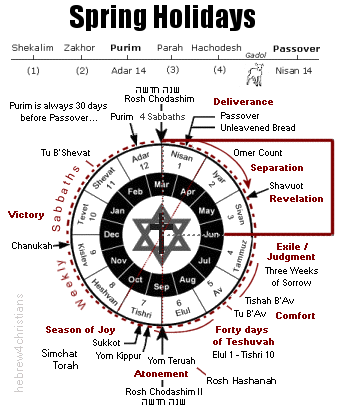
The Torah divides the calendar into two symmetrical halves: the Spring and the Fall, indicating the two advents of Messiah. The Biblical year officially begins during the month of the Passover from Egypt (called Rosh Chodashim, see Exod. 12:2), and the spring holidays of Passover, Unleavened Bread, and Firstfruits both recall our deliverance from Egypt and also our greater deliverance given by means of the death, burial, and resurrection of the Messiah, the great Passover Lamb of God. The holiday of Shavuot (i.e., "Pentecost") both commemorates the revelation of the Torah at Sinai as well as the revelation of the Ruach HaKodesh (Holy Spirit) at Zion, in fulfillment of the promise given by our Lord....
The intermediate months of summer end with the advent of the sixth month of the calendar, the month of Elul, which recalls the time Moses interceded on behalf of Israel after the sin of the Golden Calf. To commemorate this time of our history, we likewise focus on teshuvah (repentance) in anticipation of Rosh Hashanah and especially in anticipation of Yom Kippur, the great "Day of Atonement." In Jewish tradition the 30 days of Elul are combined with the first ten days of the seventh month (called the "Days of Awe") to set apart "Forty Days of Teshuvah" leading up to the Day of Forgiveness for Israel. Immediately following Yom Kippur, the mood changes as we begin preparing for a joyous week-long celebration called Sukkot (i.e., "Tabernacles") that concludes with the holiday of Simchat Torah.
 |
The Spring Holidays:
"This month (i.e., the month of Nisan in the spring) shall be for you the beginning of months (i.e., rosh chodashim: רֹאשׁ חֳדָשִׁים). It shall be the first month of the year for you" (Exodus 12:2). When the Lord said the month of Nisan 1 marked the "beginning of the year" (החודש הראשון של השנה), he was saying that all the other holidays were to be understood in relation to it. It is therefore called "Chodesh Ha'yeshuah" (חודש הישועה), the "Month of Salvation."
The Spring holidays (חגי האביב) then provide a portrait of the death, burial, and resurrection of the Messiah: Yeshua was crucified on erev Pesach (during the time of the sacrifice of the Passover lambs), buried during Chag Hamotzi (the festival of Unleavened Bread), and was resurrected from the dead on Yom Habikkurim (the Day of Firstfruits). Fifty days after Passover, on the climactic holiday of Shavuot (i.e., the feast of Pentecost), the Ruach HaKodesh (Holy Spirit) fell on the believers in fulfillment of the promise given by our Lord. Note that the giving of the Holy Spirit occurred precisely according to the calendar countdown given in the Torah (Lev. 23:15-16), and that it occurred after the resurrection of Yeshua -- just as our Messiah foretold (John 16:7; Acts 1:6-8, 2:1-4). This proves that the feasts of the LORD (מוֹעדי יהוה) were not abolished after the crucifixion. The meaning of the gospel is prefigured in the holidays given in Torah. See Luke 24:27, 24:44; John 5:46; Acts 26:22, etc.
![Spring Holiday Timeline (H4C]](../../About_HFC/Site_News/roshchodeshim-line.gif) |
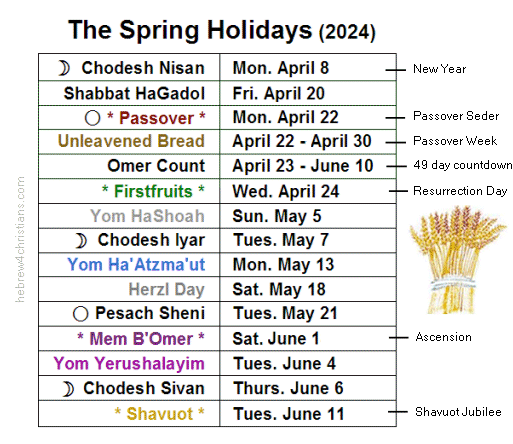
Kindly note that in accordance with both Torah and Jewish tradition, the following holiday dates begin at sundown (ויהי־ערב ויהי־בקר; Gen. 1:5):
- Month of Adar II (Sat. March 9th [eve]) - Mon. April 8th [day])
Dates for Passover Week 2024:
Free Seder Guide
- Month of Nisan (Mon. April 8th [eve] - Tues. May 7th [day])
- Month of Iyyar (Tues. May 7th [eve] - Thurs. June 6th [day])
- Month of Sivan (Thurs. June 6th [eve] - Sun. June 18th [day])
 |
Note: For more information, see the Calendar Pages....
May 2024 Site Updates
Note: If any page content appears to be missing, please refresh the page...
This week's Torah:
Kedoshim - פרשת קדשים
[ The following is related to this week's Torah reading, parashat Kedoshim... ]
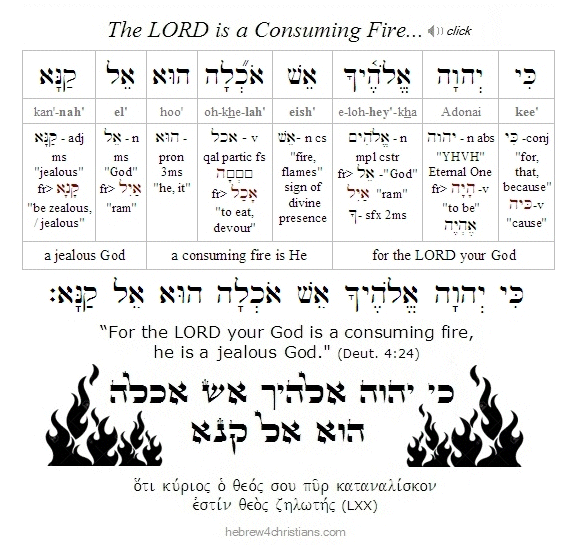
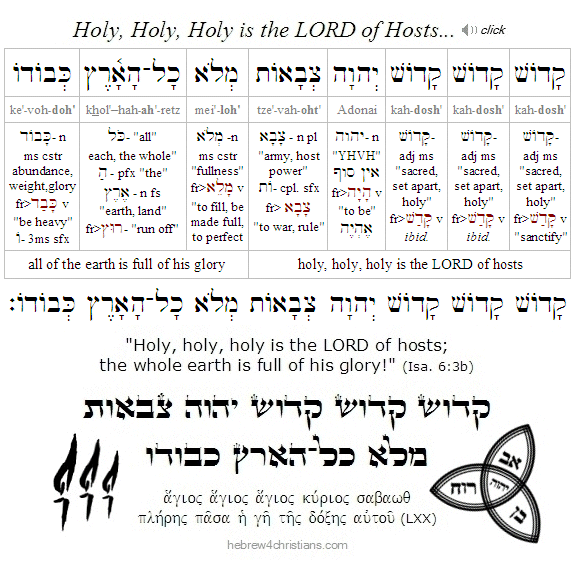
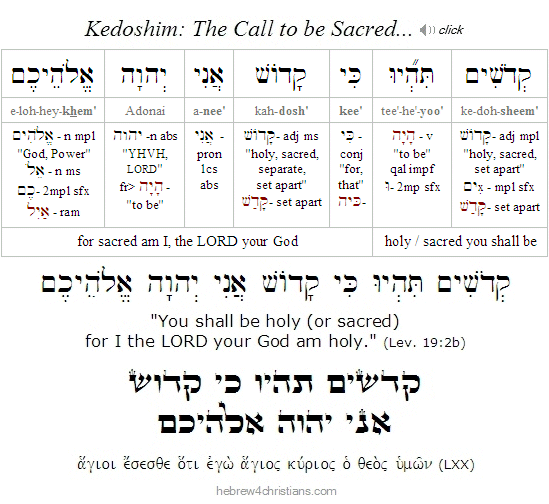
05.06.24 (Nisan 28, 5784) Last week's Torah portion (Acharei Mot) discussed how the yearly Yom Kippur service (עבודת יום כיפור) would (provisionally) purge the uncleanness and sin of the people and restore the Sanctuary to a state of purity. This week's Torah portion (Kedoshim) continues the theme of purity with the LORD saying to "the whole assembly of Israel" (כָּל־עֲדַת בְּנֵי־יִשְׂרָאֵל), "You must be holy (or sacred) because I, the LORD your God, am holy" (Lev. 19:2). Indeed this portion lists more mitzvot (commandments) regarding practical ethics (musar) than any other of the Torah, thereby directly connecting the holiness of the community with obedience to God's moral truth...
Hebrew Lesson
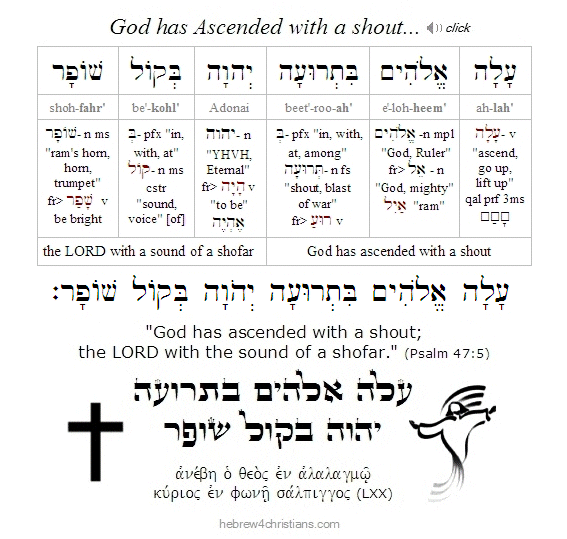
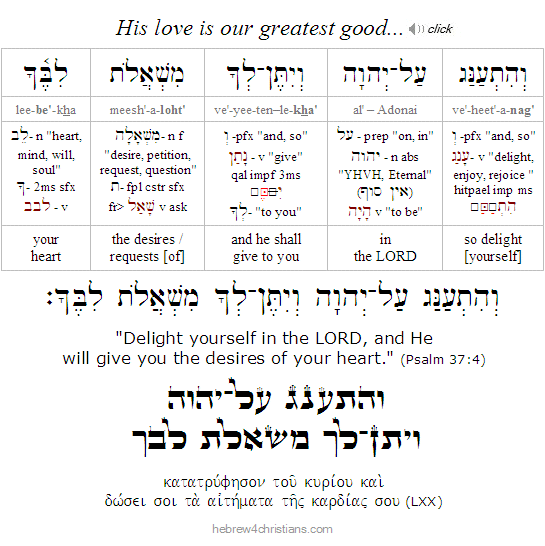
Lev. 19:2b Hebrew reading (click):
 |
After stating the foundational requirement to be holy, the LORD begins to explain, "Each of you must respect (i.e., yirah: יִרְאָה) his mother and his father, and you must keep my Sabbaths. I am the LORD your God" (Lev. 19:3). The duty to revere (or honor) one's parents recalls the Fifth Commandment (Exod. 20:12), which is the starting point of learning to respect other people in our lives. Notice that the word for "my Sabbaths" (שַׁבְּתתַי) implies both the keeping of the weekly Sabbath as well as the "appointed times" of the LORD. As we will see, sanctifying time is a way we can express practical holiness in our lives...
Various practical commandments are given in this Torah portion through which a Jew is sanctified, or set apart to be kadosh - holy - and therefore fit for relationship with God. God is not only "wholly Other" (i.e., transcendent) but also pervades all of creation (i.e., "immanent"), and those who are called into His Presence must therefore be holy themselves. Such practical holiness results in sanctification obtained through the observance of commandments (mitzvot). These commandments include both mitzvot aseh (commandments to do something) and mitzvot lo ta'aseh (commandments to refrain from doing something). In addition, chukkim, or "statutes" are given that further separate the Jew from the customs and profanity of the surrounding nations.
For example, though it is inevitable (and psychologically necessary) that we make judgments about other people, the Torah states, be'tzedek tishpot amitekha, "in righteousness shall you judge your neighbor" (see also John 7:24), which implies that we must use the "good eye" (ayin tovah) when we think of other people. Indeed, the focal point and the very heart of what practical holiness represents is stated as ve'ahavta le're'akha kamokha - "You shall love your neighbor as yourself." Note that the direct object of the verb (ahav - to love) is your neighbor. But who, exactly, is my neighbor? Some have claimed that the word rea (neighbor) refers only to one's fellow Jew - not to others at large in the world. However this is obviously false, since the "stranger" (ger) is explicitly identified to be an object of our love (Lev 19:34). And note that Yeshua the Mashiach answered this question by turning it around. Instead of attempting to find someone worthy of neighborly love, I am asked to be a worthy and loving neighbor myself (Luke 10:29-37).
The phrase ve'ahavta le're'akha kamokha (Lev. 19:18) is considered the most comprehensive rule of conduct toward others found in the entire Torah. The Talmud (Shabbat 31a) tells the story of how Rabbi Hillel, a contemporary of Yeshua, was once challenged by a pagan: "Make me a proselyte, on the condition that you teach me the whole Torah while I stand on one foot." Hillel agreed, and while standing on one foot said, "What is hateful to you, do not do to your neighbor: that is the whole Torah and the rest is commentary; go and learn it." Yeshua likewise said, "In everything, treat others as you would want them to treat you, for this is the point of the law and the prophets" (Matt 7:12). The apostle Paul - who was a student of Hillel's grandson Gamaliel - likewise wrote: "Love (ἡ ἀγάπη) does no wrong to a neighbor; therefore love is the fulfillment (πλήρωμα) of the law" (see Rom. 13:10, Gal. 5:14).
Notice that the commandment to love our neighbor is given in connection with forgiveness. Leviticus 19:18 reads, Lo tikom, ve'lo titor (לא־תִקּם וְלא־תִטּר): "You must not take vengeance nor bear a grudge ... but you must love your neighbor as yourself. I am the LORD." In Jewish tradition, "Yom Kippur does not atone until we have made peace with one another." In light of the greater glory of the New Covenant, this may be stated, "the Cross of Yeshua will not avail you unless you are willing to forgive others for their sins against you" (Matt. 6:14-15).
The problem, of course, is not that we don't know what our duty before God is, but rather finding the means to truly live a life of love and forgiveness toward others in this fallen world... But thanks be to God - the Holy Spirit enables us to do the impossible...
Not the Author of Chaos...
[ Those who deny the truth of God and God's law, those who arrogate the "right" to define what is good and evil on their own terms, repudiate the Voice and Person of the One who said: לֹא תִּרְצָח - "Thou shalt not murder." Their judgment is the insanity of their own arrogance... ]
05.05.24 (Nisan 27, 5784) These are lawless days, where worldly culture celebrates moral anarchy and teaches the narcissistic philosophy that everyone "should" do what is right in his or her own eyes... These are like the "days of Noah," where the wickedness has become great in the earth, and intention of the thoughts of people's hearts has become evil continually (Gen. 6:5). Because worldly culture has suppressed and exiled the truth of God from the public domain, God has pronounced "like-for-like" judgment by giving people over to the tyranny of their darkened passions, resulting in inner chaos and self-destructive impulses. This is the very worst possible judgment of God - when He removes his hand and says, "Have it your way..." (Rom. 1:28). We now live in a stupefied age wherein people are unable to think clearly or use logic, but instead resort to violence and ad hominem attacks on others because of their derranged thinking and hardened hearts...
The importance of the Torah, or the "law" of God, cannot be overstated, friends. Yeshua plainly said to his followers: "Do not think that I have come to abolish the Law or the Prophets; I have not come to abolish them but to fulfill them. I tell you the truth, until heaven and earth pass away not the smallest letter or even a stroke of a letter (קוצו שׁל יוד) will pass from the law until everything comes to pass. So anyone who breaks one of the least of these commands and teaches others to do so will be called least in the kingdom of heaven, but whoever obeys them and teaches others to do so will be called great in the kingdom of heaven" (Matt. 5:17-19). He further solemnly warned: "Not everyone who says to me, 'Lord, Lord,' will enter into the kingdom of heaven– only the one who does the will of my Father in heaven. On that day, many will say to me, 'Lord, Lord, didn't we prophesy in your name, and in your name cast out demons and do many powerful deeds?' Then I will declare to them, 'I never knew you. Go away from me, you workers of lawlessness' (Matt. 7:21-23).
To the ungodly, "freedom" means being lawless, that is, acting under their own authority apart from the will of God. Their "law" is one of unbridled selfishness: "Do what thou wilt." This of course was the original temptation in Eden, when the nachash (serpent) told Eve that if she acted under her own authority, her eyes would be "opened" and she would be "like God," knowing both good and evil (Gen. 3:5). That is always the creed of the wicked: "Do as thou wilt..." True freedom, however, is not the supposed right to do whatever you want, but instead is the power to do what is right, living in harmony with moral reality, and being liberated from the slavery of impulses to do evil. The moral law of God, then, is the blessing of having boundaries, order, and moral sanity within our lives, and that is why the Holy Spirit inscribes the law "within" us - to help guide our steps, protect our way, and to empower us to live in obedience to the truth of God (Jer. 31:33). If you are led by the Spirit, you are no longer enslaved to the law of sin and death -- that is, the lower nature and its idolatrous impulses -- but you will bear the fruit of righteousness, goodness and truth (Gal. 5:18; Eph. 5:9). Let no one deceive you with vain words. "By this it is evident who are the children of God, and who are the children of the devil: whoever does not practice righteousness is not of God, nor is the one who does not love his brother" (1 John 3:10).
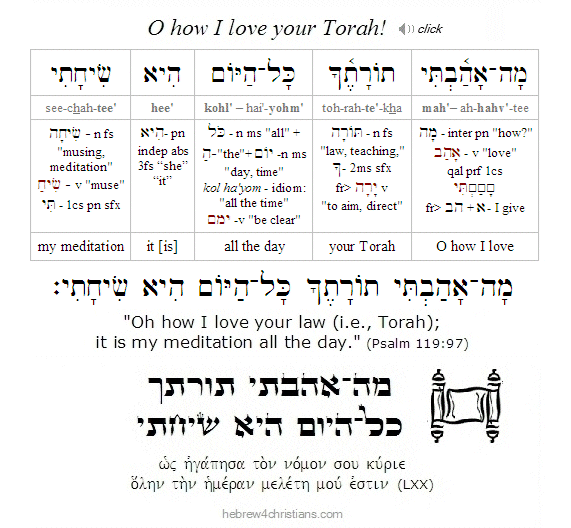
Hebrew Lesson:
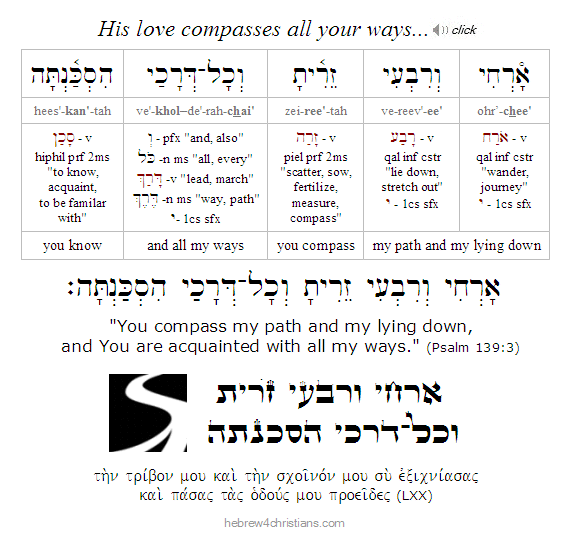
Psalm 119:97 reading (click for audio):
 |
Beauty for Ashes...
[ Yom HaShoah, Holocaust Remembrance Day, begins this evening at sunset. לעולם לא עוד ]
05.05.24 (Nisan 27, 5784) While there is no official "haggadah" for the Yom HaShoah memorial, it is traditional to light a yellow yahrzeit candle for those who died, to attend a Yom HaShoah memorial service, and to recite kaddish. Some people prepare a lavish meal using recipes written from memory by the starving women of Theresienstadt (salvaged after the war). Many of these recipes are for rich desserts and cakes, recalling days of joy before the women and their families were rounded up and brought to the concentration camps. During the memorial meal, stories of Jews who died are told, as well of those of survivors. Many survivors tell stories about the "hidden children" who were saved by righteous Gentiles (חֲסִידֵי אוּמוֹת הָעוֹלָם). These young survivors were either hidden in secret places (like Anne Frank) or were "adopted" by Christian families who pretended they were their own children.
Though we can't control what happens in this dangerous world, we can trust that God is working all things together for good, even during times of severe testing, and even in things that are blatantly evil (Rom. 8:28; Gen. 50:20). And while we instinctively recoil at the prospect of physical death, there are decidedly things worse than death itself, namely, losing hope in life, walking in the darkness of despair, living a joyless existence because of fear. As much as we abhor evil - and we must resist it with all our hearts - even more must we love the good - and cling to God (וּלְדָבְקָה־בוֹ) with all that is within us.
Ultimately, the most important thing to remember regarding death is the truth about God's salvation (יְשׁוּעָה). After all, God assuredly hates death and provides each of us with its eternal remedy: By clothing himself in human flesh, Yeshua embraced mortality itself and willingly bore the penalty for your sins, exchanging his life for yours, thereby destroying the one who had the power of death, namely the devil, and by so doing, set you free from slavery to the dread of death (Heb. 2:14-15). To those who belong to belong to Messiah, death represents a passage to eternal life and the loving presence of God Himself.
Only the miracle of faith can see hope in the face of radical evil... and yet that is the very message of the cross of the Messiah... Our Lord demonstrated that He is the the Killer of death itself; the Slayer of the Serpent; and the ultimate Triumph of God's Light over the realm of despair and everlasting darkness... He is the First and the Last, the Living One who died, and behold is alive forevermore, the true Keyholder of Death and Hell (Rev. 1:18).
For more on this topic see: "Beauty for Ashes: Further thoughts on the Shoah."
Hebrew Lesson:
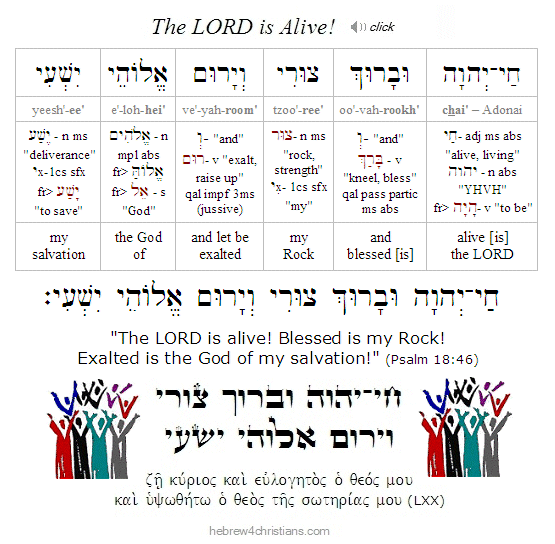
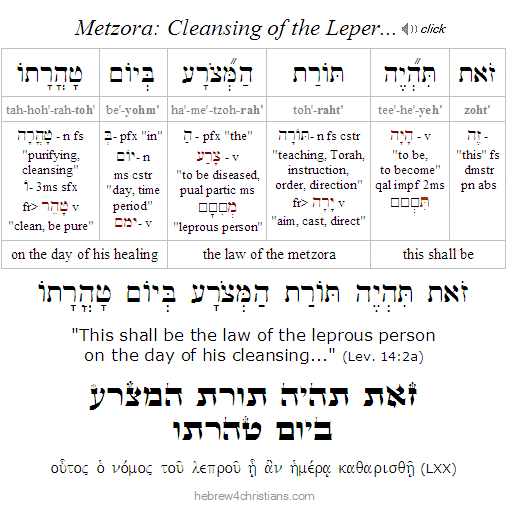
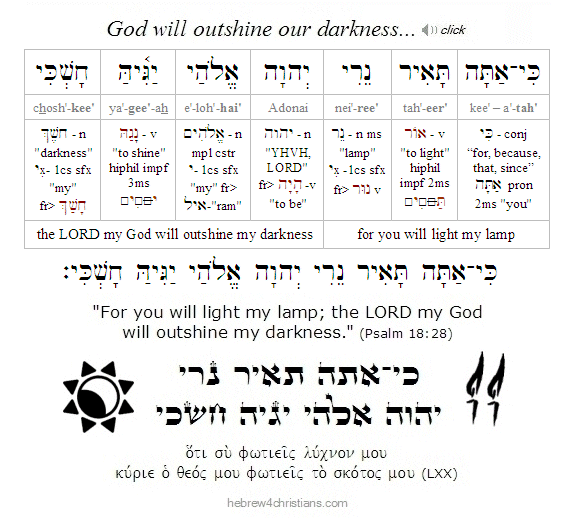
Psalm 18:28 reading (click):
 |
Keep the Flame Burning...
[ "Faith is the strength by which a shattered world shall emerge into the light." - Helen Keller ]
05.03.24 (Nisan 25, 5784) Keep the flame within your heart burning, friend... A sage once told a person struggling with his faith: "It is written that all creation was brought into being because of people like you. God saw there would be people who would cling to our holy faith, suffering greatly because confusion and doubt would plague them. God perceived that such would overcome these doubts and troubles of heart and remain strong in their belief. It was because of this that God brought forth all creation." Indeed, it was because of this that Yeshua our LORD suffered and died for you... Amen. Therefore never yield to despair, since that leads to further darkness and fear. Press on and keep fighting the "good fight" of faith (1 Tim. 6:12). Remember that you infinitely matter to heaven; your life has great value; you are significant and you are truly loved by our Heavenly Father. There is a "future and a hope" for you; there is "a white stone, and on that stone will be written a new name that no one can understand except the one who receives it" (Rev. 2:17). May "the trial of your faith, being much more precious than of gold that perishes, though it be tested with fire, be found to result in praise and glory and honor at the revelation to come" (1 Pet. 1:7).
"I am sure of this, that he who began a good work in you will bring it to completion (ἐπιτελέω) at the Day of Yeshua the Messiah" (Phil 1:6). The LORD is able to guard you (φυλάξαι) from stumbling and to present you blameless before the presence of His glory with great joy (Jude 1:24). "The LORD upholds all who are falling and raises up all who are bowed down" (Psalm 145:14). "He will sustain you to the end, guiltless in the Day of our Yeshua the Messiah" (1 Cor. 1:8). He who calls you is forever faithful; He will surely do it (1 Thess. 5:24). Yea, "the Lord is faithful (נֶאֱמָן הוּא): He will establish you and guard you against the evil one" (2 Thess. 3:3). The Spirit says, "Fear not, for I AM with you always."
Hebrew Lesson:
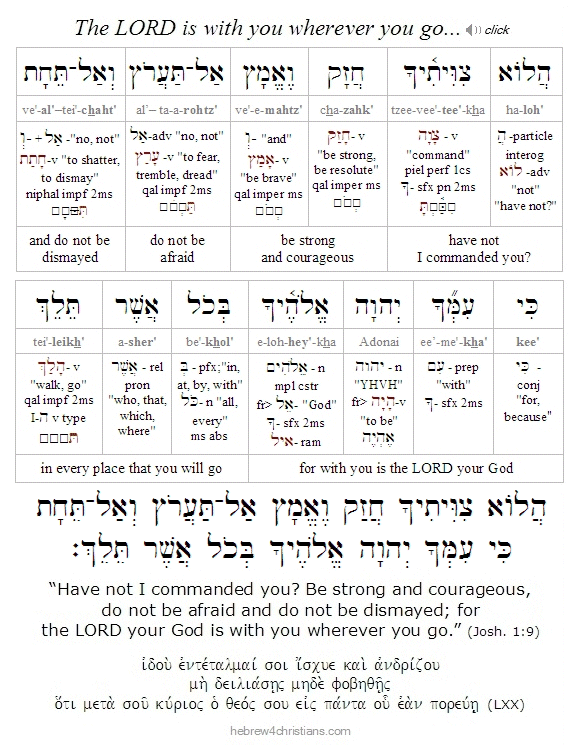
Isaiah 41:10 Hebrew reading (click):
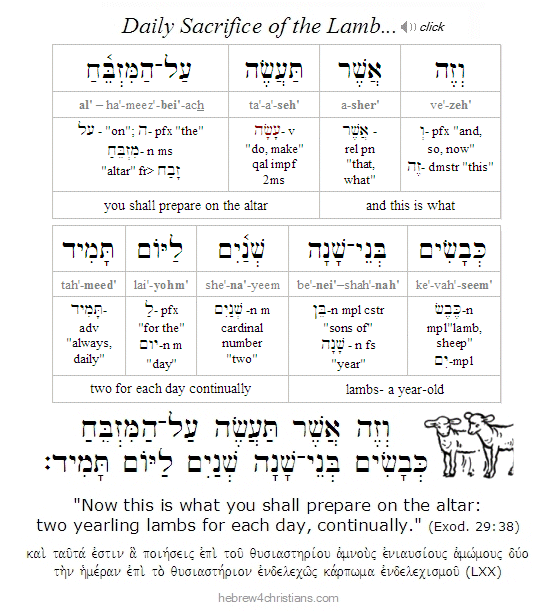
I appreciate this quote from the late Frederick Beuchner: "To be commanded to love God at all, let alone in the wilderness, is like being commanded to be well when we are sick, to sing for joy when we are dying of thirst, to run when our legs are broken. But this is the first and great commandment nonetheless."
It is true; we cannot possibly love God with all our hearts apart from a miracle of personal encounter with the risen Lord who calls us to know Him.
Human pride looks for reasons why God would reveal himself to us; it assumes there is something about us that commends his love. But the miracle of faith is a gift from above, since the only thing we can offer God is our need, our brokenness, and our powerlessness.
Some people trust in religion, but what matters most is disclosed as you lay dying on your bed, in your most needy moment for the intervention of God's grace. Is it not precisely then that when all human hope is lost, your heart reaches out to the utmost for the good Lord to come to your rescue? We are saved by hope (Rom. 8:24). אֵלֶ֥יךָ יְ֝הוָ֗ה נַפְשִׁ֥י אֶשָּֽׂא — "Unto Thee O Lord do I lift up my soul..." Amen. Bo, ruach Elohim!
|
Loving the Stranger...
05.03.24 (Nisan 25, 5784) From our Torah portion for this week (Acharei-Mot) we read: "You shall love the stranger as yourself" (Lev. 19:34). But how is this possible apart from empathy for someone who is lost? The unspoken assumption here is that since we know how it feels to be an outsider, oppressed and without a sense of home, so we ought sympathize with others who feel that way too.
When we acknowledge the pain of others we also acknowledge our own. We let go of the weapons of blame and retribution when we give voice to the "stranger" within ourselves, when we realize that others share in our suffering: "Do not oppress a sojourner, for you know the soul of a stranger (וְאַתֶּם יְדַעְתֶּם אֶת־נֶפֶשׁ הַגֵּר), for you were strangers..." (Exod. 23:9). The Hebrew verb used here (i.e., yada, to know), implies intimacy, personal and direct understanding. You "know the soul" of the stranger by reliving their place, and by using the "good eye" to see how they share common our pain, joy, hope, and so on.
Being sensitive to the heartache of others helps us find our own healing: We are brought out of our "inner Egypt" into freedom and wholeness. Remembering what it was like to be a stranger helps us extend compassion to ourselves, and that brings healing to our hearts.
The mitzvah to love the stranger applies not only to someone whom we regard as an "outsider," but more radically to the "stranger within ourselves," that is, to those aspects of ourselves we censor, deny, or reject. Like the prodigal son, we have to "come to ourselves" to return home (Luke 15:17) - believing that we are somehow redeemable - yet we will be unable to know how we are unconditionally loved until we venture complete disclosure. That is the great risk of trusting in God's love for your soul: You must accept that you are accepted despite your own unacceptability... Those parts of ourselves that we "hide" need to be brought to the light, atoned for, healed, and reconciled. If we don't love and accept ourselves, then how can we hope to love and accept others?
Hebrew Lesson
Lev. 19:34 reading (click):
Torah of Sighs...
[ A sigh is a deep breath that is audibly exhaled from the depths of the soul... In modern Hebrew the word for "sigh" is "anachah" (אֲנָחָה), while in Yiddish the word "oy!" is often used, and the prophets sometimes used the word "eichah" (אֵיכָה) to mournfully moan "how can it be?" to heaven. In any case, the sigh is an essential part of the vocabulary of Jewish life. How can we not sigh in grief with the world is the way it is? And should we not sigh and groan for the completion of our redemption? (2 Cor. 5:1-6) ]
05.03.24 (Nisan 25, 5784) The Scriptures are filled with desperate cries of the heart... Ad ana Adonai: "How long, O LORD? Will you forget me forever? How long will you hide your face from me? How long must I take counsel in my soul and have sorrow in my heart all the day?" (Psalm 13:1-2). "Make haste to help me, O LORD, my salvation!" (Psalm 38:22). "My soul melts away from grief; strengthen me according to your word" (Psalm 119:28). "Answer me quickly, O LORD! My spirit fails! Hide not your face from me, lest I be like those who go down to the pit" (Psalm 143:7). God know that "hope deferred makes the heart sick" (Prov. 13:12), so there can be no turning to God, no teshuvah, apart from the presence of real hope (תִּקְוָה). Indeed, as the Apostle Paul wrote: "We are saved by hope" (Rom. 8:24).
The late Henri Nouwen wrote, "I am beginning to see that much of praying is grieving." Contrition, grief, and regret for our sins is at the heart of genuine teshuvah. Crying is a expression of utter humility, helplessness, and need. In this life we weep over many things, but we inwardly cry for our Abba, our heavenly Father's love... "Whenever you find tears in your eyes, especially unexpected tears, it is well to pay the closest attention. They are summoning you to where you should go next" (Frederick Buechner).
"Whenever you find tears in your eyes, especially unexpected tears, it is well to pay the closest attention. God is speaking to you through them of the mystery of where you have come from and is summoning you to where you should go to next. (Frederick Buechner, Whistling in the Dark: 1988).
An old Jewish prayer, uttered with a expansive sigh, begins, "O Lord, I know that Thou wilt help us; but wilt Thou help us before Thou wilt help us?" It's not always easy to wait for God, especially when we are in pain, sorrow, or anxiety, but we must never, ever, give up; we must never ever, abandon our heart's longing for ultimate healing. The "blessing of the sigh" is that it expresses the bittersweetness of our struggle and the courage of our conviction. Faith exercises hope in the Reality, Substance, and Being (ὑπόστασις) of the Invisible and is made captive to undying hope (Heb. 11:1). Therefore the Spirit cries out: "Hope to the LORD; be strong and strengthen your heart; and (again) hope to the LORD" (Psalm 27:14). "Blessed are you, O LORD, who walks with the wounded of heart."
Hebrew Lesson:
Psalm 119:28 Hebrew Reading (click):
The Heart of Atonement...
05.03.24 (Nisan 25, 5784) Most of our deepest anxieties come from the fear of death, whether we are conscious of this or not... Death represents fear of the unknown, fear of being abandoned, fear of being rejected, fear of being separated from others, and so on. I am so glad Yeshua gives us eternal life, which for me is not so much about immortality of the soul as it is being loved and accepted by God... That is what "at-one-ment" means, after all (John 17:22-23). Because God loves and accepts us, we trust Him to be present for us, even in the darkest of hours, on the other side of the veil, where he there "prepares a place for us" (John 14:2). As Yeshua said, "I tell you the solemn truth, the one who hears my message and believes the One who sent me has eternal life (חַיֵּי עוֹלָם) and will not be condemned, but has passed (i.e., μετά + βαίνω, lit., "crossed over" [עָבַר]) from death to life" (John 5:24). God's love "crosses over" from death to life and now forever sustains me.
Our Torah reading for this week (Acharei Mot) provides details about Yom Kippur, or the "Day of Atonement," a special service that gave ritual expression of God's love by making purification for our sins. As I've explained before, the word for love (i.e., ahavah: אהבה) equals the number thirteen (1+5+2+5=13), but when shared it is multiplied: 13 x 2 = 26, which is the same value for the Sacred Name (יהוה), i.e., (10+5+6+5=26). Likewise the Hebrew word for "life" is chayim (חַיִּים), is written in the plural to emphasize that life cannot be lived alone but must be shared. Notice that within the word itself are embedded two consecutive Yods (יי), representing unity in plurality (Yod-Yod is an abbreviation for YHVH, also indicating the "deep Akedah" of Father and Son). God gave up His life so that we can be in relationship with Him, that is, so that we can be "at-one" with His heart for us. Whatever else it may mean, then, the Hebrew word for "atonement" (i.e., kapparah, "covering," "protection," "purification," "forgiveness") is about accepting God's heart for you - being unified in his love - and if you miss that, you've missed the point of the Torah's teaching....
Hebrew Lesson
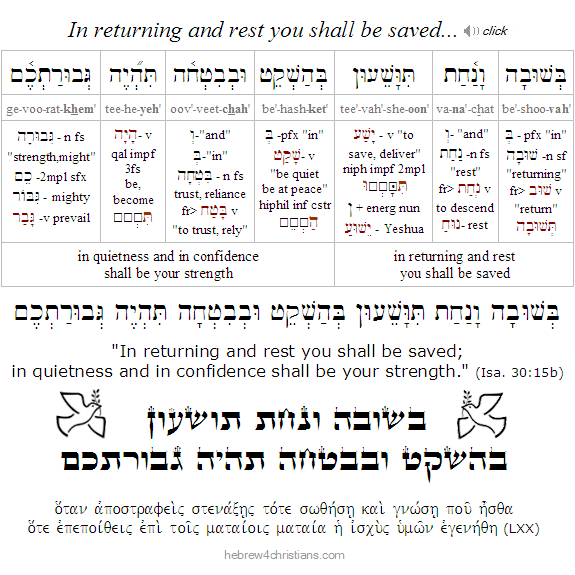
Psalm 118:17 reading (click for audio):
Extraordinary Encounters...
[ The following is related to our Torah reading this week, parashat Acharei Mot... ]
05.02.24 (Nisan 24, 5784) We "sanctify" our hearts whenever we consciously focus on what is sacred, awesome, wonderful, and glorious about Reality, and in particular, on the Living God, oseh shamayim va'aretz (עשֵׂה שָׁמַיִם וָאָרֶץ), the Maker of Heaven and Earth, and the great salvation we have in Yeshua. In our Torah portion this week (i.e., Acharei Mot) we read: "You shall not do as they do (לא תַעֲשׂוּ) in the land of Egypt, where you lived, and you shall not do as they do in the land of Canaan, to which I am bringing you. You shall not walk in their statutes" (Lev. 18:3). In other words, we are not to follow the crowd, to appeal to the status quo, or to mimic the customs of the world because we are a visionary people who walk by faith in the Torah of the LORD (Psalm 119:1-3).
Being in a vital relationship with God means separating from the ordinary and mundane, leaving our "original homeland" behind us and crossing over to the realm of blessing. Abraham had to leave the land of his father before he could receive the promise; the Israelites had to trek far into the desert before they received the vision at Sinai, and we have to leave our old lives behind to partake of newness of life. There is a radical break from the past -- we are transformed, reborn, and made into new creations by the miracle of God (2 Cor. 5:17). "Being holy" therefore means coming alive and looking away from that which deadens our hearts (Col. 3:1-4). Behold, the LORD God of Israel makes all things new!
The call to be holy is radical and completely contrary to the world and its messages of conditional approval. Worldly culture flatters itself by making a pretense of true originality and genuine love. It imagines itself to be "cool," unconventional, creative, sophisticated, artistic, and so on, but in truth it is trite, uninspired, and cloyingly tragic. To be truly original means encountering God in your daily experience, struggling through the day in faith, disregarding the clamor and demands of popular culture and its idolatry (i.e., fads, fashions, trends, etc.). God calls his people to come alive, to be new, and to experience abundant life; we are to treasure the unseen, the possible, and to keep faith in the healing good that will overwhelm all darkness. Now that's radical; that's original; that's powerful.
Note the connection between worldliness and idolatry, since idolatry essentially involves trying to find your identity, your worth, your satisfaction, and your ultimate fulfillment in the realm of the transitory and the finite (i.e., the world) rather than in God.... We are (rightly) warned against the vices of "worldliness" and are admonished to abstain from popular culture and its spurious values, but note well that worldliness extends well beyond all this, since it concerns understanding the identity and nature of the person as a whole. The fruit of worldliness is the result of being rooted in this world rather than in God's kingdom. The various desires of the human heart - even the desire for "normal things" like personal happiness in this world - may be regarded as "worldly" if they are devoid of submission to God and His rule. Conversely, even Christian workers may be "worldly" if they base their identity in what they do rather than who they are in the Messiah...
We are "in" but not "of" the world; we are embedded within our culture to be salt and light, and that means we stay true to our vision and relationship with the LORD our God... We don't have to reinvent the wheel, however, since we learn from one another and especially from the testimony of our holy Scriptures, but nevertheless we must personally venture out and encounter God within our own hearts, trusting in his love for our everlasting healing. B'chol dor va'dor: in each generation an individual should look upon himself or herself as having been personally delivered from Egypt. To be efficacious, the message of the Passover Lamb must be personally received by the heart of faith.
Renew the affirmation of faith and know who you are: "If then you have been raised with Messiah, seek the things that are above (τὰ ἄνω ζητεῖτε), where the Messiah is seated at the right hand of God; focus your thoughts on the things above - not on things here on earth - for you have died, and your life has been hidden with Messiah in God. Then when the Messiah, who is your life, appears, you too will appear with him in glory" (Col. 3:1-4). Amen.
Hebrew Lesson:
Leviticus 20:7 reading (click for 2 min audio):
The Sins of Sodom...
[ "As it was in the days of Lot..." The postmodern dialectic has moved into the phase of metapostmodern nihilism, a world devoid of hope and all possible ontological meaning. This is the whirlwind of despair I've mentioned before in other places, and it is here, now... ]
05.02.24 (Nisan 24, 5784) From the Torah (i.e., parashat Vayera) we read: "And the LORD said, 'The outcry of Sodom and Gomorrah is indeed great, and their sin is exceedingly grave...'" (Gen. 18:20). But what was the sin of Sodom and Gomorrah? Why did God destroy the two cities? Was it because the people there refused to show hospitality to the angelic visitors (as is claimed by some), or was it because of ongoing and escalating sin of the people?
Though the sin of Sodom undoubtedly included the practice of sexual perversion (called "strange flesh" in the Book of Jude), such behavior was symptomatic of a nihilistic culture that glorified violence, despised moral authority and logical truth, and practiced the exploitation of others. Throughout the Scriptures "Sodom" symbolically represents gross immorality, depravity, and inevitable judgment from heaven. For example, the prophet Ezekiel later wrote of Judah: "Behold, this was the guilt of your sister Sodom: she and her daughters had arrogance, abundant food, and careless ease, but she did not help the poor and needy. Thus they were haughty and committed abomination (תּוֹעֵבָה) before me; therefore I removed them when I saw it" (Ezek. 16:49-50). The New Testament refers to the fate of Sodom as "a fearful example of the everlasting fire of retribution" (Jude 1:7) -- the destructive result of spiritual anarchy, lawlessness, deviancy, perversion, and trauma (2 Pet. 2:6-10). Thankfully there is real hope for those who seek to escape from the wrath to come by turning to God and trusting in his healing power of salvation, though it is only a "remnant" that find true deliverance (Matt. 7:14). Speaking of the final salvation of Israel, the Apostle Paul quotes Isaiah: "If the LORD of Hosts hadn't left us a few survivors, we'd be as desolate as Sodom, doomed just like Gomorrah" (Isa 1:9; Rom. 9:29).
In this connection it should be noted that the word "sodomy" involves any form of violence, perversion, exploitation, or lawless expression of sexuality regardless of gender... In general, it is more helpful to think of it as a code word for egregious sin, "in-your-face" spite toward God, defiant immorality that celebrates spiritual anarchy, moral nihilism, and death... Adultery, fornication, sexual perversions, viewing pornography (i.e., the lust of the eyes), covetousness, gluttony, arrogance (idolatry), unbridled anger (rage), sloth, worshiping the things of this world (i.e., fads, trendy TV shows, sports idols, the world's value system), and so on, all may be called "sodomy." Whenever we consider such things, it is better to look at how we are healed rather than what makes us sick.... The answer in every case to the trauma of the sinful heart is to turn to God and ask for deliverance in the name of Yeshua.
The world and its "group-think" always calls for the abolition of individual conscience. Like the people of ancient Sodom that repudiated God's moral authority so that they would be "free" to their indulge their selfish desires and "autonomy," so the world system today repudiates a person of real conviction and conscience. Indeed, the only thing regarded as "intolerable" in the devil's world is the objection that people have the supposed "liberty" to sin in whatever way they please. This godlessness is anathema to one who truly fears God, of course, since tolerating sin in a world ripe for judgment is a cowardly form of "collaboration" with the enemy (James 4:4). "Woe to those who call evil good and good evil, who put darkness for light and light for darkness, who put bitter for sweet and sweet for bitter! Woe to those who are wise in their own eyes, and who are shrewd in their own sight!" (Isa. 5:20-21).
The "original sin," that is, eating from the Tree of Knowledge of good and evil, meant that man sought to transcend God's will to determine what is valuable, true, beautiful, and so on. Man became autonomous, "the measure of all things." Such was the "logical" method of the German idealism of Kant and Hegel, which led to way for Karl Marx, Friedrich Nietzsche, and Adolf Hitler (and some present day politicians) to unleash their nightmares upon the earth. Understand that the deep untruth that lies behind cynical "postmodernism" expresses little more than the godless desire to control the world... Today, more than ever before, the world is like "Sodom," and therefore ripe for judgment from heaven.
And the judgment of God indeed came upon the moral anarchy of that realm... After the angels rescued Lot (and his immediate family), we read "then the LORD rained on Sodom and Gomorrah sulfur and fire from the LORD out of heaven. And he overthrew those cities, and all the valley, and all the inhabitants of the cities, and whatever grew on the ground" (Gen. 19:24-25). The sages note the word translated "overthrew" is vayahafokh (וַיַּהֲפךְ), which means "overturned," suggesting that besides the fire and brimstone that rained down from the sky, an enormous earthquake engulfed the plain, forming a crater filled with salt that became known as the "Dead Sea" (ים המלח).
Hebrew Lesson
Jeremiah 7:14 Reading (click):
Note: If someone were to urge me to declare whether a certain sexual orientation was acceptable (or sinful), I would push the question further back... Before we consider questions of sexual orientation we first must come to terms with questions of theological orientation, and in particular, with the question of whether we will believe that Yeshua is God the Son who redeems humanity from sin... After all, the central concern of life is not with this or that particular sin (since sin reveals the more fundamental problem of "spiritual death") but rather with the question of how can we find true life. How can we be delivered from the sickness of death and God's judgment? What is the meaning and purpose of our lives? How should I live? Everyone is entirely responsible for what they choose to believe and our judgment is to be whatever we make of our lives... In our "postmodern" culture we must start here before we get sidetracked into the "mind games" of identity politics, etc.
|
Yom HaShoah Podcast...
[ Yom HaShoah, or Holocaust Memorial Day, begins Sunday May 5th at sundown and runs through Monday, May 6th until sundown... ]
05.02.24 (Nisan 24, 5784) Shalom chaverim. I made an audio podcast for Yom HaShoah, or Holocaust Remembrance Day (see the link below). In it I discuss some of the philosophical influences that led to the atrocities of the attempted genocide of the Jewish people, including the rise of the wild-eyed idealism of G.W. Hegel and the invidious concept of the "dialectic" that was used to negate the value of the individual in preference to the collective.... Hegel directly influenced Karl Marx and his godless materialism and social revolutionary theories, and in general it may be said that German idealism led both to the nihilism of Friedrich Nietzsche and eventually to the barbarity of Adolf Hitler's national socialism. Though the subject matter is a bit philosophical, I nevertheless hope you will find it helpful.
Sunday May 5th at sundown is
Holocaust Remembrance Day...
05.01.24 (Nisan 23, 5784) Yom HaShoah, or "Holocaust Remembrance Day," marks Israel's time of commemoration for the approximately six million Jews -- including over a million children -- who perished as a result of the actions carried out by Nazi Germany and its accomplices. It was inaugurated in 1953 and is annually observed on (or about) the 27th day of the month of Nisan, just a few days after Passover Week in the spring. In stark contrast to the celebration of freedom commemorated during Passover, Yom HaShoah marks a very difficult time when we revisit specters of absolute evil and again ask haunting questions about the power and presence of malevolence in our world. Often we are left speechless over the cruelty and depravity of human beings. It all seems so inexplicable, so needlessly horrible, so senseless, so vile... We may feel powerless, despondent, or full of indignation, but still we ask ourselves, how could this have happened? How was all of this possible?
Simply put, the Holocaust was the result of cowardice and self-deception... The systematic, institutionalized, and "politically correct" genocide of the Jewish people was made possible solely because so many others - including nominal "Christians" - forfeited their God-given responsibility to live as authentic individuals by passively surrendering their will to "the crowd." But giving up your identity to join a gang inevitably leads to fragmentation of the soul, potentially inviting in a "legion of demons..." Regardless of whether it's a gang of thugs running an inner city neighborhood, or the pressure to keep quiet over ethical misconduct at your place of work, or the desire to feel "approved" as a good citizen of the state, or even the pressure to conform to a particular religious group, in either case, "losing yourself" in the midst of the crowd is an evasion, a cop-out, and a desecration of the image of God within you. Indeed following the crowd is a form of slavery where you surrender your freedom for the sake of a supposed sense of security... You become self-deceived because you no longer "own" yourself but became the ward of "another." Becoming a member of a crowd makes you into a copy or similitude, a shadow rather than a person of substance.
We must never forget what happened to the Jewish people under Hitler. The Holocaust was made possible because people timidly refused to stand apart from the group to serve as bold witnesses of the truth. And the great risk of our age is the revival of political fascism that attempts to again control, disarm, and violate people's freedom all for the supposed "greater good" of the "state." We must remember that silence in the face of evil is itself evil: "First they came for the communists, and I didn't speak out because I wasn't a communist. Then they came for the trade unionists, and I didn't speak out because I wasn't a trade unionist. Then they came for the Jews, and I didn't speak out because I wasn't a Jew. Then they came for me, and there was no one left to speak out for me" (Martin Niemöller).
This year Yom HaShoah, or "Holocaust Remembrance Day, begins Sunday, May 5th (at sundown) and runs through Monday, May 6th until sundown.
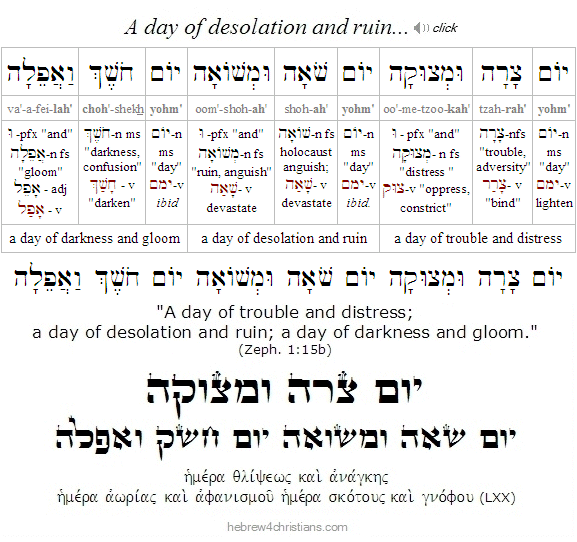
Hebrew Lesson
Zephaniah 1:15b reading (click):
 |
As atrocious and appalling as the European Holocaust was for the Jewish people, it would be remiss not to mention the current persecution of Israel and the Jewish people by Hamas ("Islamic Resistance Movement"), Hezbollah, Iran, the Palestinian Authority (the old PLO), and various antisemitic groups around the world. Israel is truly surrounded by enemies!
And we should also remember the earlier genocide of Christians -- mostly Armenians but also Assyrians and Greeks -- that took place under the Islamic Ottoman Empire, throughout World War I, where the Turks systematically massacred approximately 1.5 million Armenians, 300,000 Assyrians, and 750,000 Greeks. Indeed April 24th is recognized (by some) as "Armenian Genocide Remembrance Day." In Yerevan, the capital of Armenia, hundreds of thousands of people walk to the Tsitsernakaberd Genocide Memorial to lay flowers at the eternal flame.
Finally, Christians are also under worldwide persecution and oppression as well. According to the Cato Report, today -- at this time in history -- Christians are the single most persecuted religious group in the world (and that does not include the persecution of Christians in many "democratic" countries such as the United States, Canada, the United Kingdom, and other countries of western and eastern Europe).
For more information see the links listed below.
This Shabbat's Torah:
Acharei Mot - אחרי מות
05.01.24 (Nisan 23, 5784) Shalom chaverim. Our Torah portion for the Sabbath following Passover Week is called Acharei Mot (אחרי מות). This portion transitions from the preceding readings regarding ritual purity (i.e., tahora: טָהֳרָה) to revisit the tragic incident of Nadab and Abihu, the two sons of Aaron who were killed when they offered "strange fire" (אֵשׁ זָרָה) upon the Altar of Incense during the dedication of the Tabernacle (see Lev. 10:1-2). Because these priests came close to the Holy of Holies and offered incense in a forbidden manner, the LORD commanded Moses to instruct Aaron that he should enter the innermost chamber only in a carefully prescribed manner once a year - on the tenth day of the seventh month - during a sacred time that would be called Yom Kippur, or the "Day of Atonement." Incidentally, this is the anniversary of the same date that Moses descended from Sinai with the restored tablets of the covenant after Israel was forgiven of the sin of the golden calf...
On this most solemn day, Aaron was commanded to immerse himself in a mikveh (pool of fresh water) and to dress in all-white linen. He then was instructed to slaughter a bull as a personal sin offering. Aaron then brought some ketoret (incense) to burn within the Holy of Holies before returning to sprinkle the blood of the sin offering seven times before the Ark of the Covenant (i.e., the kapporet or "Mercy Seat"). Aaron repeated this procedure using the blood of one of two goats that was selected (by lot) to be slaughtered as a sin offering on behalf of the people. After this, Aaron took more of the sacrificial blood and purified the Altar of Incense and the other furnishings of the Tabernacle. Later, the fat of these sacrifices was burned on the Copper Altar in the courtyard, though the hide and the flesh were to be entirely burned outside the camp.
After purifying the Tabernacle, Aaron went to the gate of the courtyard and laid both hands upon the head of the other goat (designated "for Azazel," a name for the accusing angel) while confessing all of the sins and transgressions of the people. This "scapegoat" was not slaughtered, however, but was driven away into the wilderness, carrying "all their iniquities unto a land not inhabited." Finally, Aaron returned to the Tent, washed and changed his clothes, and offered two more burnt offerings – one for himself and one for the people – to complete the purification process.
This elaborate ritual was ordained to be a decree for Israel, and the day of Yom Kippur was to be observed every year as a time of "affliction and mourning" for all the people. The portion ends with further instructions about making sacrifices, including the prohibition against offering sacrifices apart from the rites of the Tabernacle. The consumption of blood is explicitly forbidden, since blood was reserved for sacrificial purposes upon the altar.
Note: I realize it's a bit odd to be thinking of Yom Kippur and atonement issues immediately after Passover, but of course there is a connection, since the Passover is also about blood atonement for those who are trusting in the Lord God of Israel... Amen.
April 2024 Site Updates
Honesty and Deliverance...
04.30.24 (Nisan 22, 5784) "Those who are well have no need of a physician, but those who are sick. I have not come to call the righteous but sinners to repentance" (Luke 5:31-32). Every one of us has a "dark side" or a "shadow self" that has destructive and selfish urges. We try to conceal this truth from others (and even ourselves) but such denial doesn't change the reality within our hearts (Matt. 5:19; Jer. 17:9; Eccl. 9:3). Indeed, when we pretend to be something we are not we are more likely to be overwhelmed by dark forces hidden within us. Paradoxically we most vulnerable when we think we are well, that is, when we deny our sickness our heart and minimize our need for deliverance.
The way of healing is to "own" or confess the truth of our inner condition and to acknowledge the dark passions that sometimes overmaster our best intentions. We must give ourselves permission to allow the hurt, angry, and fearful voices to be heard and sanctioned within us - and then to bring these dark and hidden aspects of our selves before God for healing. The failure to do so will split the soul and cause the hidden aspects of the self to seek "revenge" upon the "parent self" that censors their message. The struggle within our hearts is real and we should attend to it seriously. Denying evil by pretending that we are okay, or by blaming others, blinds us to the truth of our ongoing need for deliverance. May God help each of us to be honest with ourselves and to confess our great need before our Heavenly Father.
Why do we have such difficulty being genuinely honest with ourselves? Despite the fact that we may profess that we are "sinners saved by grace," we often make excuses for our failures, rationalizing that we are not "that bad," and therefore we postpone genuine teshuvah (repentance) and trifle with our spiritual lives. We do this because we feel an almost irresistible desire or "need" to justify ourselves, to "save face" by pretending that we are not "incurably sick," or by attempting to find something about us that makes feel valuable and worthy. As H.L. Mencken once wittingly noted, "the 'truth' that survives is simply the lie that is pleasantest to believe."
The LORD wants us to be truthful in the "inward being" (Psalm 51:6), though that truth will cost us something, namely whatever worldly gains we might find through self-deception... Opening our hearts to divine examination eventually means colliding with the world of men and their conspiracies, since the godly man no longer abides their presence (Psalm 1:1-2). The Apostle Paul said there was an exclusive disjunction between seeking the approval of men and of the approval of God: "Do I seek to please men? for if I yet pleased men, I should not be the servant of the Messiah (Gal. 1:10). Likewise we are told not to deceive ourselves (lit., "reason around" the truth, from παραλογίζομαι, from παρά, "around, beside" and λογίζομαι, "to reason") by merely hearing the truth of Scripture and not living it (James 1:22). God is not interested in "lip service" any more than he desires heartless sacrifice (Isa. 29:13; Hos. 6:6; Matt. 15:9). "Let your love be genuine (ἀνυπόκριτος, without a "mask" put on), abhor what is evil; cling to what is good (Rom. 12:9). God abhors those who pretend to know Him but who are really spiritual impostors (Matt. 7:21-23; 25:11-12; Luke 6:46).
Tragically (and paradoxically) many people can talk themselves into believing something without really believing it, and that is perhaps the most dangerous thing of all (Matt. 7:22-23). On the other hand, some people can talk themselves into believing (or accepting) something that they know is untrue (or morally wrong), and that self-deception leads to inner fragmentation, chaos, and dissolution of character. A "double-minded man is unstable in all his ways" (James 1:8). As I have said before, the word translated "double-minded" is dipsuchos (δίψυχος), a word formed from δίς, "twice" and ψυχή, "soul." The word describes the spiritual condition of having "two souls" that both want different things at once -- a state of inner contradiction and ambivalence.
Hebrew Lesson
Psalm 51:6 reading (click):
Thank the LORD our God that there is real healing for our inner dividedness, ambivalence, and double-mindedness, but that healing demands rigorous honesty. As Kierkegaard rightly observed: "No person is saved except by grace; but there is one sin that makes grace impossible, and that is dishonesty; and there is one thing God must forever and unconditionally require, and that is honesty." Therefore we are instructed to confess our faults one to another, and pray for one another, that we may be healed (James 5:16). May the LORD our God help each of us to be wholehearted in our devotion to Him.
Finally, friend, a closing thought. Let us not despair by thinking that we will never change. We must simply "enter into" the presence of God in Yeshua. That is what "self-denial" really means: Turn to God and know his heart. When we do, we receive a heart to know him in return... Let us "believe to see" the goodness of the LORD in your midst. Amen.
Engineered Duplicities...

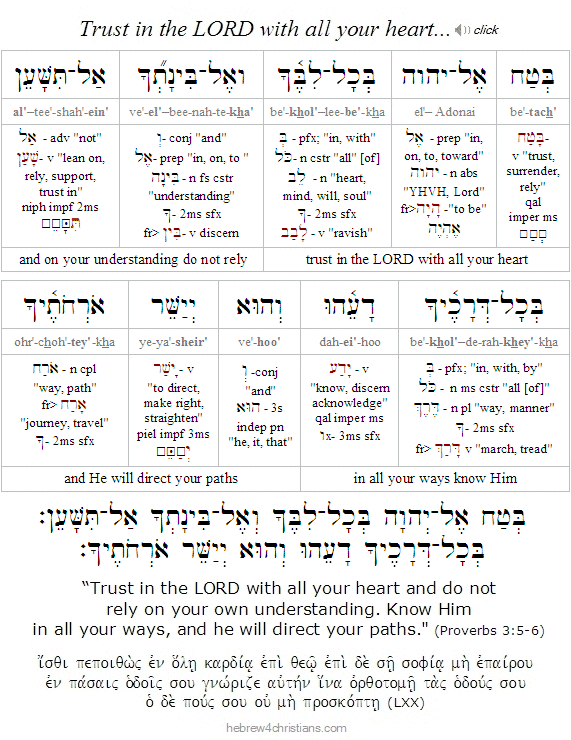
04.30.24 (Nisan 22, 5784) "Seek first the kingdom of God and his righteousness" (Matt. 6:33). This is the right approach to life: Open your heart to heaven and seek God's presence before you do anything else (Prov. 3:5-6). This is particularly important at this time, friends. Do you want your mind to be confused, excited, depressed or angry? Do you want others to decide what is important and "real" for you? Then turn your attention to this world and its rumors and tendentious news. The mass media thrives on trouble - whether real or imagined - and serves to manipulate people by making them afraid. The newsmakers of this world understand that fearful people make their most loyal consumers...
Consider the godless assumptions that underlie the "obvious" news of the this world, however. Purported and alleged experts are lined up; the dialog is scripted; sound bites are repeated on a relentless schedule, images and videos are crafted, yet you will hear nary a word to call upon God for healing and deliverance. God is simply "not there"; he is not part of the narrative of the present crisis or trouble. Yet nothing could be further than the truth!
The LORD God must be the first principle of our thinking or else we will become deceived, regardless of the formal validity of our reasoning. There is a difference between soundness and validity, and if we do not begin with truth, our thinking will be impaired, even if we accidentally make inferences that turn out to be empirically true. Therefore we must be vigilant and vigorously challenge ideas that attempt to seduce us away from the truth and divide our affections. We must learn to identify the false assumptions that deny the knowledge of God and take "every thought captive" to Messiah. We must be on guard for subtle and calculated appeals to compromise our faith (2 Cor. 10:5).
If we find ourselves in a state of recurring temptation, we must examine the underlying assumptions that are at work in our thinking. If we dig deeper, we are likely to discover that we are doubting that God cares for us, or we are fearful that God will not meet our needs. We must therefore counter such faithless assumptions with God's revealed truth, and that means regularly studying and reviewing the Scriptures to remind ourselves about what is real rather than what is illusory. We then can learn to look at life as it really is - a spiritual world, a "valley of decision," a corridor that irresistibly leads to the world to come. Each soul is on a journey to meet with God for judgment... God does not leave us comfortless. He has promised to never leave nor forsake those trusting in Him. The Lord is your Good Shepherd who walks with you during your sojourn through this temporal world (Psalm 23).
 |
A voice says, "Cry!" And I said, "What shall I cry?" All flesh is grass, and all its beauty is like the flower of the field" (Isa. 40:6). "All flesh is grass" (כָּל־הַבָּשָׂר חָצִיר) - we are here today but gone tomorrow. We have only so many chances to turn to the LORD and make up our minds that we will serve Him. Our Torah portion this week intimates, "man is a tree of the field," i.e., הָאָדָם עֵץ הַשָּׂדֶה, Deut. 20:19). The righteous man is described as a "tree planted by the rivers of water that brings forth fruit in his season" (Psalm 1:3). If you stand in front of a tree to watch it grow, however, you will see nothing. But if you care for the tree, nurture it over time, and provide for its needs, eventually you will see its fruit appear. God gives us each a season to repent, but if that proves fruitless in our spiritual lives, eventually we will be "cut down" (Luke 13:6-9).
The Scriptures warn that a "double-minded man is unstable in all his ways" (James 1:8). The word translated "double-minded" is dipsuchos (δίψυχος), a word formed from δίς, "twice" and ψυχή, "soul." The word describes the spiritual condition of having "two souls" that both want different things at once. It is therefore a state of inner contradiction, of having two separate minds holding contradictory thoughts. "How long will you go limping between two opinions?" Notice that the word translated "limping" is posechim (פּסְחִים), from the same root as Passover (i.e., pasach: פָּסַח): How long will you pass from one thing to another? How long will you play "hot potato" with your commitments?
Being doubleminded makes us "unstable in all our ways." Such a cross-eyed approach leads to disorientation and confusion. The Greek word used to describe being "unstable" (ἀκατάστατος) is the same word used to translate being "storm-tossed and not comforted" in last week's Haftarah portion (LXX: Isa. 54:11). The image of a ship being tossed in the sea pictures a state of distress and peril. Interestingly, the description of being "not comforted" is lo nuchamah (לא נֻחָמָה), which comes from the very word translated as "repent" or "regret" (nacham). When we are double-minded, we are "storm tossed" and unable to experience the comfort that comes from genuine repentance. We are like "a wave of the sea that is driven and tossed by the wind" (James 1:6).
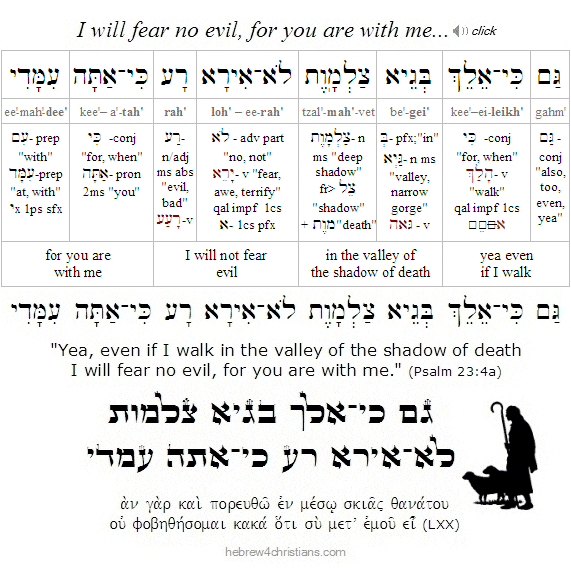
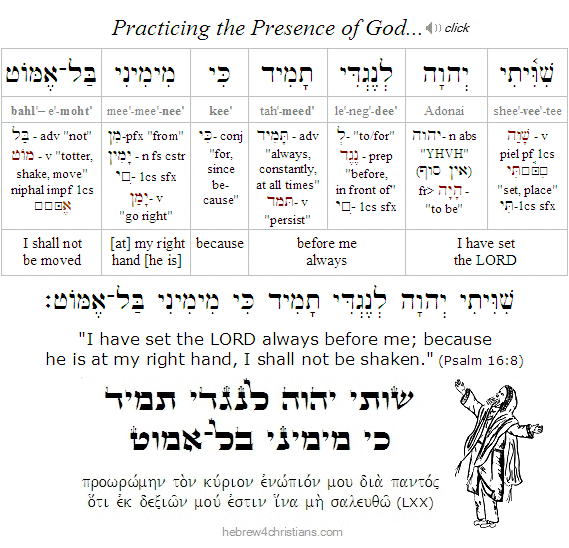
On the other hand, singleness of vision concentrates the will and produces wholeheartedness, conviction, stability, inner peace (shalom) and genuine character. As Kierkegaard said, "purity of the heart is to will one thing." "I have set the LORD always before me; because He is at my right hand, I shall not be moved" (Psalm 16:8).
 |
The Apostle Paul taught that we are not to be "conformed" (συσχηματίζω) to the pattern of this fallen world but rather be "transformed" (μεταμορφόω) by renewing our minds, so that by testing we may discern what is the will of God (Rom. 12:2). Note that the word translated "conformed" in this verse means to accept the world's scheme (σχῆμα) of understanding things, that is, to passively go along with the world's matrix of lies, wishful thinking, propaganda, etc. The word translated as "transformed," on the other hand, means to be metamorphosed or radically changed into a different kind of nature with a different source of being itself. Such transformation comes from having our minds "renewed" -- the word used in this verse (i.e., ἀνακαινόω) means being "made new on the inside," and therefore renewal is the gift of teshuvah (turning to God).
Understand, then, that the foundation of all transformation of inner character and outward conduct comes from the miracle of having a renewed mind. I use the word "miracle" quite intentionally, since by itself "right thinking" is powerless to help the sinner truly change his ways, and therefore something more - radically new life and healing power from heaven, is what is necessary. Indeed "the beginning of transformation of character is the renovation in the very centre of the being, and the communication of a new impulse and power to the inward self" (Alexander Maclaren). Amen, may the LORD God work out our salvation and give us the grace to walk our days in the light of his countenance.
|
The Bread of God...
04.30.24 (Nisan 22, 5784) Our Master said: "For the bread of God (לֶחֶם אֱלהִים) is the One who comes down from heaven to give life to the world" (John 6:33). This is the Bread of Presence, literally, the "Bread of [his] Face" (לֶחֶם פָּנִים) that was prefigured in the manna that fell in the desert and in the rituals of the Tabernacle (Exod. 25:30). It was in the Holy Place, in the light of the Menorah, that the "bread of his face" was to be eaten...
At his last Passover Seder with his students, Yeshua said "this is my body" (τοῦτό ἐστιν τὸ σῶμά μου), and made analogy between physical and the spiritual. We metaphorically "eat his flesh and drink his blood," by seeing Him as our altar, our bridge before the Father.
Just as the heart is the means by which blood is distributed to the body, so with the love of God expressed in our Lord Yeshua. He is the Divine Center of all of life: the true Tabernacle, the Word made flesh. He is the true Bread of Life (לחֶם הַחַיִּים), and we receive spiritual strength when we abide in his Torah (תּוֹרָה) and his life (John 15:5).
Hebrew Lesson:
Psalm 18:28 reading (click):
Always the First Step...
[ "He [God] lets me weep before him in silent solitude, pour forth again and again my pain, with the blessed consolation of knowing that he is concerned for me — and in the meanwhile he gives that life of pain a significance which almost overwhelms me." - Kierkegaard ]
04.29.24 (Nisan 21, 5784) There is a core element of our spiritual life that is all-determinative, that affects everything else, and that is the decision of whether we will choose to "show up," whether we will engage it's hope; and whether we will open our eyes and yield ourselves to the light... And this is an ongoing decision.
Therefore we read: "If you walk in my statutes (אִם־בְּחֻקּתַי תֵּלֵכוּ) and observe my commandments and do them..." (Lev. 26:3). The sages note that unlike the holy angels, we must "walk out" the faith of our days, and therefore we are always moving either forward or backward. In this world, God's sun shines on the just and unjust alike (Matt. 5:45). Every human being lives by faith of some kind, and it is therefore impossible to opt out of the decision to "choose this day whom we shall serve" (Josh. 24:15). Indifference or apathy is as much a spiritual decision as is outright rebellion, and if we do nothing today to draw us near to the Lord, we will eventually regress and slip backward.
This is all very sobering. "No one knows the day or hour," and that's why it is so vital to turn to God and be healed while there is still time. So turn today and bacharta ba'chayim (בָּחַרְתָּ בַּחַיִּים) - "choose life!" "For this commandment (of turning to God) is not hidden from you, and it is not far away... No, the matter is "very near you" (כִּי־קָרוֹב אֵלֶיךָ הַדָּבָר מְאד) - in your mouth and your heart - to do it" (Deut. 30:11-14; Rom. 10:8-13).
Hebrew Lesson
Deut. 30:19b reading (click):
All Things Made New...
[ "In relationship to God one can not involve himself to a certain degree. God is precisely the contradiction to all that is 'to a certain degree'." - Kierkegaard ]
04.29.24 (Nisan 21, 5784) Some people attempt to provide empirical "proof" of the resurrection of Yeshua, though strictly speaking this will always be insufficient. After all, the very guards at the tomb who witnessed the sight of the angel rolling away the stone later conspired with the religious establishment to suppress the message of the resurrection (Matt. 28:2-4, 11-15). Even Yeshua said that personally witnessing someone coming back from the dead would be insufficient for teshuvah (see Luke 16:30-31). No, we do not see the resurrection of Yeshua through the eyes of the flesh, but rather through the eyes of faith. We believe in order to see; not the other way around...
Empirical evidence at best provides a sense of logical "probability," but faith is a life-and-death matter of the heart, soul, and mind... Only the inward testimony of the Holy Spirit (i.e., argumentum Spiritus Sancti), can "drag" the sinner to the confess the reality of the risen Yeshua, and once His Living Presence is encountered, categorically everything changes and nothing will remain the same forever. He makes all things new! (2 Cor. 5:17).
"Great Companion, You have loved us first.
May we never forget that You are love,
So that this sure conviction might triumph in our hearts
Over the whirling of the world,
Over the inquietude of the soul,
Over the anxiety for the future,
Over the fright of the past,
Over the distress of the moment.
May this conviction discipline our soul
So that our hearts might remain faithful and sincere
In the love which we bear to all those we love as ourselves."
- Soren Kierkegaard
Hebrew Lesson
Isa. 43:19a reading (click):
Lament and Forgiveness...
[ "Faith sees best in the dark," which is to say that it closes its eyes to this world and its thinking to apprehend the truth of eternity. As it says: "We walk by faith, not by sight" (2 Cor. 5:7). ]
04.29.24 (Nisan 21, 5784) We suffer, and life hurts. Often we are afraid. And if suffering is part of God's overarching plan for creation, if it is part of the "divine idea," then how do we learn to emotionally accept it without becoming bitter? We earnestly desire the love and blessing of God, but we are shaken when terrible things happen. We are told not to be afraid, that we are not alone, but we often do feel afraid and alone in our suffering...
First we must find faith that God's decision to create us is for our blessedness rather than for evil, or minimally that it is better for us to have been created than never to have been born (Jer. 29:11). In that sense trusting God represents an affirmation of our life and its value. Whether this is the "best of all possible worlds" is an abstract question for speculative theology, but where we live, in the raw and messy struggles of life, in the midst of our joys and elations, but also in our darkness and pain, we need faith to believe that our existence has some meaning and purpose, that our lives carry some significance, and that not everything is hevel havalim, "vanity of vanities." Asking whether it would have been better had you never been born is not a trivial question, then, and indeed the ancient Hebrew prophets Job, Solomon, Jeremiah, and Jonah each wrestled with it in the course of their lives (Eccl. 4:1-3; Job 3:1-3; 10:19; Jer. 20:14; Jonah 4:3).
The sages asked whether we can ever be justifiably angry at God, and they answer that surely we can, because otherwise we could never love Him "bekhol levavkha," with all our heart (Deut. 6:5). Indeed, how can we claim to love God if we withhold the truth, lie to ourselves, and attempt to hide who we really are from Him? If you are angry at God, he already knows, so why the pretense? Being angry with God is part of being a real person in a real relationship with Him, and allowing yourself to express the truth of your heart to him is a sign of trust... Forgiving God means letting go of your grudges over matters infinitely beyond your control. We need God to even know that we need God...
Rightly (and sympathetically) understood, when we "forgive God" we are confessing our own ignorance about what is happening to us while allowing our hearts to give voice to its pain. At bottom, suffering is a type of grieving, a confession of the darkness of loss. On the other hand, we can find healing through the grieving process. Over time we learn that by "forgiving God" we are able to forgive ourselves, and we are then released from the pain that withholds us from love and blessing in our lives.
Frederick Buechner reminds the heart of faith: "The worst isn't the last thing about the world. It's the next to the last thing. The last thing is the best. It's the power from on high that comes down into the world, that wells up from the rock-bottom worst of the world like a hidden spring. Can you believe it? The last, best thing is the laughing deep in the hearts of the saints, sometimes our hearts even. Yes. You are terribly loved and forgiven. Yes. You are healed. All is well." For more on this topic see the article: "Angry at God..."
Hebrew Lesson:
Psalm 62:8 Hebrew reading:
Returning to the LORD...
04.29.24 (Nisan 21, 5784) The only way we can draw near to God is if we believe that He is near to us, personally, intimately... "Behold I stand at the door and knock" (Rev. 3:20). Faith "hears the knock" as God's desire to draw near; faith hears his voice and opens the door to his presence; faith believes to partake in his communion.... "Draw near to God and he draws near to you" (James 4:8). The Hebrew word karov (קרוב) is translated using engidzo (ἐγγίζω) in New Testament Greek, a word that means to come close and touch... When we draw close to God, we reach out and find God holding us. Our "I" melts away as we cling to God as our dear life; we become one with his heart; we lose ourselves to find ourselves.
Hebrew Lesson
Zechariah 1:3b reading (click):
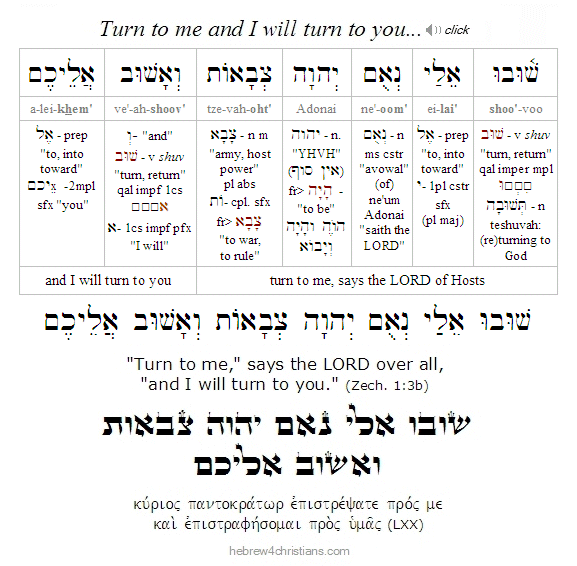 |
"Turn to me, and I will turn to you..." (Zech. 1:3). Someone might wonder why we must take the initiative, yet that is because God has never turned away from us; he has always been the one who loves us most of all and awaits our return to his love.... "Turn to me and you will discover that I have never left you nor forsaken you."
Yeshua illustrated the idea of teshuvah (i.e., תְּשׁוּבָה, "returning to God") by telling the famous story of the "prodigal son" (Luke 15:11-32). After selfishly squandering his father's inheritance, a wayward son decided to return home, full of shame and self-reproach. "But while he was still a long way off, his father saw him and was filled with compassion for him; he ran to his son, threw his arms around him and kissed him." The father then ordered a celebratory meal in honor of his lost son's homecoming. When his older brother objected, the father said, "We had to celebrate and be glad, because this brother of yours was dead and is alive again; he was lost and is found."
This parable reveals that teshuvah ultimately means returning (shuv) to the outstretched arms of your Heavenly Father... God sees you while you are still "a long way off" (Rom. 5:8). He runs to you with affection when you first begin to turn your heart toward Him. Indeed, God's compassion is so great that He willingly embraces the shame of your sins and then adorns you with "a fine robe, a ring, and sandals." Your Heavenly Father even slaughters the "fattened calf" (Yeshua) so that a meal that celebrates your life may be served....
|
God of my Salvation...
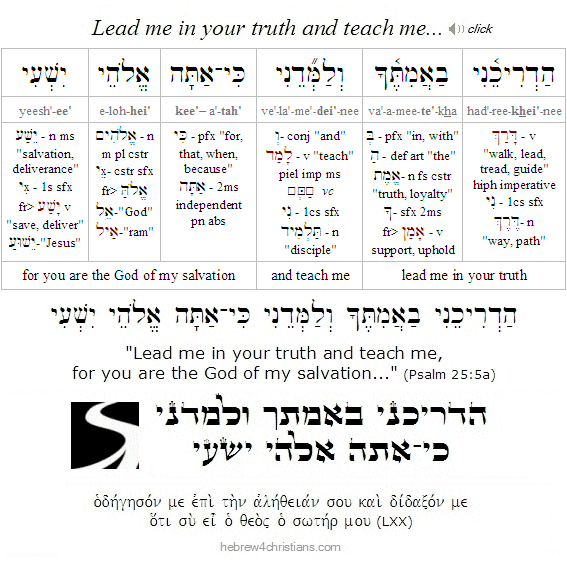
04.28.24 (Nisan 20, 5784) Our Savior says: "You shall know the truth and the truth shall make you free" (John 8:32). Spiritually understood the soul in its natural state is sick, in a state of error and ongoing self-deception. The truth sets us free from our self-imprisonment, from the bondage we have to our illusions, so that we may be healed, transformed and made new. However, knowing the truth is more volitional than it is cognitive – it is revealed in our decisions and actions, not merely in holding to a "true opinion" or assenting to a "true creed." Knowing the truth permeates the whole person – bekhol levavkha – and accepts all the consequences of its decision and passion. There is danger here, friends. Even learning Scripture and studying theology may become untruth if it is devoid of the fear of the Lord. "How many have asked, 'What is truth?' and at bottom hoped that it would be a long time before the truth would come so close to him that in the same instant it would determine what his duty was to do at the moment?" (Kierkegaard: Works of Love).
The deeper question is whether you actually want genuine freedom, since many are content to "exist" in the cold comfort of their resentments, in the desert of the self-serving ego, and in the wasteland of anger and fear... Self-deception is enticing because it provides an excuse to be mediocre; it justifies a victim mentality and abnegates personal responsibility. It is far easier to blame others for your life than to own the truth about yourself, to walk in the truth, and to seek the blessing of truth. Spiritual freedom means being awakened and empowered to choose the Eternal by denying the present moment's demand to be made absolute. It offers no peace to the natural desire for the soul to return to its sleepy state, but calls and rouses the heart to wake up and confront the demands of eternity...
In heaven there is only the language of truth, and truth is the language of heaven. "If we ask according to his will, he hears us..." (1 John 5:14). This means that words find their traction only in honesty of the heart, in the midst of our deepest need. Only in "fear and trembling" can we talk with God, though when we pray fervently, our words may trail off until we become silent.... But it is there, in the silence of the soul, that we may learn to listen to the Spirit and hear God's voice. When we seek first the kingdom of God, we will lay aside everything else, quiet our hearts, and focus our will. Seeking God in this way is an end in itself, for whatever else we may seek must be subordinated to this greater seeking. "You will seek me and find me, when you seek me with all your heart" (Jer. 29:13).
Hebrew Lesson
Psalm 25:5a Hebrew reading:
 |
Grievous Personal Update...
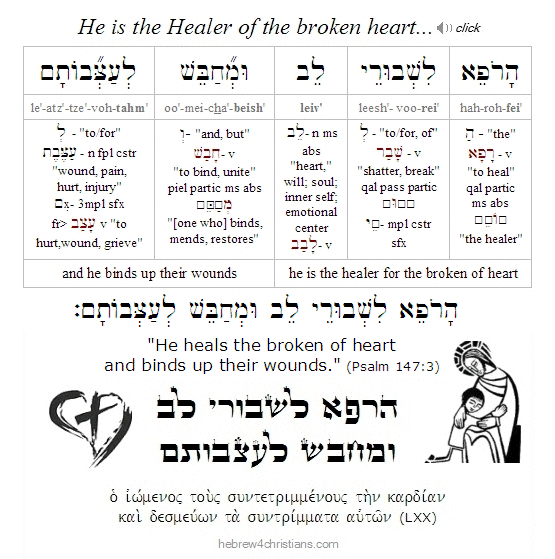
04.26.24 (Nisan 18, 5784) It is terribly hard for me to share this, but it is my heart's desire to be honest with all of you, and therefore I must disclose that Olga left me awhile ago, and despite attempting reconciliation, we are now divorced. The last two years, in particular, have been terribly difficult for the family, and we have been exhausted and depressed as a result. Please pray for our healing. Only our Lord can save us from death and the depravity of our selves... Thank you for your kind understanding and good will, chaverim ahuvim.
Please note that because of the intensely personal nature of this, I humbly ask that you would not ask any questions. Suffice it to say that there was no infidelity or physical abuse that brought about the break, but there were other factors that I do not want to publicly share... In all things, and especially in such heartbreaking sorrows, we must turn to our Lord...
"O God, when at times our strength is taken from us, when sorrow overcomes us like a kind of fog in which our vision is plunged as into a dark night; when our hearts do tremble with our loss: then teach us and strengthen the conviction in our hearts that in death, no less than in life, we belong to You." - Soren Kierkegaard
 |
Love's Fear and Trembling...
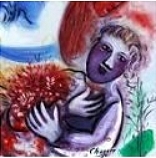
[ During Passover week it is customary to read the ancient "love song" of King Solomon called Shir Ha-Shirim (שִׁיר הַשִּׁירִים), or the "Song of Songs." ]
04.26.24 (Nisan 18, 5784) The gospel reveals God's passion for us, the call of his heart, his desire to elevate us to the role of the beloved, and we respond by accepting Him as the great Lover of our souls, the "ultimate concern" of our life. Sin threatens to seduce us away from God's love, to interfere with our relationship, which evokes God's "jealousy" to protect love from loss.
It is written that "perfect love casts out fear" (1 John 4:18), but perfect love (τελεία ἀγάπη) must be "perfect," that is, reciprocal, complete, consummated, and alive with passion. In Hebrew, perfect love is "shalem" - that is, whole, healed, and unified (אַהֲבָה שְׁלֵמָה). Perfect love is both given and received... It is not "perfect love" to objectively simply accept that God loves you in Jesus. No, you must receive this as an inward passion, you must live within it, must embrace it, take possession of it, and let it fill your heart to abundance. This love, this "perfect love," then will cast away your fear of being unwanted, rejected, and abandoned. But to know this love, you have to open your heart and accept it as your own; you have to accept yourself as the beloved of God:
אֲנִי לְדוֹדִי וְעָלַי תְּשׁוּקָתוֹ
a·nee · le·do·dee · ve·a·lai · te·shoo·ka·to

"I am my beloved's, and his desire is upon me."
(Song 7:10)

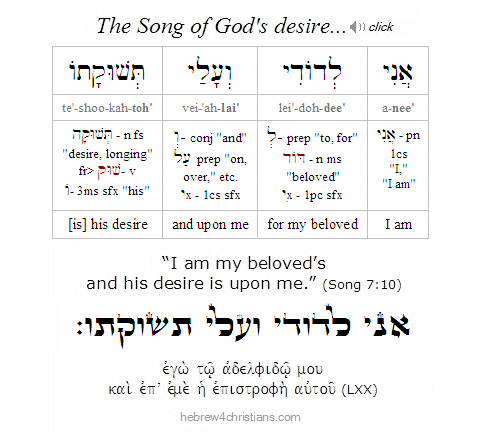
I realize the analogy of God as the great "Lover of our Souls" is ideal for most of us, and yet it is vital that we understand ourselves as the "beloved" of the Lord...
Countdown to Shavuot...
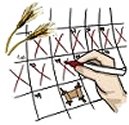
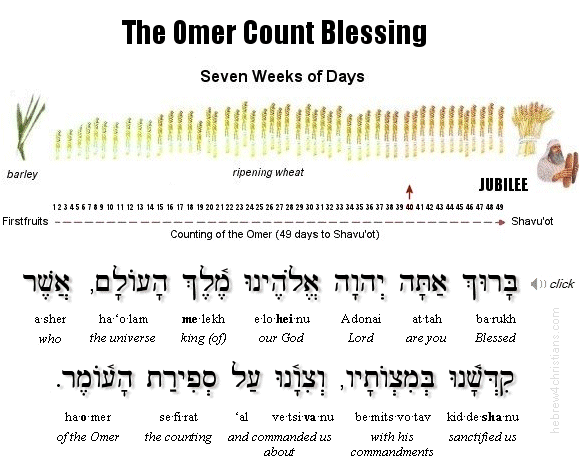
04.25.24 (Nisan 17, 5784) In the Torah we are instructed to count forty nine days – seven weeks of days – from the day following Passover until the holiday of Shavuot (i.e., Weeks or "Pentecost"). This period of time is called Sefirat HaOmer (ספירות העומר), or the "counting the [barley] sheaves" (see Lev. 23:15-16; Deut. 16:9). In abstract terms, it's as if there is a dotted line pointing directly from Passover to Shavuot - a "Jubilee" of days - representing the climax of Passover itself.
The early sages identified this climax as the revelation of the Torah at Sinai (which did happen exactly 49 days after the Passover in Egypt), but the New Testament identifies it as the outpouring of the Holy Spirit (רוח הקודש) that ratified the reality of the New Covenant of God at Zion. The redemption process that began at Passover was therefore completed at Shavuot, and that "completion" was the revelation of God's love and deliverance for the entire world.
And though the Jewish sages did not fathom the use of the otherwise forbidden leaven in the offering (see Eph. 2:14). The countdown to Shavuot therefore goes beyond the giving of Torah at Sinai and points to the greater revelation of Zion. Shavuot is the fulfillment of the promise of the Holy Spirit's advent to those who are trusting in Messiah (Acts 2:1-4). "Counting the Omer," then, is about receiving the Holy Spirit to experience and know the resurrected LORD of Glory. You can "count" on that, chaverim!
In this connection it is important to understand that the climax of the 49 days was not the giving of the law at Sinai (i.e., matan Torah), but rather the revelation of the altar (i.e., the"Tabernacle") and its subsequent fulfillment in the sacrificial death of Yeshua as our Lamb of God. Moreover, it was during this time that Yeshua made His post-resurrection appearances to His disciples and indeed ascended to heaven during this period...
Of particular importance during this count down time are the following: 1) the beginning of the count of the omer since it signified the waving of the firstfruits and therefore the resurrection of Yeshua (1 Cor. 15:20); 2) the 40th day of the Omer (Mem B'Omer), when Yeshua ascended back to heaven, and 3) the climactic 49th day of the Omer (Shavuot) when the Holy Spirit was given to the disciples in fulfillment of the promise that we would not be left comfortless (Acts 2:1-4). It should be clear, then, that Shavuot marks the time of "Jubilee" of the Spirit, when we are clothed with power to serve the LORD without fear...
 |
It can feel a bit overwhelming when you consider how the spring holidays of Passover, Unleavened Bread, Firstfruits, and the Omer Count overlap on the Torah's calendar. And it is always a bit difficult explaining the interrelationships between the holidays as well:
Hebrew Lesson
Psalm 47:5 Hebrew reading:
Why do some start the Omer Count earlier than others?
It depends on how you read מִמָּחֳרַת הַשַּׁבָּת, "the day after the Sabbath" (Lev. 23:15). If you interpret "the Sabbath" to refer to the Sabbath of Passover you will have one start day, but it you regard the Sabbath to refer to the weekly Sabbath, you will have another... This is sometimes called the "Omer Controversy." For more on this subject, see the article: "Sefirat HaOmer: Counting the Sheaves to Shavuot."
This changes everything!
The Resurrection of Yeshua...
04.25.24 (Nisan 17, 5784) THE MOST IMPORTANT FACT OF ALL HISTORY - and that which radically transforms everything else - is the resurrection of Yeshua from the dead (תחייתו של משיח). Spiritual life means being awake to the risen reality and saving Presence of Yeshua, the One who Overcame and vanquished the power of death. Without Him we are hopeless; with Him we are more than conquerors (1 Cor. 15:14; Rom. 8:37). The resurrection means Yeshua is forever alive, and that today he hears your heart's cry. He is surely able to help you, and nothing can overthrow his invincible will. Our Lord suffered and died for your inner peace and healing, but now death has no hold over him, and he "ever lives to make intercession for you" (Rom. 6:9, Heb. 7:25). He is your compassionate Advocate (παράκλητος, lit. "one called alongside") who gives you heavenly comfort (1 John 2:1). Even more: The very power that raised Yeshua from the dead now dwells in you (Rom. 8:11). The miracle of new life is "Messiah in you - the hope of glory" (Col. 1:27). The Lord will never leave you nor forsake you (Heb 13:5): He "sticks closer than a brother" (Prov. 18:24); He sustains your way, and he will perfect the work of salvation on your behalf (Jude 1:24). In short, there simply is no "gospel" message apart from the resurrection! The resurrection is the victory of God's plan of salvation - His everlasting vindication over the powers of darkness - for your life.
Everything turns on whether we awaken to the risen Reality
and Presence of Yeshua in our lives...
The Talmud says "All the world was created for the Messiah" (Sanhedrin 98b). The New Testament had earlier said the same thing: "All things were created by Him (i.e., Yeshua), and for Him" and in Him all things consist (συνεστηκεν, lit. "stick together") (Col. 1:16-17). Indeed, all of creation is being constantly upheld by the word of the Messiah's power (Heb. 1:3). Creation begins and ends with the redemptive love of God as manifested in the Person of Yeshua our LORD... The Messiah is the Center of Creation - its beginning and end. As it is written: אָנכִי אָלֶף וְתָו רִאשׁוֹן וְאַחֲרוֹן ראשׁ וָסוֹף / "I am the 'Aleph' and the 'Tav,' the First and the Last, the Beginning and the End" (Rev. 22:13). "For from him and through him and to him are all things. To him be glory forever. Amen" (Rom. 11:36). Yeshua our Messiah is called מֶלֶךְ מַלְכֵי הַמְּלָכִים / Melech Malchei Hamelachim: The "King of kings of kings." He is LORD of all possible worlds -- from the highest celestial glory to the dust of death upon a cross. Yehi shem Adonai mevorakh (יְהִי שֵׁם יהוה מְברָךְ): "Let the Name of the LORD be blessed" forever and ever (Psalm 113:2). So while we can agree with the Talmud's general statement that the world was created "for the Messiah," we would insist that the name of the Messiah is none other than Yeshua, God's Son, and indeed, there is no other (Acts 4:12).
The heart of faith sees Elohei Yishi (אֱלהֵי יִשְׁעִי), the "God of my salvation," namely, the One who was and is and is to come (הַהוֶה וְהָיָה וְיָבוֹא) – the LORD our God Yeshua (Rev. 1:4;8; Isa. 41:4). The early Christian theologian Augustine of Hippo (354-430 AD) rendered Elohei Yishi as "God my Jesus," since "Jesus" (i.e., Yeshua) rightly means YHVH saves. Yeshua is the One who breathed life into the first Adam just as He is the One who breathes eternal life into those who are descended from Him, the great "second Adam."
Amen. He is alive, and we know this because of the testimony of Scripture, and because we also experience His glorious presence in our hearts. Shalom chaverim!
Hebrew Lesson:
Psalm 18:46 Hebrew reading:
Note: For more on this meditation, see the Techiyat Ha-Mashiach article...
When was the Resurrection?
[ The following is related to Passover and the timing of the resurrection of Yeshua... ]
04.24.24 (Nisan 16, 5784) Every year I get asked when the resurrection of Yeshua likely occurred in relation to the date of the Passover. The reason for the confusion, I think, is that the Jewish calendar is different than the secular calendar, and the date for Passover is not fixed in relation to it. To get an understanding of the issues, we must first keep in mind that the biblical "Day" (capitalized) begins at nightfall, which may seem a bit counter-intuitive. This is based on the Torah's definition of a day as the time between "the evening and the morning" (עֶרֶב וָבֹקְר) repeatedly used in the account of the creation. Hence we speak of Passover as occurring just after nightfall of Nisan 15, and continuing through that night and throughout the following day until the next nightfall (evening), which then becomes Nisan 16. Remember that together the "night-day" span of time is considered a biblical "Day."
Now with this distinction carefully in mind, we can try to make sense of the time of the early Passover of Yeshua and his resurrection from the dead three nights and days later...
First, we know that Yeshua had an early seder with his disciples, because as the "Lamb of God," he would have to be sacrificed on Nisan 14, during the very time the Passover lambs were slaughtered at the Temple (recall that the original Passover lamb was slaughtered and its blood daubed on the doorways before nightfall in Egypt (Exod. 12:6-7). Yeshua's early seder with his disciples likely occured exactly a day earlier, that is, on the afternoon of Nisan 13 (a Wednesday), which would move into the first hours of Nisan 14 after the seder was complete. After the seder, then, on Wednesday night, Yeshua left for the grove of Gethsemane (גת שמנים) at the foot of the Mount of Olives, where he prayed, underwent his agony, was betrayed by Judas, and was arrested that night (Matt. 26:30-50).
Early in early morning of Nisan 14 (i.e., Thursday morning) the "chief priests and elders" conspired to take Yeshua before Pilate to be executed (Matt. 27:1-33). Because it was the day before Passover, however, they asked Pilate to break the legs of those being crucified so that their bodies would not remain on the cross during the Passover "high Sabbath" (John 19:31). This meant that Yeshua would have to be hastily tried and judged so that he would be dead before the Passover would begin at nightfall... Hence the priests and elders roused the rabble to call for Yeshua's immediate condemnation, despite Pilate's objections (Mark 9-15). Yeshua was likely condemned to die by crucifixion sometime the late morning of Nisan 14.
Therefore on Nisan 14, the day before the Passover, from noon until three in the afternoon on Thursday, darkness covered the land, and Yeshua then cried out אֵלִי אֵלִי לָמָה עֲזַבְתָּנִי - "My God, my God, why have you forsaken me?" (Matt. 27:46). A few moments later, He died upon the cross (his legs were left unbroken because he had already died before the Roman soldiers executed the order to break the legs). At the moment of his death, however, the veil of the Temple was torn from top to bottom, there was an earthquake that shook the area, and many miracles occurred (Matt. 27:50-54). Later that afternoon, Joseph of Arimathaea asked Pilate for permission to bury the body of Yeshua before the sun would set that day (Matt. 27:57-58) .
So we see that Yeshua was crucified and died on the day before the Passover, during the afternoon of Nisan 14, which is considered a "half day" in the "three days and nights" of being in the earth before his resurrection from the dead (Matt. 12:40). See the chart below.
Yeshua remained in the tomb throughout the first two (full) days of Passover, that is, from Nisan 15 (from nightfall until following nightfall on Friday) and on Nisan 16 (from nightfall until following nightfall on Saturday), and He was resurrected sometime during the night of Nisan 17, before sunrise on Sunday morning when the women at the tomb discovered the stone had been rolled away and Yeshua's body was gone (Matt 28:1; John 20:1).
Since He was raised from the dead before sunrise, we can work backward to determine the chronology of days. So transposing this time table to the secular calendar for this year, Yeshua would have held his early Passover seder on Nisan 13th (Sunday), which became Nisan 14th at sundown. That night he was betrayed and arrested, and early the following morning (Monday) he was brought to Pilate for judgment by crucifixion. He died later that afternoon, at the time of the sacrifice of the lambs at the Temple, on Nisan 14, and was buried before sundown. He was in the tomb for all of Nisan 15 (Tuesday) and all of Nisan 16 (Wednesday), and was raised from the dead sometime during the night of Nisan 17 (Thursday) -- before the women discovered the empty tomb. Again, the benefit of this reckoning is that it accounts for the prophecy of Yeshua that he would be in the earth for "three days and three nights."
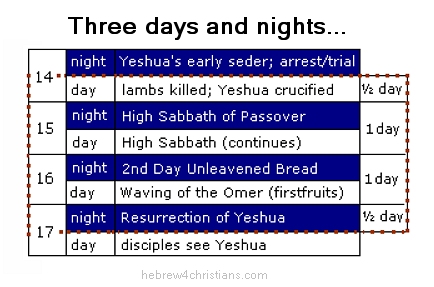 |
There may be further questions about this way of understanding the timing of the resurrection of Yeshua, but this account is in harmony with the basic facts of the Passover holiday and how it served as a "type" or foretelling of the death, burial, and resurrection of our LORD. In this connection is vitally important, however, not to lose the point concerning the matter, since the resurrection of Yeshua is not some simply a fact o history but our daily reality. Yeshua is alive today and that makes all the difference! Happy Passover and "Yom Bikkurim," chaverim!
Hebrew Lesson
Psalm 16:10 reading (click):
Note: For some of our 2024 Passover pictures, click here.
Passover in Difficult Days...
04.22.24 (Nisan 14, 5784) It is a somber time in Israel for the first night of Passover. Instead of the usual saying, "Chag Pesach Sameach," most Israelis are saying "Chag Pesach Kasher" or another equivalent...
I have been sensing the heaviness for some time now, and though I had hoped to host a large seder this year, some of my guests have fallen ill, others have canceled at the last moment, one had a work conflict, and therefore I will have a small seder with just two of my sons this evening.
During the Holocaust, Jews at the concentration camps who wanted to observe the Passover Seder faced a dilemma regarding the "letter of the law." The Torah clearly states that no chametz was to be eaten during the days of Passover, but the only food given to the prisoners contained leaven. The prisoners were forced to either use chametz as their "matzah" (and water as their "wine") or else to fast for the holiday, thereby endangering their lives.... The then rabbis quoted the verse from the Torah that reads: "you shall live by my commandments" to further imply that you shall "not die by them," and therefore they allowed for the use of chametz in such circumstances and gave a special blessing for doing so.
Though circumstances may be happy or sad, sweet or bitter, we nevertheless focus on what is essential during this time, namely, the Lord's love and deliverance of his people... If we set our eyes and hearts upon our God, we shall not be shaken, even if the earth shall tremble and the mountains be moved into the seas.
Wishing us all a blessed holiday, and may it please the Lord to especailly help Israel and the Jewish people at this time, תשובה שלמה. Amen.
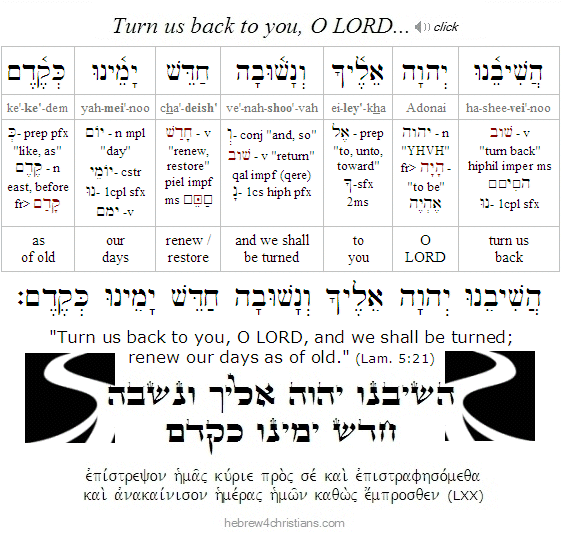 |
For Such a Time as This...
[ "The LORD is a warrior; the LORD is His Name" / יהוה אִישׁ מִלְחָמָה יהוה שְׁמו (Exod. 15:3). ]
04.21.24 (Nisan 13, 5784) An old midrash says that at the time of the great Exodus, only a remnant of Israel was actually saved while all the others died in the makkah (plague) of darkness, having fallen so low that they could not believe in the redemption or even want to be redeemed (Rom. 9:27-28)... How dreadful; how tragic! God forbid that we should give up our hope now, chaverim, especially because of the great salvation Yeshua secured for us at the cross (Heb. 2:3-4; Heb. 6:4-6). בכל דור ודור -- be'chol dor vador -- "in each and every generation" an individual should look upon him or herself as if he or she (personally) had been rescued from the "Egypt" of this world...
And yet divine history is somewhat "cyclical" in its expression. The closer we go back to the beginning, the more we see how the future was "seeded" and gets replayed in every generation. Both the Tree of Life (עֵץ הַחַיִּים) and the Tree of the Knowledge of Good and Evil (עֵץ הַדַּעַת טוֹב וָרָע) were present in the original paradise (Gen. 2:9). When Eve listened to the lies of the nachash (serpent) and regarded the forbidden tree as "desirable to make one wise," she immediately began her descent into exile. At the very dawn of human history, then, we see that "truth" (אֱמֶת) apart from God (א) leads to death (מֵת).
Adam and Eve's disobedience led to God's gracious promise regarding the coming "Seed" who would restore all things by being victorious in the war for truth (Gen. 3:15). Of course, this promised Seed was Yeshua, our Suffering Servant and "Second Adam," who, through His sacrifice upon the cross, "reversed the curse" and reconciled humanity with God. Note, however, that this "proto-gospel" message also implied perpetual warfare between the heirs of the Messiah (called the "children of light") and the heirs of Satan (called the "children of darkness"). The ongoing enmity between these "two seeds," then, was ultimately something God willed (1 Thess. 5:5; Col. 1:13; 1 John 3:10). The children of light are called to be am kadosh - a holy people - separate from the evil engendered by the fallen world and its forces, just as the very first creative expression of God was the separation of light from darkness (Gen. 1:3-4). The children of light "hate evil and love the good," and conversely, the children of darkness "hate the good and love evil" (Psalm 34:21, Prov. 8:13, Amos 5:15). The Exodus story, then, is not so much a matter of ancient history as it is a present revelation of God's righteous liberating power over the powers of darkness.
God delivered Israel with a "strong hand" (בְיָד חֲזָקָה) and led them directly to Mount Sinai to re-encounter the Tree of the Knowledge of good and evil, just as the Cross of Yeshua is the Tree of Life in the midst of the Garden of God. Life is about spiritual warfare, and the power encounter between God and Pharaoh is a paradigm for the ages. Therefore Yeshua refered to his own sacrificial death as the great Lamb of God to be the final exodus (Luke 9:31).
Throughout history we see the repeated attempt to resuscitate or revive ancient "Ra worship" (which derives from Satan in the garden). Every culture has its emissaries of evil -- its "pharaohs," its political dynasties, its caste systems, and its presumed sense of status quo. In the ancient world, most political figures were literally deified; in the Middle Ages, they were thought to rule through "divine right"; but in today's secular world, there is no justification given for their control other than through deception and the naked "will to power." In nearly every case, however, it can be stated that politicians and leaders of this world represent what is most sick about the human condition. Politicians and princlings are given "their hour" in this earth, and they are undoubtedly groomed by the "god of this world" who was a murderer and a liar "from the beginning" (John 8:44). The dust and ashes of countless past civilizations and regimes attest to this truth...
Today we are living in a world that is "globalist" by design. Politicians are often unwitting lackeys for the darker powers seeking to consolidate power to enslave the whole earth. The so-called global economy and its system of usury is the mechanism that will give rise of yet another "Pharaoh" who likewise will be judged by the LORD God Almighty at the End of Days.
Many people live in a state of fear because they believe the lies and propaganda of "the lords of the darkness of this world" / τοὺς κοσμοκράτορας τοῦ σκότους τούτου (Eph. 6:12). Satan's power always has been through the use of deception. If he can get you to believe a lie, he will begin to control you through fear. This is how the devil has always gained the kingdoms of this world -- through deception and violence... As followers of Yeshua, we must always keep in mind that reality centers on the LORD God of Israel and never in the "rhetorical violence" and metaphysical fantasies of political or media figures.
The LORD God of Israel truly cares about people's liberation from deception and oppression. The story of the Exodus is His everlasting rebuke to all the world's dictators and should cause every politician to soberly assess their fate... The time is coming when His judgment will fall upon all the "kings of the earth who take counsel against the LORD and against His Anointed One" (Psalm 2:2). Halevai, ad ana Adonai?
Presently we are living with the tension of the "already-not-yet" aspect of the original prophecy that "he (the Messiah) will crush the head (of the serpent)." Satan still appears to have the upper hand, at least in the temporal realm. Final victory is not yet here, even if it is assured through the promises of God (Rom. 16:20). And while the time appointed by God for the Messianic redemption of Israel and the "End of Days" is a heavenly kept secret (Mark 13:32), there are certain signs called chevlei mashiach (חֶבְלֵי מָשִׁיחַ) - the "birth pangs" of the Messiah - that indicate that the time is imminent when this world (κόσμος) will be judged.
Most of these birth pangs indicate peril and danger, including "distress of nations in perplexity because of the roaring of the sea and the waves," and "men's hearts failing them for fear, with foreboding of what is coming on the earth" (Luke 21:25-6). In addition, the moral depravity of mankind will be unmasked, showing us clearly that "men shall be lovers of their own selves, covetous, boasters, proud, blasphemers, disobedient to parents, unthankful, unholy, without natural affection, trucebreakers, false accusers, incontinent, fierce, despisers of those that are good, traitors, heady, highminded, lovers of pleasures more than lovers of God; having a form of godliness, but denying the power thereof" (2 Tim. 3:2-3). The increase in "globalism" and the unholy urge to unify the world into a new type of "Babylon" will give the Messiah of Evil his coming political platform in the days ahead. So-called "political correctness," that is, social coercion based on godless consensus, is the perverse ethos of our time.
We must hold to the truth that "all things work together for good to them that love God" (Rom. 8:28), and we must also take hold of the command given to Joshua: "Be strong and of good courage!" Just as Joshua was promised that the LORD would be with him as he went in to possess the land, so we must remember that the LORD has promised never to leave us nor forsake us (Heb. 13:5; Matt. 28:20) - even in the midst of tribulation, or distress, or persecution, or famine, or nakedness, or danger, or sword (Rom. 8:35).
We do not need to live in fear, because melo khol ha'aretz kevodo: מְלא כָל־הָאָרֶץ כְּבוֹדו, "the whole earth is filled with God's glory (Isa. 6:3). Amen: "In God have I put my trust: I will not be afraid: What man can do unto me?" (Psalm 56:1). Passover is all about the victory of God over the powers of darkness for the sake of our deliverance (i.e., yeshuah: יְשׁוּעָה). The echo of Moses' cry, "Let my people go!" is still resounding in the heavenly realms. So be encouraged, chaverim, even in the face of evil. Do not be afraid and do not be dismayed, "for the LORD your God is with you wherever you go." Amen!
Hebrew Lesson
Joshua 1:9 Hebrew reading (click for audio):
Passover Torah Readings...
04.21.24 (Nisan 13, 5784) Shavuah tov, chaverim! We have now reached the very edge of the central holiday of Passover, which begins tomorow at sundown (first seder).... Note that the weekly Torah Reading cycle is suspended for the holiday week of Unleavened Bread (called "Passover Week" in the Jewish tradition), with each day of the week (from Nisan 15 through Nisan 22) assigned additional readings from the Torah and Haftarah.
Unlike Western Christian tradition that followed the dictates of Emperor Constantine who oversaw the Council of Nicaea (325 A.D.) and decreed that "Easter" must be observed on the first Sunday following the first full moon after the spring equinox (March 21), the early Messianic believers in Yeshua followed the Jewish calendar by observing Passover on Nisan 14 as clearly prescribed in the Torah (see Exod. 12:18; Lev. 23:5; Num. 9:1-5; Num. 28:16; Josh. 5:10), with the resurrection occurring three days later, on Nisan 17 (Yom Bikkurim).
For more information about the specific Torah readings for Passover, see "Weekly Torah Readings" page on the Hebrew for Christians web site.
Hebrew Lesson
Leviticus 23:5 reading (click for audio):
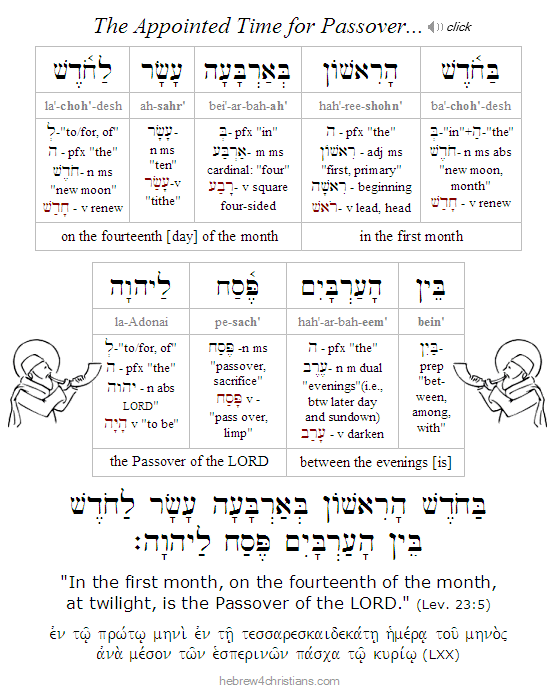 |
Quintessential Theme of Torah...
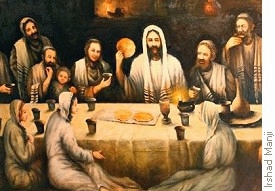
04.19.24 (Nisan 11, 5784) The heart of God expressed in the Passover is the "Archimedean Point," or the starting (and ending) expression and essential meaning of the entire redemptive message of the Bible, prefigured, foretold, re-enacted, encapuslated, dramatized, and ultimately embodied in His Son Yeshua, the great Lamb of God who is the Savior of the world.
As I've mentioned over the years, the "Passover motif" was present at the original creation - the Lamb slain from the foundation of the world - and it constituted the central and daily sacrifice of the Torah (קרבן תמיד). Indeed, the Passover will be forever celebrated in the world to come as we bow before Yeshua, the great Lamb of God who was slain for our healing, and who is forever seated upon the Throne of God (Rev 5).
Amen, let us keep the feast with reverence and thanksgiving, for Messiah our Passover has been sacrificed for us... Shabbat Haggadol Shalom, chaverim.
Hebrew Lesson
Revelation 5:12 reading (click):
Trusting and Knowing...
04.19.24 (Nisan 11, 5784) The receiving of God's revelation (קבלת תורה) must take place each and every day, as it says, "Trust in the LORD 'bekhol libekha' (בְּכָל־לִבֶּךָ) - with all your heart; and know Him 'bekol derakhekha' (בְּכָל־דְּרָכֶיךָ), in all your ways" (Prov. 3:5-6). The revelation of Torah is described as a "loud and never-ending voice" (Deut. 5:22), though it is our constant responsibility to "shema" – to take heed and receive the invitation of God's heart.
It is written in our Scriptures: "Trust in the LORD with all your heart, and do not rely on your own understanding" (Prov. 3:5). The Hebrew word for trust is "bittachon" (בִּטָחוֹן), from a root word (בָּטָח) that means "to lean upon," to feel safe and secure (Psalm 31:19). Bittachon expresses the emotional conviction that you are welcome and accepted before God, and that you have access to his heart (Heb. 4:16; 1 Pet. 5:7). We trust with "all of our heart" when we let go of our need to control (or understand) things and instead rely on God's ability to take care of us. Trusting God means knowing "in your kishkas," that is, in your guts, that God is taking care of you (Rom. 8:28); it is the comfort of being made safe in his love...
"In all your ways know Him, and he will direct your paths" (Prov. 3:6), and that means you are to know God in whatever "way" you happen to find yourself in, which includes ways of joy and happiness, but also ways of struggle, ways of sinfulness, and ways of heartache (Job 1:21; Job 2:10; Psalm 119:71; Micah 7:9). In all these ways we are to know him.... And just as we are to trust God with all of our heart and abandon ourselves to his care, so we are "know God" in all our goings, opening our heart to his loving presence and trusting in his guidance for our lives. The Good Shepherd will lead us down the right paths for the sake of his beautiful name (Psalm 23:3). Amen.
Hebrew Lesson
Proverbs 3:5-6 reading (click):
"The" Question of Passover...
04.19.24 (Nisan 11, 5784) During the Passover Seder we begin our retelling the story of the Exodus when the question is sung: "Mah nishtanah ha-lailah ha-zeh mikol ha-leilot?" - What makes this night differ from all other nights? This is "the" central question of Passover, asked for thousands of years, and the answer is always the same: Avadim Hayinu: "We were slaves, but God redeemed us from bondage by the blood of the lamb (דַּם הַשֶּׂה)."
In this connection note that there were not many lambs, but the LORD told Israel: "You shall keep it [i.e., the Passover lamb] until the fourteenth day of this month, when the whole assembly of the congregation of Israel shall slaughter him (את) at twilight (Exod. 12:6). Each family put their trust in God's uniquely appointed sacrifice to be delivered from the plague of death (מכת המוות). There is no Passover apart from the blood of the Lamb of God....
Hebrew Lesson
Exod. 12:6b reading (click for audio):
Intimacy of Passover...
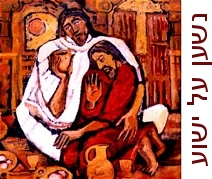
04.18.24 (Nisan 10, 5784) Unlike many of the rituals and practices of organized religion, the Passover Seder takes place at home, not in a sanctuary, and may be conducted by anyone, not by professional clergy or a rabbi...
The heart of the seder is shared meal (shelamim) celebrating our connection with family, our friends, the "called out" people of God who take refuge in his promises. Such intimacy is altogether fitting, since the Passover was foreshadowed first by the sacrifice of the lamb when the Lord covered the transgression of Adam and Eve in the garden, and who then promised the coming Savior who would ransom humanity from the curse of death (Gen. 3:14-21). Adam's faithful son Abel later re-affirmed God's promise by offering of the fat of the lamb (Gen. 4:3-5). The promised blessing was later re-enacted by faithful Abraham's sacrifice of the ram in place of his son Isaac (Gen. 22), and of course the faithful of Israel affirmed the promise when they sheltered under the blood of Passover lamb at the time of the Exodus (Exod. 12:5-14).
In each case the blood of the lamb is central: covering the shame of Adam and Eve's transgression; expressing faith in the coming Savior who would deliver us from the curse of the nachash (serpent), exemplifying the heart of God's compassion by substituting the lamb for Isaac, and redeeming the families of Israel during the Passover. Most of all, however, the Passover Seder foretells and recalls the sacrifice of Yeshua on our behalf as the great Lamb of God who eternally delivers us from our slavery to sin. Therefore heed the Torah's general rule about the holidays: "You shall rejoice in your festival" (Deut. 16:14) by delighting in the salvation of God, by embracing our family and friends in the sure hope of eternal life. Amen.
Hebrew Lesson
Psalm 33:22 reading (click):
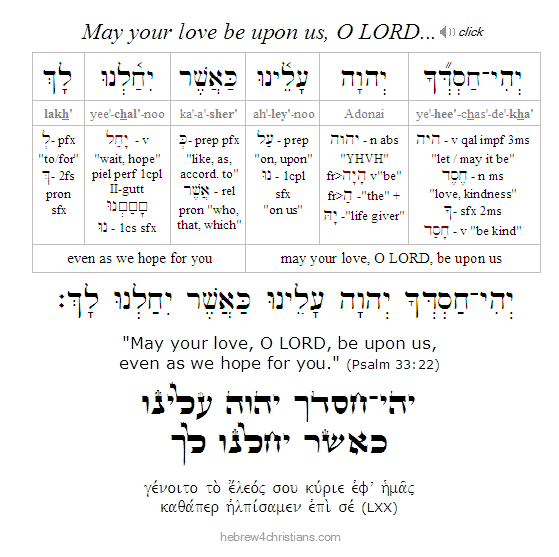 |
Passover and the
Limping Messiah...
04.18.24 (Nisan 10, 5784) As we prepare our hearts for the Passover, recall that the Hebrew verb "pasach" (פָּסַח) can mean not only "to pass over," but also "to limp," suggesting the heel of Messiah that was "bruised" in the battle for our salvation (Gen. 3:15). As it is written, "Just as Moses lifted up the serpent in the wilderness, so must the Son of Man be lifted up, that whoever believes in him may have eternal life. For God so loved the world, that he gave his only Son, that whoever believes in him should not perish but have eternal life (חַיֵּי עוֹלָם). For God did not send his Son into the world to condemn the world, but in order that the world might be saved through him" (John 3:14-17). Humanity as a whole has been "bitten by the snake" and needs to be delivered from its deadly venom. Just as the image made in the likeness of the destroying snake was lifted up for Israel's healing, so the One made in the likeness of sinful flesh was to be lifted up as the Healer of the world (Rom. 8:3). All we need to do is look up and believe...
Some people might object that the verb pasach (פָּסַח) alludes to the wounded Savior, our great Passover "Lamb who was slain" (John 1:29; 1 Pet. 1:19-20; Rev. 5:12; 13:8); however, it is evident that the Hebrew root can mean "to limp" as a result of a wound. Indeed the Hebrew participle pise'ach (פִּסֵחַ) means "lame" or "crippled" (for example, see Lev. 21:18; Deut. 15:21; 2 Sam. 9:13, etc.). Furthermore, there are several uses of the verb pasach that explicitly mean to "limp" or "be lame." For example, in 2 Sam. 4:4 it says: "and he (Mephibosheth) fell and 'became lame" (וַיִּפָּסֵחַ); in 1 Kings 18:21, we read: "how long will you limp (פּסְחִים) between two opinions?" and in 1 Kings 18:26 it is written: "and they (the priests of Baal) 'limped upon the altar" (וַיְפַסְּחוּ עַל־הַמִּזְבֵּחַ) in a pagan ritual dance. In other words there is clearly a connection between Passover and becoming wounded, and this alludes to the Suffering Servant, the Messiah, whose heel was bruised in the battle for our deliverance (Gen. 3:15). Those who wish to argue that pasach cannot refer to the "limping" of the Messiah, the Passover "Lamb of God" who was slain for our sins in the battle against the serpent, therefore have the burden to explain the meaning and usage of the verb pasach in these other verses of the Hebrew Scriptures.
Hebrew Lesson
The First Prophecy of the Torah:
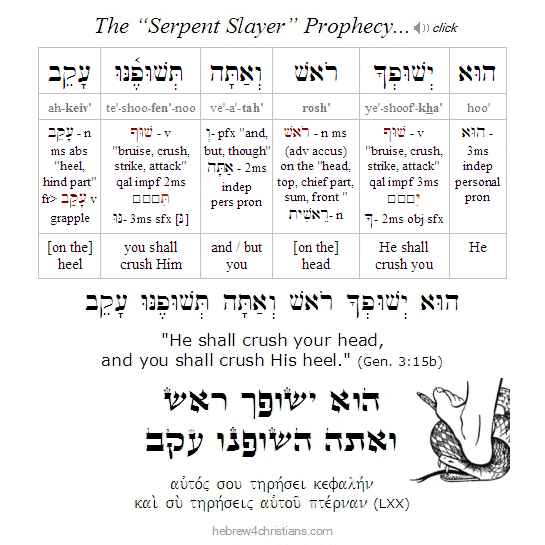 |
Retelling the Story...
[ Passover begins next Monday at sundown. "In every generation, each of us is obligated to see himself or herself as though he or she personally came forth from Egypt."- Traditional Hagadah ]
04.18.24 (Nisan 10, 5784) Concerning the observance of the Passover Seder the Torah states, "When your child asks you in time to come, 'What is the meaning of the testimonies and the statutes and the rules that the LORD our God has commanded you?' then you shall say, 'We were slaves (עבדים היינו) to Pharaoh in Egypt, but the LORD brought us out of Egypt with a mighty hand. And the LORD showed signs and wonders, great and grievous, against Egypt and against Pharaoh and all his household, before our eyes" (Deut. 6:20-23). We are instructed to "remember what the LORD your God did to Pharaoh and to all Egypt, the great trials that your eyes saw, the signs, the wonders, the mighty hand, and the outstretched arm, by which the LORD your God brought you out" (Deut. 7:19). As it is written in the Shema, "You shall teach them diligently to your children," we ask, what do we teach? And we answer: Kulo! Everything – the whole story of our deliverance (הסיפור המלא).
The early sages taught that Hebrew word "Pesach" (פסח) can be read as peh (פֶּה), "mouth," and sach (סַח), "speaks," indicating that Passover is a confession of the truth of God's redemption, testifying to the truth of the LORD's faithful love. On Pesach we thank God for the revelation and the wonder of the great Lamb of God that was slain... Indeed, in light of the truth of the Scriptures - both in the Torah, the writings, the prophets, and the New Covenant Scriptures - how is it possible to honor the LORD God of Israel and to celebrate his redemption apart from the Messiah who came to earth to die as the great Lamb of God? Yeshua is the heart and central meaning of the Passover, and there is simply NO valid Passover Seder apart from the blood of the Lamb (Heb. 2:3; Heb 10:28-29).
Hebrew Lesson
Deuteronomy 26:8a reading (click):
The Sign of Life...
[ The holiday of Passover begins this Monday evening, April 22nd, at sundown... ]
04.18.24 (Nisan 10, 5784) "The blood shall be a sign for you, and when I see the blood, I will pass over you (פָסַחְתִּי) that no plague will befall you to destroy you..." (Exod. 12:13). The blood would be a sign for the eye of faith, i.e., "for you," and not for the unbelieving world at large. During the afternoon of the 14th, the korban Pesach (Passover lamb) was slaughtered and its blood smeared on all three sides of the doorframe, top, right and left, in the form of the letter Chet (ח). This letter is connected with the word chai (חי), "alive," and chayim (חיים), "life," signifying that atoning life is in the sacrificial blood (Lev. 17:11).
Note that the letters of the Name YHVH (יהוה) - the Name of Divine Compassion - were said to be daubed on the doorposts: The Yod (י) was written on the top beam, the Vav (ו) on the right doorpost, and the Hey (ה) on the left. And since Yeshua is indeed YHVH, his Name was the sign of life written by the faithful. Amen, the Hebrew word for "sign" is ot (את), referring to the One who is the Alef (א) and Tav (ת), the First and the Last, the Almighty (Rev. 1:8).
Hebrew Lesson
Exod. 12:13b Hebrew reading (click):
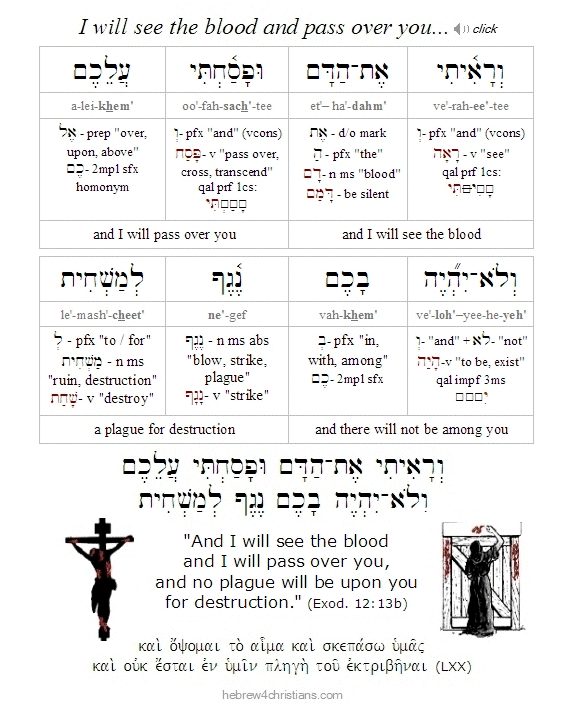 |
Taking Passover Personally...
[ The great holiday of Passover begins Monday, April 22 at sundown... ]
04.17.24 (Nisan 9, 5784) The message of Passover applies to each of us: Dor va'dor: "In each and every generation an individual should look upon him or herself as if he or she (personally) had left Egypt." Indeed the very First Commandment is to accept the reality of your personal deliverance by the LORD: "I am the LORD your God, who brought you (singular) out of the land of Egypt, out of the house of slavery" (Exod. 20:2).
Note that the Hebrew word "Egypt" is mitzraim (מצרים), a word that means "prison, enclosure, or straights," from the verb tzur (צוּר) meaning "to bind or confine" (the Yiddish word tsuris, "trouble," comes from the same root). On the other hand, the Hebrew word for salvation is yeshuah (ישועה), from a root (יָשַׁע) that means "to wide," to "release from constraint," to deliver or set free. Amen, Yeshua (ישׁוע) sets us free from sin and death.
It is noteworthy that God began the Ten Commandments by identifying Himself as our Redeemer and Deliverer rather than as our Creator, because the very purpose of creation is to be set free by means of God's redemptive love given through Yeshua, the "Lamb slain from the foundation of the world" (Rev. 13:8; 1 Pet. 1:18-20; Eph. 1:4; 2 Tim. 1:9). Amen. The book of Genesis is the context to the story of the Exodus. A blessed Passover Season to you, friends...
Hebrew Lesson
Exodus 20:2 reading (click):
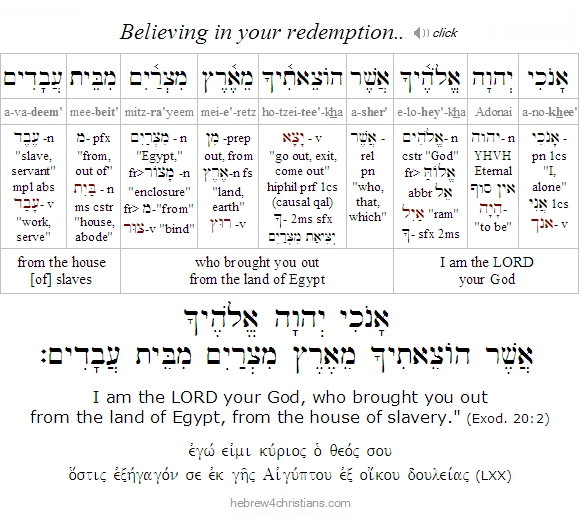 |
Though studying the Scriptures is of course essential, "theology qua theology" is useless if we do not realize that we are always standing before the Divine Presence....
Psalm 139:3 reading (click):
Our Broken Matzah...
[ The major holiday of Passover begins Monday, April 22nd at sundown this year... ]
04.16.24 (Nisan 8, 5784) During the Passover Seder, three matzahs are placed on the table, said to represent Abraham, Isaac and Jacob, respectively. During the "Yachatz" step of the seder, the middle matzah (representing Isaac) will be broken to recall how Isaac was sacrificed in obedience to his father, foreshadowing the sacrifice of Yeshua by God the Father. Indeed, the Talmud states, "We break the middle matzah in tribute to Yitzchak (Isaac), who accepted the sins of the people upon himself" (Shabbos 89b). The smaller half of this broken matzah will be eaten later during the Motzi Matzah step, while the larger half will be eaten during the "Afikomen" step, near the end of the night...
In Hebrew, the middle of something is it's heart - the heart of the heavens, the heart of the earth, the heart of the sea, the heart of a person... Since the offering of Isaac by Abraham foretold of the greater offering of Yeshua by God Himself, when we break the middle matzah, then, we recall the broken heart of God over the pain Yeshua endured by taking our sins upon Him at the cross...."For our sake he made him to be sin who knew no sin, so that in him we might become the righteousness of God" (2 Cor. 5:21).
During his Passover seder with his disciples, Yeshua "took matzah, and after blessing it broke it and gave it to the disciples, and said, "Take, eat; this is my body" (Matt. 26:26). Since Yeshua did this while they were eating dinner, the matzah he broke would have been the Afikomen, thereby making the connection between the hidden bread (lechem ha-nistar) that would be broken given for our deliverance. The matzah we eat during Passover is called lechem oni (לֶחֶם ענִי) - "the bread of [His] suffering" - and eating the Bread of Life that was "broken for us" remembers ish makhovot, the man of sorrows, the suffering of our LORD...
Hebrew Lesson
Deut. 16:3b Hebrew reading:
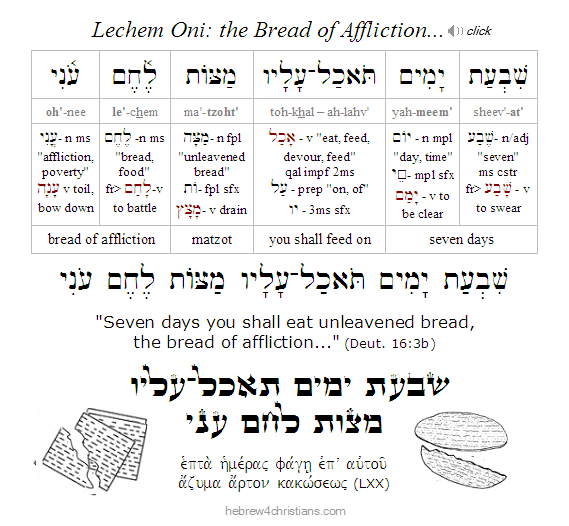 |
Immersion into the Waters...
04.16.24 (Nisan 8, 5784) The ancient philosopher Heraclitus of Ephesus (6th century BC) observed the "fluidity of life" by famously observing that "panta rhei" (Πάντα ῥεῖ), "all things flow." You can't step into the same river twice, he said, because it has already moved on. Raw experience reveals a world that is finite, fluid, and constantly "moving" - like a mysterious river - whereas reflective reason discerns an underlying order that is eternal, timeless, rational, and stable. This image presents the paradox of change, or the philosophical problem of how something can both change and yet be the same thing. For example, you regard yourself as the same person you were when you were a young child, and yet your physical body has changed considerably, and indeed, the cells of your physical body cyclically die yet replicate over time. What about you has remained the same despite all the changes of your past?
Heraclitus further noted that while life was marked by constant change, there is an underlying principle of reason called the "logos" (ΛΟΓΟΣ) that serves to unify experience and that holds all things together. The dualistic separation of the real from the ideal was later incorporated into Plato's theory of "forms" (εἶδος) and Aristotle's theory of universals.... For us the unchanging is the Word of the LORD God and the soul created in his image and likeness.
People subconsciously fear change because it either represents the unknown behind the change, or because it represents decay, dissolution, and death. In the 1991 movie Shadows and Fog, the lead character Kleinman remarks about a sudden change in the weather by voicing Heraclitus' observation: "Everything's always moving all the time. Everything's constantly in motion -- so it's no wonder that I'm nauseous...."
Some people experience anxiety because they feel powerless in the face of change, so they "compensate" by trying to hold on to what cannot be held: "All the desires of this world are like rays of light. You try to catch them in your hand only to find there is nothing in your grasp." Nonetheless, the heart wants life to be both real and yet unchangingly ideal, and the soul yearns for loving relationships that will not be drowned by the inevitable flow of time. In light of this deep inner conflict, the existential question we must face is whether we will "agree" to let go and trust the flow of life, or whether we will protest by demanding our own "heaven" in the here and now. Will we accept life on life's terms, or on our own? Honoring the flow of life is to honor the Father's will for us, to let go of our dread (i.e., our craving for temporal security) by trusting in His sovereign plan for all of life. We overcome anxiety by trusting that God is in the "midst of the whirlwind" of change and is supervising the end of all things according to his good and perfect purposes (Rom. 8:28).
We must first look to the Eternal to see the finite; we must look upward before we look downward. Jesus walked on the water and then calmed the raging storm of life. Only God can give us safe passage through the shadowy and threatening transience of this world. As we contemplate God's Eternality and power, we realize the wonder and sanctity of our short time here. The Eternal is our refuge, our "dwelling place," in all generations, and that means in the present generation as well, on the other side of fleeting appearances of this world. When we pray to God as Avinu She-bashamayim, "Our Father in Heaven," we are calling to the One (שֶׁ) who is in (בּ) the midst of the waters (שָׁמָיִם) of Life.
Hebrew Lesson
Psalm 46:1-2 reading (click):
Our Lord Yeshua spoke of "living water" (מַיִם חַיִּים), or an inward flow that would well up within the heart through the agency of the Spirit of Life: "Whoever believes in me, as the Scripture has said, 'Out of his heart will flow rivers of living water'" (John 7:38). The image that spiritual life is like a flowing river is also found in the Book of Revelation, where the "river of the water of life" flows out from the Throne of God to nourish the Tree of Life (עֵץ חַיִּים) in midst of the paradise of God (Rev. 22:1-2).
The psalmist says (Psalm 118:17): "I shall not die but live." Rabbi Yitzchak said, in order really to live you must give yourself to death, but when you have done so, you discover that you are not to die, but to live. "Giving yourself to death" here means surrendering to God's will, accepting the yoke of heaven, and trusting in His governing "flow" over all of creation. This is the deeper meaning of "baptism" as we are immersed into God's care for our lives. Kierkegaard makes a similar point by saying that only after we have undergone "infinite resignation," that is, only after we have died upon the altar within our heart are we able to be reborn to take hold of reality. "Unless a seed of wheat falls into the earth and dies, it remains alone, but if it dies, it bears much fruit" (John 12:24).
 |
|
The Leper Messiah...
[ The following is related to our Torah reading for this week, parashat Metzora... ]
04.15.24 (Nisan 7, 5784) "The Messiah -- what is his name?... The sages say, the Leper Scholar..." (Sanhedrin 98b). But how was it that Yeshua was able to touch the metzora ("leper") and yet remain clean himself (Matt 8:1-4)? Only because He is the LORD (יהוה), the true Healer. Just as Yeshua spoke with greater authority than Moses (Matt. 5:21-48), so He was able to do what Moses (and those under the Levitical system of worship) could not do -- namely, reach down in compassion and take away the uncleanness from our lives.... Yeshua's blood creates the "waters of separation" (מֵי נִדָּה). He is the fulfillment of the "Red Heifer" sacrifice. Only Yeshua enters the "leper colony" of humanity and takes away our tzara'at (sin) by becoming ish machovot (אישׁ מַכְאבוֹת), a leper Himself, the Just for the Unjust, that He might make us acceptable before the LORD.
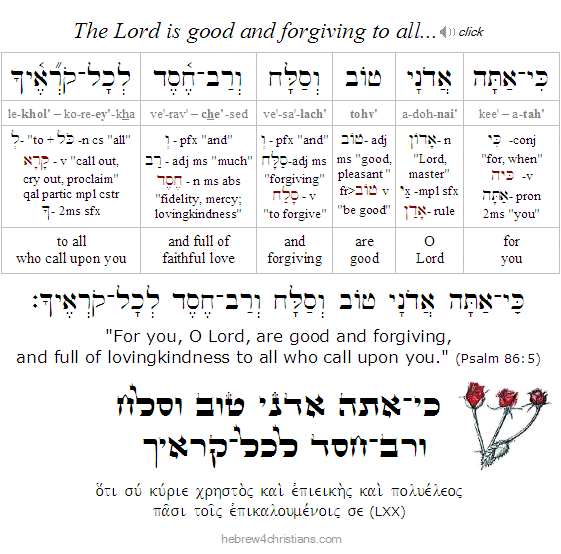 |
Just as a body can become sick with illness, so can the soul: "I said, 'O LORD, be gracious to me; heal my soul (רְפָאָה נַפְשִׁי), for I have sinned against you!'" (Psalm 41:4). If you feel your sins biting you, and your heart is wavering and beginning to tremble, take your place on the outside of the camp, where the lepers are standing, for they are the ones for whom the Gospel is intended.... Yeshua enters the leper colony to touch the leper. He seeks and saves the lost. The message of God's love and forgiveness is received only by those who understand how much they need it, to the self-confessed lepers of the soul... The gospel is sure remedy for the sick, not the healthy; it is for the sinner, not the saint. For those who accept Yeshua as their Redeemer, sin is turned right through the pain He bore on the cross, and forgiveness is a matter of sheer grace, not merit. There is joy in heaven for one sinner who turns to God in repentance, and this implies that every time you go to the LORD in your brokenness, in the truth of your need for Him, He will receive you with divine happiness.
|
Broken of Heart...
04.15.24 (Nisan 7, 5784) Who among us has not tasted the anguish of heart that attends our sinful condition? Who has not felt the sting of desperation revealed in our lost estate? But how can we be found if we do not believe we are lost? How can we be healed if we think we have no sickness? (Matt. 9:12).
A.W. Tozer once said, "It is doubtful whether God can bless a man greatly until he has hurt him deeply." Likewise Alan Redpath once wrote, "When God wants to do an impossible task, He takes an impossible individual – and crushes him." These are seeingly scandalous words; they speak a severe mercy. "Blessed are they that mourn" (Matt. 5:4).
This seems to be the divine pattern. "Truly, truly, I say to you, unless a grain of wheat falls into the earth and dies, it remains alone; but if it dies, it bears much fruit" (John 12:24). The hard "outer shell" of the seed must be broken so that the life of the Spirit can come through... Plainly put, God (and only God) can "deconstruct" the self so that life's priorities, focus, and passions are redirected to Him alone, the true Source of life and blessing.
The Lord is near to the nishbar lev, the one with a broken heart. The Hebrew word "lev" (לב) metaphorically refers to our inner life, that is, our affections, mind, and will. This is revealed in the letters of the Hebrew word itself: the Lamed (ל) depicts a "staff" used to direct something (i.e., the will), and the Bet (בּ) depicts the "house" of the physical body. Lev then represents our inner life of thought and feeling expressed in our actions. Those who are broken in heart – the nishberei lev – have discovered that they cannot control their own lives, that they are inwardly "shattered," and therefore need divine help. Contrary to conventional wisdom, God helps those who cannot help themselves; He singularly prefers to use broken vessels in His service (Psalm 51:19). As Tozer also wrote, "Beware of any Christian leader who does not walk with a limp."
There is parallelism in this verse. Both lev (לֵב) and ruach (רוּחַ) denote man's will and thoughts (Josh. 2:11; Deut. 2:30). Both the "broken of heart" and the "crushed in spirit" – dakkei ruach – refer to those who need God's deliverance (i.e., יְשׁוּעָה, yeshuah). The word translated "saves" (yoshia) connotes the idea of "making room" from what distresses us. Salvation is freedom from what oppresses and constricts our inward life. In that sense, God saves us from ourselves – from the chaos of the carnal ego trying to run our own lives.
The LORD is "near" -- karov -- to the broken of heart. This adverb means "close enough to touch." The same root is used for the word korban (קָרְבָּן), a sacrificial offering that draws us near to God, as well as karov (קָרוֹב), a near kinsman. The Lord is near to the nishbar lev, the one with a broken heart; he understands the grief of living in a fallen world.
The point of our brokenness is to draw us to God for healing: "The LORD heals the broken in heart and binds up their wounds" (Psalm 147:3). Yeshua came to "bind up the broken of heart (nishberei lev), to proclaim liberty to the captives, and the opening of the prison to those who are bound" (Isa. 61:1). God is merciful and redemptive in His afflictions: "He shall not break even a bruised reed, nor snuff out even a smoldering wick. He shall bring forth the true way" (Isa. 42:3). Affliction is a means of teaching us what we really need....
Yeshua is the healer of the broken heart and the Savior of those who are crushed in spirit. Blessed be His Name forever...
Shabbat Hagadol:
The Sabbath before Passover...
[ The holiday of Passover begins Monday, April 22nd at sundown... ]
04.15.24 (Nisan 7, 5784) The Sabbath that immediately precedes the festival of Passover is called the "Great Sabbath" (i.e., Shabbat HaGadol: שבת הגדול), in honor of the time when the first generation set aside the lamb for the Passover Sacrifice (i.e., korban Pesach: קרבן פסח).
During the time of the Temple it was customary to obtain the Korban Pesach (i.e., Passover lamb) four days before Passover so that worshipers could make sure that their lambs had no blemishes which would preclude them from being offered as sacrifices. This was done to fulfill the instructions given in Exodus 12 that the lamb for Passover be "without spot or blemish." Interestingly, this period of time allowed time for each family to become personally attached to their lamb, so that it would no longer simply be "a lamb" (Exod. 12:3) but rather their lamb" (Exod. 12:5). Indeed the Torah refers to "the" Lamb of God, as if there was only one: "You shall keep it [i.e., the Passover lamb] until the fourteenth day of this month, when the whole assembly of the congregation of Israel shall slaughter him (אתוֹ) at twilight (Exod. 12:6). Note that the direct object "him" (i.e., oto) can be read as Aleph-Tav (את) combined with the letter Vav (ו), signifying the Son of Man who is First and Last.
![Spring Holiday Timeline (H4C]](../../About_HFC/Site_News/shabbathagaolline.gif) |
Shabbat HaGadol foreshadowed the offering of Yeshua as the "Lamb of God" who takes away the sins of the world. The New Testament notes that it was a few days before Passover when Yeshua made His triumphant entry into Jerusalem riding on a donkey, signifying His Messiahship, in fulfillment of the prophecy of Zechariah: "Rejoice greatly, O daughter of Zion! Shout aloud, O daughter of Jerusalem! Behold, your king is coming to you; righteous and having salvation is he, humble and mounted on a donkey, on a colt, the foal of a donkey" (Zech. 9:9). During this time, when the pilgrims had come to select the lamb for the Passover sacrifice - they saw Yeshua and cried out: hoshiah na (הושׁיעה נא), meaning "please save" or "save now" (in English this phrase was translated from the Latin to form "Hosanna!"). The people spontaneously began singing Psalm 118:25-26 in anticipation of the fulfillment of the great Messianic hope:
אָנּא יְהוָה הוֹשִׁיעָה נָּא
אָנָּא יְהוָה הַצְלִיחָה נָּא
בָּרוּךְ הַבָּא בְּשֵׁם יְהוָה
בֵּרַכְנוּכֶם מִבֵּית יְהוָה
ah·nah · Adonai · hoh·shee·ah · nah
ah·nah · Adonai · hatz·lee·chah · nah
bah·rookh · ha·bah · be·shem · Adonai
be·rakh·noo·khem · mee·beit · Adonai
"Please, LORD save us! Please, LORD prosper us!
Blessed is He who comes in the Name of the LORD
We bless you from the house of the LORD."
(Psalm 118:25-26)
Hebrew Study Card
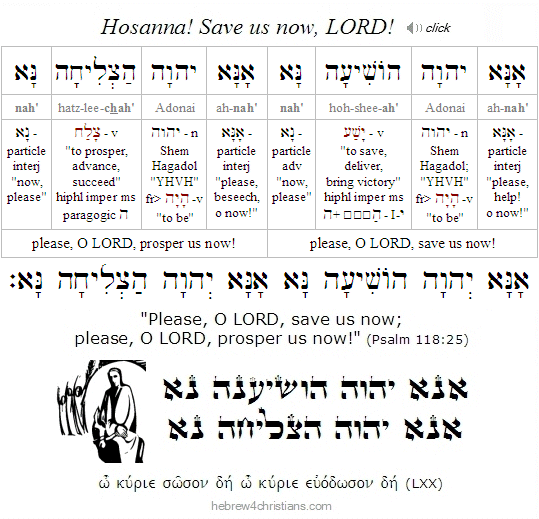
The Haftarah for Shabbat HaGadol (i.e., Malachi 3:4-24) foretells of Yom Adonai (יוֹם יהוה), the great Day of the LORD, and the return of Yeshua as Mashiach ben David. May that day come soon, chaverim. For more information, click here.
Note: Passover begins Monday, April 22nd this year, with the seder beginning approximately 18 minutes before sundown. With only a week before Passover, time is running out to begin preparing for your seder! To help you get started, I have created a free Seder Guide you can download here. Let's keep the feast, chaverim! (1 Cor. 5:7-8).
Cleansing of the Leper:
Parashat Metzora...
04.14.24 (Nisan 6, 5784) Shalom chaverim. Recall from last week's Torah reading (i.e., Tazria) that if someone was diagnosed with tzara'at (i.e., "leprosy"), they were forced to live in a state of exile. The afflicted person (called a "metzora") tore his clothes like a mourner, put a shroud over his face, and remained alone. If anyone came near, the person would cry out: "Unclean! Unclean! Stay away! Do not become impure because of me!" While so isolated, the person would have opportunity to perform teshuvah (repentance) and to reexamine his relationship with God.
In our Torah portion for this week (i.e., Metzora), we learn about the laws for cleansing "lepers" (i.e., metzorim). If the one suffering from tzara'at (i.e., the metzora) had apparently been healed, he would first call for the priest to be officially reexamined. If the priest saw no sign of tumah (uncleanness), a second examination was scheduled seven days later, and if at that time there was no further sign of disease, the process of tahara (purification) would begin.
The purification process was somewhat elaborate: After the second examination, the priest required that the metzora bring the following items for his cleansing:
- An earthenware bowl filled with spring water (mayim chayim)
- Two birds of the same type (whether turtledoves or pigeons)
- A stick of cedar wood
- A hyssop branch
- A scarlet thread
The priest then commanded that one of the birds should be slaughtered over the earthen vessel filled with fresh water, with its blood mixing with the water. The living bird, the piece of cedar, and the hyssop branch were then tied together using the scarlet thread, and the entire bundle was dipped into the earthen vessel. The blood and water mixture was then sprinkled seven times on the healed metzora, and the living bird was then set free.
Next, the healed person washed his clothes, shaved off all his hair (including his eyebrows), and bathed in a mikveh (ritual pool for cleansing). After that he could return to the camp - but he could not return to his home for another seven days. On the eighth day he would bathe again and offer several offerings (a chatat, an asham, an olah, and a minchah), but the blood from the asham (guilt) offering was mixed with oil and applied to his earlobe, thumb and foot, similar to the blood applied to the priests during their ordination. Oil from a meal offering was sprinkled seven times in the direction of the Sanctuary. Only after all this was he pronounced tahor (clean) by the priest. His life of uncleanness would be over, and he would be like a man who was brought back from the dead to new life.
This purification ritual corresponded with other rituals revealed in the Torah. The sprinkling of the hyssop by the priest recalled both the blood of the Passover lamb and the sprinkling of the ashes of the Red Heifer that cleanse from contact with death; the offering made of the two birds - one which was sacrificed and the other set free - recalled the scapegoat of the Yom Kippur ritual. The washing of garments, the shaving of all hair, and the immersion in a mikveh recalled the birth of the Jewish people at the Sea of Reeds. The blood of the guilt offering applied to the earlobe, thumb and foot, recalled the dedication of Aaron and his sons as the priests of Israel (Lev. 14:14). In other words, the individual purification process mirrored the purification of the community of Israel, and healing ultimately meant being re-identified as a redeemed child of God. In a very literal sense, then, we see how the metzora was "reborn" by water and by the blood (John 3:5; 19:34; Heb. 9:19).
Centrality of the Lamb...
04.12.24 (Nisan 4, 5784) The goal of the great Sinai revelation was not to simply impart a set of moral or social laws, but rather to "accommodate" the Divine Presence in the midst of the people. This is not to suggest that the various laws and decrees given to Israel were unimportant, of course, since they reflect the holy character and moral will of God. Nonetheless, the climax of the revelation of the Torah - its goal or purpose or "end" - was the revelation of the altar which prefigured the sacrificial work of the Lamb of God. Indeed, the central sacrifice upon this altar was the daily sacrifice (i.e., korban tamid: קָרְבַּן תָּמִיד) of a defect-free male lamb with unleavened bread and wine, one lamb offered in the morning, and another offered in the evening, so that at all times the lamb would be offered up to God. The LORD calls this "My offering, My bread..." (see Num. 28:1-8). In other words, the service and ministry of the Tabernacle constantly proclaimed the Passover Lamb of God that was offered up to deliver the faithful of Israel from the plague of death, and who would later be offered upon the cross to secure our eternal redemption (Heb. 9:11-12; 1 Cor. 5:7). The sacrifice of the lamb of God is therefore central to the meaning and purpose of the Torah.
The Talmud says "All the world was created for the Messiah" (Sanhedrin 98b). The Apostle Paul had earlier said the same thing: "All things were created by Him (i.e., Yeshua), and for Him" and in Him all things consist (συνεστηκεν, lit. "stick together") (Col. 1:16-17). Indeed, all of creation is being constantly upheld by the word of the Messiah's power (Heb. 1:3). Creation begins and ends with the redemptive love of God as manifested in the Person of Yeshua our LORD... The Messiah is the Center of Creation - its beginning and end. As it is written: אָנכִי אָלֶף וְתָו רִאשׁוֹן וְאַחֲרוֹן ראשׁ וָסוֹף / "I am the 'Aleph' and the 'Tav,' the First and the Last, the Beginning and the End" (Rev. 22:13). "For from him and through him and to him are all things. To him be glory forever. Amen" (Rom. 11:36). In everything Yeshua has the preeminence (Col. 1:18), and his "work" is of first importance (1 Cor. 2:2, 1 Cor. 15:3-4). Yeshua our Messiah is called מֶלֶךְ מַלְכֵי הַמְּלָכִים / Melech Malchei Hamelachim: The "King of kings of kings." He is LORD of all possible worlds -- from the highest celestial glory to the dust of death upon a cross. Yehi shem Adonai mevorakh: "Let the Name of the LORD be blessed" forever and ever (Psalm 113:2). So while we can agree with the Talmud's general statement that the world was created for the Messiah, we would insist that the Messiah is none other than Yeshua, God's Son, and indeed, the Messiah could be no other...
Shabbat shalom, chaverim!
Hebrew Lesson:
Exodus 29:38 Hebrew reading:
Rest for your Soul...
04.12.24 (Nisan 4, 5784) Yeshua says, "Come to me, all who labor and are heavy laden, and I will give you rest. Take my yoke upon you, and learn from me, for I am gentle and lowly in heart, and you will find rest for your souls" (Matt. 11:28-29). When he said, "Live in me, and I will live in you" (John 15:4), he didn't insist you first be found worthy or good; no, he set no other condition than that of trust: "Now are you clean through the word which I speak" (John 15:3). The separation is gone; God has made the way past your shame. You are invited to come, so come just as you are, come without delay, but come trusting that you are entirely welcome because of who Yeshua is and what he has done for you...
O Lord, help us to live the newness of life that you so graciously offer to us.... help us to come to you and receive your rest. Amen.
Hebrew Lesson
Isa. 30:15b reading (click):
Accepting True Freedom...
04.12.24 (Nisan 4, 5784) "If the Son shall set you free, you shall be free indeed" (John 8:36). The sages say, "Being free means that I am in the place I am supposed to be." In other words, freedom means surrendering, accepting, and yielding to God's path of blessing for you. This a place of great spiritual contentment where you are liberated from the slavery of fear and disappointment. Yeshua lived in this freedom, since He completely yielded Himself to His father's daily care (John 5:19; 8:29; 14:10).
Surrendering yourself to God's care is also the means of finding self-acceptance. God knows all your sins and has paid for them upon the cross, and therefore His love for you is the basis for which you can properly forgive and accept yourself... A Yiddish proverb reads, "If I try to be someone else, who then will be like me?" When you die, God won't ask why you weren't more like Moses, Elijah, etc., but rather, why you weren't more like the person He created you to be.
No one else can do the things you are called to do, and therefore God created you as a distinct individual who reflects His glory in a unique way... "To the one who conquers I will give a white stone, with a new name written on the stone that no one knows except the one who receives it" (Rev. 2:17). Those who follow Yeshua can intellectually understand and emotionally trust that God is working all things together for good in their lives (Rom. 8:28).
Hebrew Lesson
Psalm 103:13-14 reading (click):
Passover Shalom....
[ "Peace I leave with you, my peace I give unto you: not as the world giveth, give I unto you. Let not your heart be troubled, neither let it be afraid." - John 14:27 ]
04.11.24 (Nisan 3, 5784) We don't have to needlessly complicate the Passover Seder... After all, it is the foundation for what Christian tradition calls "communion" or "the Lord's Supper." In other words, don't "over think" how to do it correctly, but focus instead on its significance in terms of Yeshua and his suffering, death, and resurrection. If you have any guests over for the evening, focus on the people present rather than following any sort of script. Yes, the traditional Seder has 15 steps that we perform, but these are simply a guide to the greater end of retelling the story of our redemption. Reviewing the great story of God's deliverance in Messiah "sets the table" for the rest of the year, and re-frames our understanding of the meaning of the gospel message itself.
There are some questions about how Yeshua actually observed the (early) Passover Seder with his disciples, and it is a bit difficult reconstructing the order of his service because we are unsure of the exact customs of that time. It is likely, however, that as a Torah-true Jew he would have performed Kiddush for the holiday (i.e., the First Cup), which recalls how God set apart his people by delivering them from bondage in Egypt, and it is also likely that he would have begun the seder with dipping karpas into salt water, followed by the breaking of the matzah (yachatz). After this, he would have retold the story of the Exodus, though he would have explained its ultimate significance in his sacrificial role as the Lamb of God. It is therefore likely he would have blessed the "Cup of Deliverance" (i.e., the Second Cup) and then ate matzah with his disciples in accordance with the Torah's instruction (Exod. 12:15). The Passover meal itself would then be eaten.
After the meal, Yeshua would have taken the matzah that was broken during the "breaking" (or yachatz) step of the service and blessed it, giving it to the disciples as a symbol of his body that would be broken for them. He then would have taken up the third cup, called the "Cup of Redemption," and sanctified it as a memorial of his blood shed for the disciples' forgiveness. This is called the barech ("blessing") step of the traditional Seder.
Since the New Testament explicitly says that Yeshua took the bread and wine "after (the Passover) supper" (Luke 22:20, 1 Cor. 11:25) it is clear that third cup, the "Cup of Redemption," is the one He raised when He said, "This cup is the New Covenant in my blood, which is shed for you" (Matt. 26:27-39). The Cup of Redemption recalls both the shed blood of the innocent lamb offered as redemption from Egypt, but it more fully commemorates the greater redemption provided by the shed blood of Yeshua our Savior, the Lamb of God and the greater Exodus from slavery to sin (Luke 9:30-31). "Unless you eat the flesh of the Son of Man and drink His blood, you have no life in you" (John 6:53).
Finally, Yeshua's seder with his disciples would have ended with the "Hallel" (ההלל לפסח), a time of singing psalms and offering thanks to God. Note that it was directly after singing Hallel that Yeshua went out to the Mount of Olives where his passionate intercession took place and where he was later betrayed by Judas Iscariot and arrested (see Matt. 26:30-50).
There are additional details about doing a Seder given in the H4C Passover Seder Guide, but I hope this entry may suffice as a succinct overview. And it should be evident that anyone can joyfully celebrate the Passover with just a few basic items such as some cups, grape juice, some matzah, a plate to hold food, a simple water basin, a Bible, and so on (there is a simple list found in the Seder Guide). God loves the humble of heart.
Hebrew Lesson
Revelation 5:12 reading (click for audio):
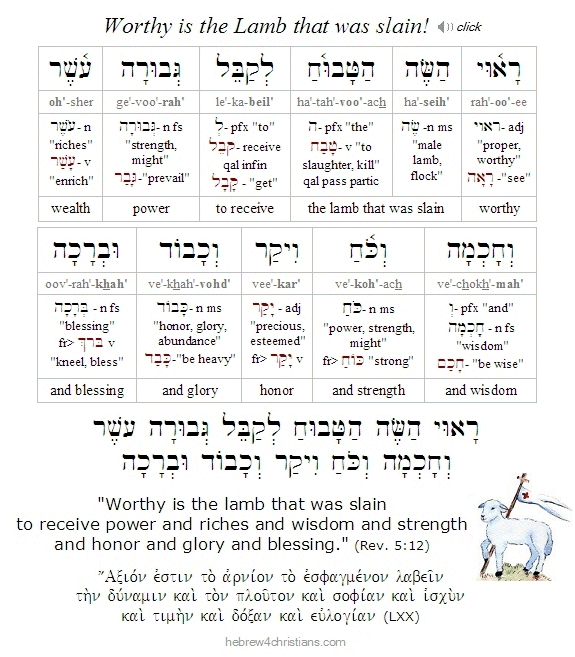 |
Note: I was hoping to make a revision of the Hebrew for Christians Seder Guide this year, focused on the Last Supper, but I simply ran out of time... Did you know that the largest portion of the Gospel of John is found in the "Upper Room" discourse of Yeshua with his disciples, on the night before he was betrayed? (John 14-18)? Yeshua's Seder was performed as the final expression of His mission as the Lamb of God, and it was observed a day earlier because Yeshua would offer Himself up as our Passover Lamb, sacrificed on the cross, at the very time the korban pesach (i.e., Passover sacrifice) was being made at the Temple.
The Appointed Time of Passover...
[ Shalom chaverim. You can download a free pdf of this post by clicking here... ]
04.11.24 (Nisan 3, 5784) The LORD is a God of order, and the appointed times (מוֹעֲדִים), or holidays, were designed and intended to reveal prophetic truth about him.
The first of all of the Biblical holidays (חגי תורה) is the appointed time of Passover (חג הפסח). On the first day of Nisan, two weeks before the Exodus, God showed Moses the new moon and commenced the divine calendar (Exod. 12:1-2). Two weeks later, the Israelites kept the Passover by daubing the blood of the lamb on their door posts (Exod. 12:6-7). At the stroke of midnight of Nisan 15 God sent the last of the ten plagues on the Egyptians, killing all their firstborn (Exod. 12:12). Israel then left Egypt and crossed the sea seven days later to begin their trek through the desert.
On the 6th of Sivan, exactly seven weeks after the Exodus, Moses ascended Sinai to receive the Torah (Shavuot). Forty days later, on the 17th of Tammuz, the tablets were broken. Moses then interceded for Israel for another forty days until he was called back up to Sinai on Elul 1 to receive the revelation of the Name (YHVH). After this, he was given the second tablets and returned to the camp on Tishri 10, a date that later was commemorated as Yom Kippur, or the "Day of Atonement." Later the holiday of Sukkot ("Tabernacles") was instituted to recall God's care for the people as they trekked through the desert en route to the promised land.
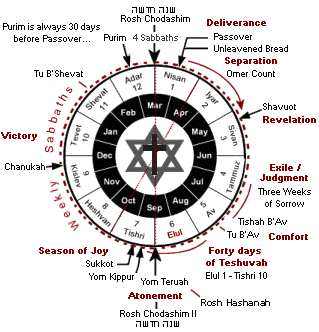 |
Beside the foretold visitation of the Messiah Yeshua to redeem Israel (Luke 2:25-32), the Exodus from Egypt (סיפור יציאת מצרים) is the most fundamental event of Jewish history. In addition to being commemorated every year during the appointed time of Passover (Exod. 12:24-27; Num. 9:2-3; Deut. 16:1), it is explicitly mentioned in the very first of the Ten Commandments (Exod. 20:2), and it is recalled during Kiddush every Sabbath day (Deut. 5:12-15). The festivals of Shavuot ("Pentecost") and Sukkot ("Tabernacles") derive from it (the former recalling the giving of the Torah at Sinai and the latter recalling God's care as the Exodus generation journeyed from Egypt to the Promised Land). Indeed, nearly every commandment of the Torah (including the laws of the Mishkan (i.e., "Tabernacle") and the sacrificial system) may be traced back to the story of the Exodus. Most importantly, the Exodus prefigures and exemplifies the work of redemption given through the sacrificial life of Yeshua the Messiah, the true King of the Jews and the great Lamb of God (שׂה האלהים).
In this connection note that the very first occurrence of the word "Torah" (תורה) in the Scriptures refers to the obedient faith of Abraham (Gen. 26:5), and the second occurrence refers to the law of Passover: "There shall be one law (תורה אחת) for the native and for the stranger who sojourns among you" (Exod. 12:49). There is a link between these two occurrences. Abraham lived before the time of the Exodus, of course, and therefore he obeyed the law of Passover by means of the Akedah (the sacrifice of his "only begotten" son Isaac). Despite offering his son up upon the altar at Moriah, Abraham believed in the LORD and it was credited to him as tzedakah (righteousness). Abraham's obedience revealed that the inner meaning of Torah is that the "righteous shall live by faith" (Hab. 2:4, Rom. 1:17). The Torah of Passover (תורת הפסח) likewise teaches that redemption from death is possible through the exchange of an innocent sacrificial victim. The blood of the Passover was "a sign" of imputed righteousness that was obtained entirely by faith. This is the "korban" principle of "life-for-life" that underlies the Torah of the sacrificial system of the Tabernacle as well.
Observing Passover is crucial for God's people. In the Torah we read: "And the LORD spoke to Moses in the desert of Sinai, in the first month (בַּחֹדֶשׁ הָרִאשׁוֹן) of the second year after they had come out of the land of Egypt, saying, 'Let the people of Israel keep the Passover at its appointed time. On the fourteenth day of this month, at twilight, you shall keep it at its appointed time; according to all its statutes and all its rules you shall keep it' (Num. 9:1-3).
 |
Ultimately all true Torah points to Yeshua, who is the divinely appointed Redeemer and the beginning and goal of all of creation... "When the fullness of time (τὸ πλήρωμα τοῦ χρόνου) had come, God sent forth his Son, born of woman, born under the Torah, to redeem those who were under the Torah, so that we might receive adoption as sons" (Gal. 4:4-5). As the psalmist later declared: "He made the moon for the appointed times" (Psalm 104:19). And since Yeshua came to perfectly fulfill the meaning of these appointed times, it is clear that he observed this calendar as well (Gal. 4:4-5).
Therefore, friends, let us keep the feast of Passover according to the appointed time of the LORD, namely, on the 14th day of the month of Nisan, the first month of the Biblical calendar, at twilight, as a time to be remembered and guarded for all generations (Exod. 12:42). As the Apostle Paul wrote: "Cleanse out the old leaven that you may be a new lump, as you really are unleavened. For Messiah our Passover Lamb has been sacrificed" (1 Cor. 5:7-8). Amen! Worthy is the Lamb who was slain!
Hebrew Lesson:
Psalm 104:19 reading (click):
Leprosy of Ingratitude...
[ The following is related to our Torah reading this week, parashat Tazria... ]
04.10.24 (Nisan 2, 5784) Tazria, or "leprosy," is a spiritual sickness brought about by sinful thinking and faithlessness... In this connection Kierkegaard notes: "The gospel about the Ten Lepers (Luke 17:11-19) is about how the nine were healed of their leprosy – and then caught, so to speak, an even worse leprosy: their ingratitude and unthankfulness. Herein lies the difference between sickness of the body and sickness of the spirit." Ten metzorot (lepers) were healed in body, but only one was healed both in body and soul -- the "stranger" who recognized God's kindness and who made an effort to offer his thanks...
Hebrew Lesson:
Psalm 41:4 reading (click):
Purification and Healing...
[ The following is related to our Torah reading for this week, parashat Tazria... ]
04.10.24 (Nisan 2, 5784) Our Torah portion for this week, parashat Tazria, continues the discussion of the laws of "purity" and "impurity" that began earlier with parashat Tzav. Of particular interest are certain afflictions, collectively called tzara'at (צארעת), that caused the affected person (or a thing) to be both ritually impure (tamei) and in a state of uncleanness (i.e., tumah: טומאה). Tzara'at was an a spiritual affliction (i.e., yisur: יסור) that could only be diagnosed by a kohen (priest) and not by a doctor... If someone was diagnosed with tzara'at, they were called a "metzora" (מצרע) and forced to live in a state of exile where they were instructed to do teshuvah (repentance) and seek spiritual healing.
The cleansing of a metzora (i.e., "leper") corresponded with other significant sacrificial rituals given in the Torah. The sprinkling of the hyssop by the priest recalled the blood of Passover; the offering made of the two birds - one which was sacrificed and the other set free - recalled the scapegoat of the Yom Kippur ritual. The washing of garments, the shaving of all hair, and the immersion in a mikveh (a pool of fresh water) recalled the birth of the Jewish people at the Sea of Reeds. Finally, the blood of the guilt offering sprinkled on the earlobe, thumb and foot, recalled the dedication of Aaron and his sons as the priests of Israel (Lev. 14:14). In other words, the individual purification process mirrored the purification of the community of Israel, and healing ultimately meant being re-identified as a redeemed child of God. In a very literal sense, then, we see how the metzora was "reborn" by water and by the blood (see John 3:5; 19:34; Heb. 9:19).
Of the Messiah it is written: "He is despised and rejected of men, a man of pains (אִישׁ מַכְאבוֹת) and acquainted with sickness (וִידוּעַ חלִי), and we hid as it were our faces from him. He was despised and we esteemed him not. Surely he has carried our sicknesses (חֳלָיֵנוּ) and borne our pains (מַכְאבֵינוּ), yet we esteemed him as plagued (נָגַע), smitten of God (מֻכֵּה אֱלהִים) and oppressed. But he was pierced (מְחלָל) for our transgressions (פְּשָׁעֵנוּ), he was crushed for our iniquities (עֲוֹנתֵינוּ): the discipline for our peace was upon him (מוּסַר שְׁלוֹמֵנוּ עָלָיו); and in his blows we are healed. All we like sheep have gone astray; we have turned every one to his own way, but the LORD has attacked in him (הִפְגִּיעַ בּוֹ) the iniquity of us all" (Isa. 53:3-6). Through the substitutionary sacrifice of the righteous Suffering Servant, Yeshua, we are both forgiven and made free from the power of sin and death. Because of Him we are no longer "lepers" or outcasts from the community of God but are made clean through His loving touch.
Notice that the word translated "blow" (i.e., חַבּוּרָה, "wound" or "stripe") comes from the same root as the word "friend" (חָבֵר), and therefore we can read this as "in His friendship we are healed." Yeshua gave up His life for us so that we could become his friends... As He later told us regarding his sacrifice: "Greater love has no one than this, that one lay down his life for his friends" (John 15:13). Indeed of Yeshua it may truly be said, Yesh ohev davek me'ach – "there is a friend who sticks (davek) closer than a brother" (Prov. 18:24).
Hebrew Lesson
Psalm 51:7 reading (click):
Note: For more on this subject, see the article: "Thoughts on Holiness."
Finding your Greatest Good...
04.10.24 (Nisan 2, 5784) The heart (הלב) is the center of the will - the locus of desire, affection, and love... However, the heart itself must be constrained by wisdom (חוכמה), since unbridled desire is slavery to the lower nature (יצר הרע), as it says: "The righteousness of the upright will deliver them, but the faithless will be ensnared by their own desires" (Prov. 11:6).
The problem for many of us is having "disordered loves," that is, serving various idols of the heart that demand our attention yet divert us from what we really need. The difficultly is not so much that we indulge in lesser loves as much as we do not know the love of God that heals us and sets us free. As C.S. Lewis once said, "God cannot give us a happiness and peace apart from Himself, because it is not there. There is no such thing" (Mere Christianity). The righteous have found the most precious secret: "I shall behold your face in righteousness; when I awake, I shall be satisfied with your likeness" (Psalm 17:15).
It has been said that "there is nothing so whole as a broken heart." We become whole when we discover that the idols of our hearts do not truly satisfy us. Usually this involves "severe mercy" as we learn that what we thought we "needed" proved to be just another illusion... Then and only then can we begin to believe in and to accept God's love as our highest good. Such "perfect love" casts out the fear induced by the idols of the heart.
When we seek first the kingdom of God and His righteousness, the passions of our heart are ordered correctly. As it is also written in our Scriptures: "Delight yourself in the LORD, and he shall give you the desires of your heart. Commit your way to the LORD; trust also in him, and he will bring it to pass. And He shall bring forth your righteousness as the light, and your judgment as the noonday" (Psalm 37:4-6).
The Lord is near to the shavur lev (שבור לב), the one with a broken heart. The Hebrew word "lev" (לב) metaphorically refers to our inner life, that is, our affections, mind, and will. This is revealed in the letters of the Hebrew word itself: the Lamed (ל) depicts a "staff" used to direct something (i.e., the will), and the Bet (בּ) depicts the "house" of the physical body. Lev then represents our inner life of thought and feeling expressed in our actions. Those who are broken in heart – the nishberei lev (נִשְׁבְּרֵי־לֵב) – have discovered that they cannot control their own lives, that they are inwardly "shattered," and therefore they need divine help. Contrary to conventional wisdom, God helps those who cannot help themselves; He prefers to use broken vessels in His service (Psalm 51:19). As A.W. Tozer observed: "Beware of any Christian leader who does not walk with a limp."
Yeshua taught, "Blessed are the pure in heart, for they shall see God" (Matt. 5:8). As I've mentioned before, the Greek word translated "pure" is katharos (καθαρός), sometimes used describe the cleansing of a wound (catharsis), or to describe the unalloyed quality of a substance revealed through refining fire. Metaphorically, then, purity of heart refers to separation from the profane - singleness of vision, wholeheartedness, passion, and focused desire for the sacred.
Faith is a great trembling of love: "With this ring I do worship thee..." As we center our affections on Yeshua, we become pure in heart -- i.e., unified, made whole, and healed of our inner fragmentation. We see the Lord both in this world, through his effects, and then panim el panim (פָּנִים אֶל־פָּנִים), "face to face," in the world to come. Our hope purifies us for that coming great day of full disclosure (1 John 3:2-3; Heb. 12:14). That day is surely drawing near, friends.
Hebrew Lesson
Psalm 37:4 reading (click):
Passover Soul Searching...
[ The following is related to the theme of repentance before the holiday of Passover... ]
04.10.24 (Nisan 2, 5784) The search for chametz (חפש חמץ) before Passover may be likened to the soul searching we do before the High Holidays in the fall, when we take an inventory of our spiritual condition (חשבון נפש) and do teshuvah. The Torah instructs us to carefully search and remove sources of inner impurity so that we might experience the truth that we are a "new lump" - that is, a new substance that is purged from the sour and rotting influences of our past lives... And since Yeshua has been sacrificed as your Passover Lamb, you are indeed a new creation (בּריה חדשׁה) made "unleavened" (pure) by the power of the Holy Spirit (2 Cor. 5:17). Therefore you are likewise commanded put away the "old nature" (יצר הרע) and purge from your life the old influences that inwardly canker you and make you sick (Eph. 4:22; Col. 3:9). Walk without hypocrisy in the truth of the love of God for your soul.
חָקְרֵנִי אֵל וְדַע לְבָבִי
בְּחָנֵנִי וְדַע שַׂרְעַפָּי
וּרְאֵה אִם־דֶּרֶךְ־עֹצֶב בִּי
וּנְחֵנִי בְּדֶרֶךְ עוֹלָם
chohk·rei'·nee · el · ve·da · le·vah·vee
be·chah·nei'·nee · ve'da · sar·ah·pai
oor·eih · eem-de'·rekh-oh'·tzev · bee
oo·ne·chei'·nee · be·de'·rekh · oh·lam
"Search me, O God, and know my heart!
Test me and know my anxious thoughts!
And see if there be any idolatrous way in me,
and lead me in the way of eternity."
(Psalm 139:23-24)

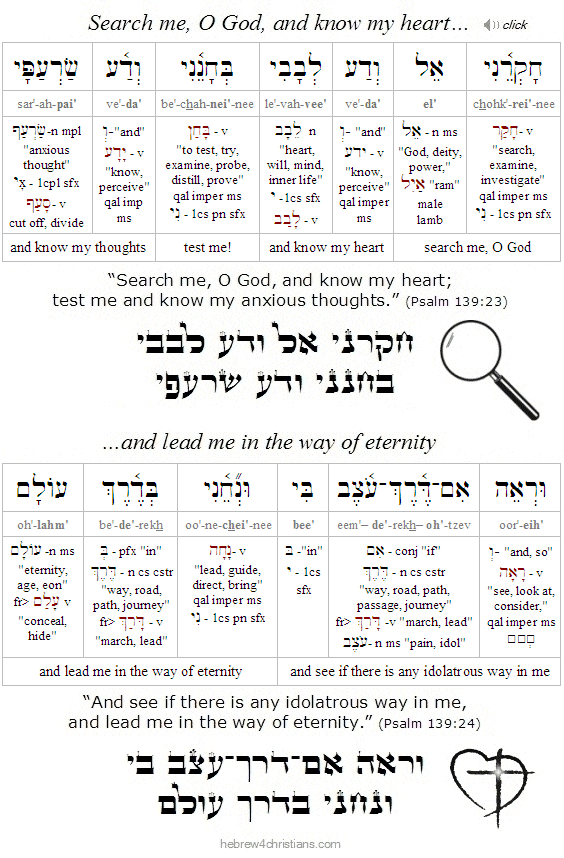
"Teshuvah" for a New Year...
04.09.24 (Nisan 1, 5784) The central message of the Scriptures is to turn to God for life. Rabbi Sussya once said: "There are five verses in the bible that constitute the essence of the Torah. These verses begin in Hebrew with one of these letters: Tav (תּ), Shin (שׁ), Vav (ו), Bet (בּ), and Hey (ה), which form the word for repentance, "teshuvah" (תְּשׁובָה). The five verses are 1) Tamim tiheyeh (תָּמִים תִּהְיֶה): "Be wholehearted before God" (Deut. 18:13); 2) Shiviti Adonai (שִׁוִּיתִי יְהוָה): "I have set the LORD always before me" (Psalm 16:8); 3) Va'ahavta lere'akha (וְאָהַבְתָּ לְרֵעֲךָ): "Love your neighbor as yourself" (Lev. 19:18); 4) Bekhol derakekha (בְּכָל־דְּרָכֶיךָ): "In all your ways know Him" (Prov. 3:6); and 5) Higgid lekha (הִגִּיד לְךָ): "Walk humbly with your God" (Micah 6:8).
In other words, the way of teshuvah, of answering God's call for you to return to Him, is to wholeheartedly "set" the LORD before you (i.e., to believe), to respect others, and to know God's Presence as you walk in humility with Him....
Aren't you grateful that the Lord asks this of us -- and not some long litany of commandments to juggle? Do justice, love mercy, and walk humbly with God (Micah 6:8).
Hebrew Lesson
Micah 6:8 reading (click for audio):
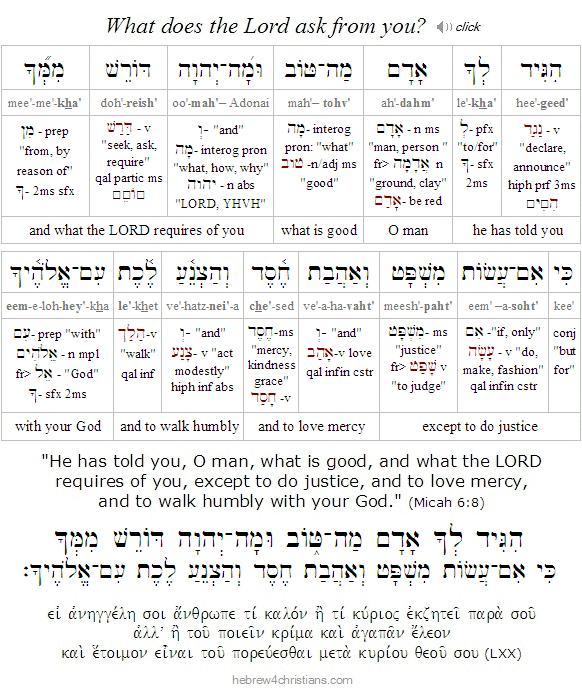 |
The Month of Deliverance...
04.09.24 (Nisan 1, 5784) Are you discouraged by this evil world, chaverim? Do you sometimes utter the plaintive prayer: "O Lord, I know that you will help us; but will you help us before you will help us?" When things are dark and seemingly hopeless, it is tempting to yield to passivity and even to despair, but it is precisely then that our faith must rise up and become all the more emboldened. Faith in God's love is the victory (i.e., netzach: נֶצַח) that overcomes the world and its illusions (1 John 5:4). We must remember that the LORD is our Deliverer and Kinsman Redeemer (הַגּוֹאֵל), a "very present help" in our troubles.
The great Passover (חג הפסח הגדול במצרים) is all about the victory of God over the powers of darkness for the sake of our deliverance (יְשׁוּעָה). "Let my people go!" Indeed, the month of Nisan is called Chodesh ha-yeshuah (חדֶשׁ הַיְשׁוּעָה), the "month of the salvation," both in terms of remembering the physical deliverance from the political powers of Egypt, but more profoundly in terms of our spiritual deliverance given at Zion/Moriah through the Messiah. Chodesh ha-yeshuah can also be read as chadash ha-yeshuah, "the new (חָדָשׁ) salvation," suggesting the new covenant power we are given in the Messiah. We wrestle not against flesh and blood, chaverim, but against hidden powers of darkness that seek to enslave us as Pharaoh did of old (Eph. 6:12). But thanks be to God who gives us the victory (netzach, salvation) through our Lord Yeshua the Messiah (1 Cor. 15:57).
Passover is really a month-long celebration. Over and over it is referred to as the "month of spring" (חדֶשׁ הָאָבִיב), the "month of redemption," the month of Nisan, and so on. The word Nisan (נִיסָן) itself might come from either the word nitzan (נִצָּן), meaning "bud" (Song 2:12), or the word nissim (נִסִּים) meaning "miracles," both of which suggest physical and spiritual resurrection in our lives. Others think the word comes from the verb nus (נוּס), meaning "to flee," both in relation to Israel's flight from Egypt and Egypt's flight from Israel (i.e., when the pursuing Egyptian cavalry fled (נָסִים) before the sea closed upon them (Exod. 14:25, 27). We also see this usage in the verse: "The wicked flee (נָסוּ) when no one pursues, but the righteous are bold as a lion" (Prov. 28:1). The devil's power is found in the lie. If he can make you afraid, you will not think clearly. Establishing your faith in the truth will embolden you to deal with the lies and distortions that are intended to enslave you in fear. As Yeshua said, the truth will set you free (John 8:32).
Yeshua is called the "Lion of the tribe of Judah" (הָאַרְיֵה מִשֵּׁבֶט יְהוּדָה) and the "Root of David" (שׁרֶשׁ דָּוִד). Notice that the name Judah (יְהוּדָה) includes the Name YHVH (יהוה) with the insertion of the letter Dalet (ד), suggesting that this shevet (tribe) would be the "door" or "gate" into the presence of God. Yeshua the Messiah was from the tribe of Judah who described Himself as ha-sha'ar (הַשַּׁעַר) "the gate" (John 10:9). Putting our faith in Yeshua gives us bold access to the throne of God's grace so that we can find help (deliverance) in time of our need (Heb. 4:16).
In light of the conditions of this present evil world, we cry out for the Messiah to return now! We want His deliverance, just as He delivered the Jews from ancient Egypt with great signs and wonders. Most politicians, by definition, exhibit the Pharaoh-like lust to control and exploit people. They are called "the lords of the darkness of this world" / τοὺς κοσμοκράτορας τοῦ σκότους τούτου (Eph. 6:12). This is the nature of the corruption of those who crave power over others... Today, so many people live in fear because they believe the propaganda of the "princes of this age." We must always keep in mind that reality centers on the LORD God of Israel, not in appearances and the rhetoric of political or media figures. Melo khol ha'aretz kevodo: מְלא כָל־הָאָרֶץ כְּבוֹדו, "the whole earth is filled with His glory (Isa. 6:3). And the LORD God of Israel cares about people's liberation from deception and tyranny. The story of the Exodus is His everlasting rebuke to all the world's dictators and should cause every politician to soberly assess their fate... The time is coming when His judgment will fall upon all the "kings of the earth who take counsel against the LORD and against His Mashiach" (Psalm 2:2).
The world runs on a different "clock" and operates under its own set of philosophical assumptions. The "wisdom of this world" (σοφία τοῦ κόσμου τούτου) is the prevailing cultural spirit that suppresses the reality of God's Presence and truth. Such "wisdom" is regarded as foolishness before God, and God has promised to "seize the so-called wise in their own craftiness" (1 Cor. 3:19). The life of faith, on the other hand, sees what is invisible. Faith (emunah) apprehends "the substance (ὑπόστασις) of things hoped for, the assurance (ἔλεγχος, conviction, "correction," "argument," i.e., tokhachat: תוֹכַחַת) of things not seen" (Heb 11:1). Faith "looks not to the things that are seen but to the things that are unseen. For the things that are seen are transient, but the things that are unseen are eternal" (2 Cor. 4:18).
Ultimately Passover is about experiencing the deliverance of God from our fears, despite the appearance of rampant wickedness in this world. During this season - and always - may He help us walk by faith (בָּאֱמוּנָה), not by sight (2 Cor. 5:7). May He give you comfort and reassure you of His strong arm of deliverance at this time... Remember the great promise: "God is our refuge and strength, a very present help in trouble. Therefore we will not fear though the earth gives way and the mountains be moved into the heart of the sea." Amen.
Hebrew Lesson
Psalm 46:1-2 reading (click):
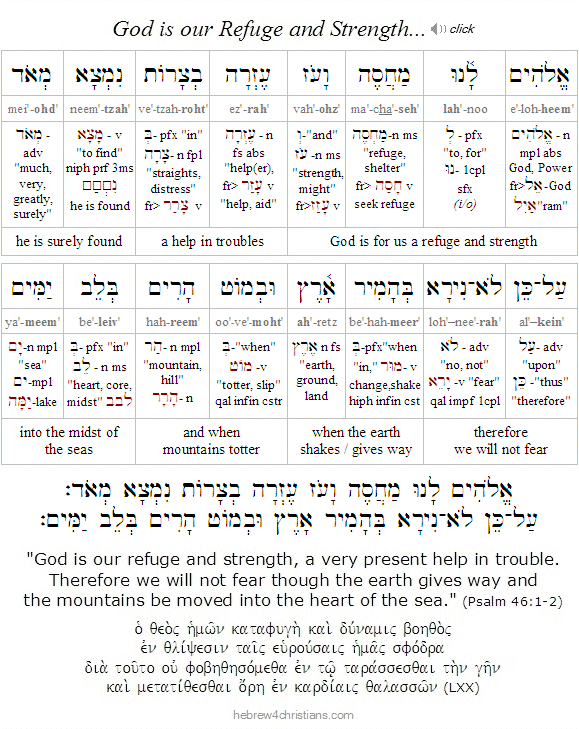 |
Teshuvah of Love...
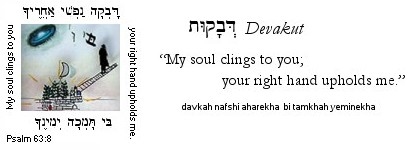
[ Shanah Tovah b'Yeshua, chaverim. At this time may we renew our hearts before the LORD. ]
04.08.24 (II Adar 29, 5784) When considering the matter of "teshuvah" (i.e., returning to God), it is vital to understand that God does not love you based on your obedience, though his love for you will lead you to obedience... It is only after accepting that you are accepted despite yourself – despite your inherent inability to please God, despite your incurably sick heart, despite your disobedience, sin, and so on – it is only then that earnest, Spirit-enabled obedience may arise spontaneously within your heart (Rom. 2:4). In that sense "obedience" is like falling in love with someone. It is your love that moves you to act and to express your heart, and were you prevented from doing so, you would undoubtedly grieve over your loss... Therefore the "law of the Spirit of Life in Messiah" is first of all empowered by God's grace and love. We walk by faith, hope, and love – these three. And this explains why the first step of teshuvah is to love God: Ve'ahavta et Adonai (Deut. 6:5). The work of faith is to believe in the miracle that God's love is "for-you-love..." (John 6:29).
If you find yourself operating from a sense of God's conditional acceptance, you will undoubtedly need to repeat the same sins over and over until your heart is finally convinced of its incurably wretched state. You must first be utterly sick of yourself to believe in the miracle of God's deliverance. You have to be "sick of your sickness" and be willing to give it up. Only then will the message of find opportunity to speak...
It needs to be added, however, that genuine repentance implies an understanding that sin is dreaded because it separates us from God's love. Some seem to think Yeshua died on the cross for their sins so that could live their lives without regard for sin, but that is of course a perversion of the truth. Yeshua did not suffer, bleed out, and agonize upon the cross for our sins so that we'd be given license to disregard the God's great cost to remedy our hearts... Indeed, by treating sin lightly we disparage the sacrificial work of Yeshua given on our behalf – we "crucify the Son of God afresh" and thereby deny God's wrath for sin as well as his severe mercy given to those who trust in him (Heb. 6:4-9). There is no Torah apart from the cross, just as there is no cross apart from the Torah... Most of all, the cross of Yeshua reveals that God is willing to sacrifice everything for your blessing...
Hebrew Lesson
Psalm 145:8 reading (click):
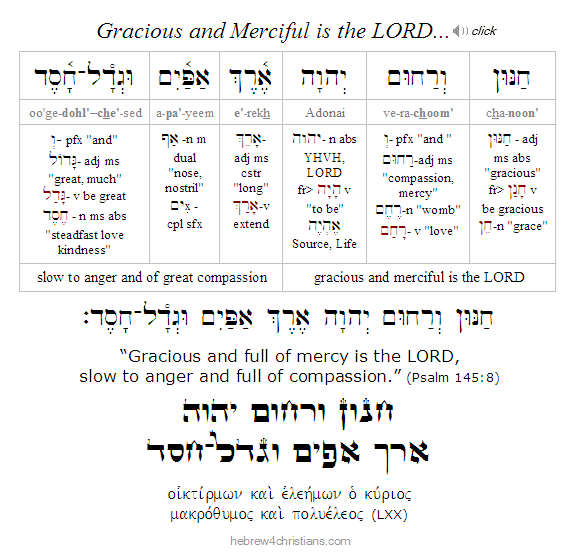 |
"Blessed is the man who walks not in the counsel of the wicked, nor stands in the way of sinners, nor sits in the seat of scoffers, but his delight is in the Torah of the LORD, and in His Torah he meditates day and night" (Psalm 1:1-2). Again, it is a severe mercy, a weighty grace, that is bestowed to us, friends...
God of Wonders Blessing...
04.08.24 (II Adar 29, 5784) Shalom chaverim, and shanah tovah! The following blessing is traditionally recited whenever you want to praise the LORD for the works of His creation, for example upon seeing lightning, an eclipse (solar or lunar), or a comet, or when first seeing a mountain, a river, an ocean or other natural wonder:
"Blessed are You, Lord our God, King of the universe,
who makes the works of creation."
We must always keep firmly in mind that all of reality centers on the LORD God of Israel, and cerrtainly not in vain appearances and the deceptive rhetoric of political or media figures of the false world (i.e., עולם השקר). Melo khol ha'aretz kevodo: מְלא כָל־הָאָרֶץ כְּבוֹדו, "the whole earth is filled with His glory (Isa. 6:3). The "signs and wonders" of the LORD are all around us, if we are willing to see!
Hebrew Lesson
Psalm 72:18 reading (click):
Getting Ready for Passover...
[ Passover begins Monday, April 22 this year. Chag Pesach Sameach, chaverim! ]
04.08.24 (II Adar 29, 5784) Preparing for Passover usually begins a full month before the holiday arrives, just after the festival of Purim (or at the latest around the time of the New Year of spring, i.e., Nisan 1). Since no leavened bread may be eaten during all seven days of Passover, we make a special effort to remove leaven entirely from our homes, in obedience to the Torah's command (see Exod. 12:15). Spiritually understood, we remove leaven (called "chametz") to symbolize that we are making a radical break from the past by becoming a new "substance," as Paul instructed: "Cleanse out the old leaven that you may be a new lump, as you really are unleavened: for Messiah our Passover Lamb has been sacrificed for us. Let us therefore celebrate the festival, not with the old leaven, the leaven of malice and evil, but with the unleavened bread of sincerity and truth" (1 Cor. 5:7-8). Note that the Greek text uses an imperative verb here (ἐκκαθάρατε): "You cleanse out (i.e., purge, as in catharsis) the old leaven so that you become a new lump (ἵνα ἦτε νέον φύραμα)" since you have been made new because of what Messiah has done for you." This is a matter of faith, friends, as you "become who you are" by trusting in the Salvation of the God of Israel.
|
"A little leaven leavens the whole lump..." Chametz (i.e., leaven) is considered a corrupting influence, a hidden uncleanness that manipulates purer elements. Like the influence of a lump of leaven in a batch of dough, "spiritual" leaven functions as an evil impulse within us (i.e., yetzer ha'ra: יֵצֶר הַרָע) that corrupts and "sours" our soul. You cannot include a little sin in your life without it affecting your whole spiritual life. This "yeast in the soul" is essentially pride that manifests itself in idolatrous desires and lusts (the "puffed up" rise of the flesh in opposition to God). A practical way to observe the commandment to purge out the old leaven is not only to physically remove leaven from your home, but to look within you heart to see what corrupts and enslaves you in the physical, emotional, and intellectual realms of your life. Are you addicted to pleasure? power? approval from others? Are you enslaved to pride or fear? What holds your attention? What moves your behavior? This is part of the "search for chametz" in your life. Take a few moments to write down all the things that have enslaved you and then tear the list into small pieces. Before Passover arrives, take the torn pieces and burn them in a fire, symbolizing the end of your former life and the making of all things new. "Therefore if any person is in Messiah, he is a new creation: old things are passed away; behold, all things become new" (2 Cor. 5:17).
Hebrew Lesson
Exod. 12:19a reading (click):
Related Topics:
Audio Discussions:
Hebrew Lesson
Psalm 79:9 reading (click):
The Time is Now...

04.08.24 (II Adar 29, 5784) At the advent of a new Biblical year, it is traditional to confess your sin and turn to the Lord with a renewed passion. Therefore the sages admonish: "Repent one day before you die" (Mishna Avot 2:15b). But who knows the day of one's death in advance? Therefore live each day as if it were to be your last, and may God help you make the wholehearted decision to "seek the LORD while He may be found; call out to Him while He is near" (Isa. 55:6). Amen. But many people live in a state of hesitation and uncertainty... The Spirit asks: "How long will you go limping between two different opinions?" (1 Kings 18:21).
This question is meant for us to hear today. We are being called to make up our minds and turn (shuv) to the LORD. After all, what is more important to you than your relationship with God? Is there anything more important than this? As C.S. Lewis once said, "Christianity, if false, is of no importance and, if true, is of infinite importance. The one thing it cannot be is moderately important" (God in the Dock). "For he is our God, and we are the people of his pasture and the sheep of his hand today -- if you hear his voice" (Psalm 95:7). Today, if you hear his voice, do not harden your heart (Heb. 3:15). "Take care, brothers, lest there be in any of you an evil, unbelieving heart, leading you to fall away from the living God, but encourage one another every day, as long as it is called "today," so that none of you may be hardened by the deceitfulness of sin" (Heb. 3:12-13). Wake up! The time is now...
Hebrew Lesson
Psalm 39:4 Hebrew reading (click):
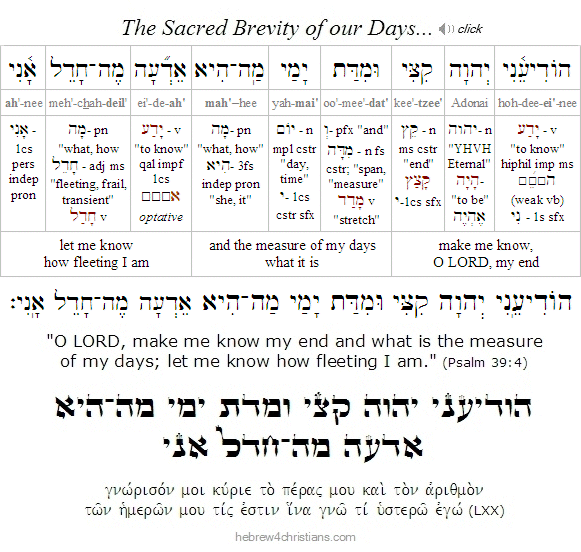 |
This week's Torah:
Parashat Tazria - תזריע
04.07.24 (II Adar 28, 5784) Shanah tovah chaverim! Our Torah reading for this week, parashat Tazria (תזריע), continues the discussion of the laws of "purity" and "impurity" that began earlier with parashat Tzav. A new mother is regarded as a niddah (a menstruent woman) and is considered "impure" (tamei) regarding the sanctuary for 40 days (if a boy) or 80 days (if a girl). On the eighth day of life a boy must be circumcised. After the mother's "period of impurity" had ended, she was required to bring a yearling sheep as a burnt offering and a dove for a sin offering (if she is poor, two doves sufficed for both offerings).
The portion next describes certain afflictions, collectively called tzara'at, that caused the affected person (or thing) to be both ritually impure (tamei) and in a state of uncleanness (tumah). Note that tzara'at is not to be identified with "leprosy" (as some English translations claim), since the symptoms of tzara'at included not just the afflicted person's skin, but sometimes his clothes, pottery vessels, and house.
When applied to people, tzara'at was a sort of a spiritual affliction (i.e., yisur: יסור) that could only be diagnosed by a kohen (priest), not a doctor. If white or pink patches appeared on a person's skin, the afflicted person was required to contact a kohen for an examination. If the priest detected 1) two hairs that had turned white within the spot, or 2) a piece of healthy skin in the middle of the spot, he was declared tamei (unclean), and then had to follow the prescribed laws for the metzora (person affected with tzara'at); otherwise he was declared tahor (clean). On the other hand, if the priest suspected tzara'at but was unsure, the afflicted person was quarantined and required to perform teshuvah (repentance). If a second evaluation indicated that the spot(s) had grown larger in size, the person was declared tamei and was subject to the laws for the metzora (i.e., dwelling "outside the camp" until the person was completely healed).
If someone was diagnosed with tzara'at, they were forced to leave the community and live in a state of exile. He had to tear his clothes like a mourner, put a shroud over his face (descending to his upper lip) and remain alone. If anyone came near, the metzora was required to cry out: "Unclean! Stay away! Do not become impure because of me!" (no one was permitted to come within eight feet of him). While so isolated, the person would have opportunity to perform teshuvah and seek spiritual "rebirth" (as described in the following Torah portion, parashat Metzora).
Turning to God's Heart...
[ Shabbat Chodesh Shalom, chaverim... the last Sabbath before the Biblical New Year! ]
04.05.24 (II Adar 26, 5784) Turning to God in teshuvah, or "conversion," is not something you accomplish in your own strength or will. No, it is an act of grace wherein God touches you to make you alive (John 1:11-12). After all, how could it really be otherwise? From our perspective, teshuvah is a matter of trust - first trusting that God loves you and redeems you from the curse of your life, and second, that he will guide you by means of his spirit to know him. Sanctification, then, is the practice of attending to God's presence, seeking him in your heartache and in your hope, walking with him in your sorrows and in your joys....
Doubts may sometimes arise, however. You may hear questions within your soul asking where you are really going, or questions about the choices you have made. You may feel anxious or uncertain about your relationship to "God, the universe, and everything." When this occurs, you must again remember who you truly are. You must recall and reaffirm God's personal and covenantal love for you, even when you feel afraid or lost inside. God's everlasting love in Yeshua is the foundation, the solid rock, and the place where you will find shelter. It is the very "ground of your being." God's heart is the place where you are never left nor forsaken, even if you have wandered into painful byways of regret, sinfulness, and loneliness. Like the prodigal, when we "come to ourselves," when we remember where we really belong, we will rediscover our Father's outstretched arms welcoming us back home (Luke 15:17-24).
Hebrew Lesson
Isaiah 41:13 Hebrew reading (click):
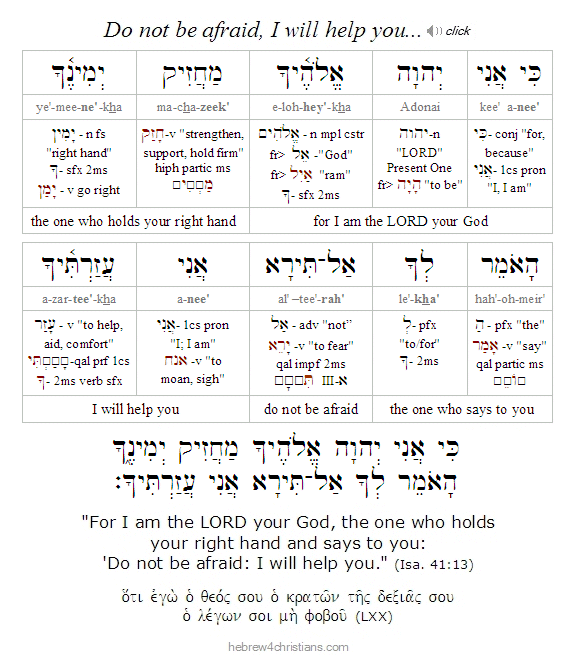 |
Endurance and Healing...
04.05.24 (II Adar 26, 5784) Our promised healing assuredly will come to us, though it remains the prerogative of God to allow trials in our lives that will work for our ultimate good. Therefore faith is the key here: Steadfastly affirm your healing even in the midst of your anguish, because your suffering is a test designed to teach you to trust God and to receive the blessing apart from any empirical evidence (2 Cor. 4:18). As the Torah declares of our father Abraham: והאמן בּיהוה ויּחשׁבה לו צדקה -- "And he believed in the LORD, and He counted it to him for righteousness" (Gen. 15:6); and also of Job's faith in the midst of his agonizing struggle: הֵן יִקְטְלֵנִי לוֹ אֲיַחֵל -- "Though he slay me, I will hope in him" (Job 13:15).
Sometimes all we can do is cry out to the LORD for deliverance... Our heart's cry does not question God's goodness to us, though we may silently wonder about the extent to which affliction may be required to mend our hearts. As C.S. Lewis once said, "We are not necessarily doubting that God will do the best for us; we are wondering how painful the best will turn out to be" (Letters of C.S. Lewis, 1964). There is a trust issue in suffering, and an "intimacy" that comes through its fires. Do not jump to conclusions; resist any insinuation that the Lord is being unjust! As Kierkegaard reminds us, "It is one thing to conquer in the hardship, to overcome the hardship as one overcomes an enemy, while continuing in the idea that the hardship is one's enemy; but it is more than conquering to believe that the hardship is one's friend, that it is not the opposition but the road, is not what obstructs but what develops, is not what disheartens but ennobles" (Four Upbuilding Discourses, 1844). Now that is a godward mindet that will endure all things to God's glory...
When Yeshua victoriously proclaimed, "It is finished" just before he died on the cross, he foreknew that his followers would experience a "purging process," a "refining fire," and time on the "potter's wheel" to perfect their sanctification. At the cross of Yeshua death itself was overcome – and all that it implies – and yet it is nevertheless true that we will suffer and die ourselves and that death persists an enemy (see 1 Cor. 15:26). While we celebrate the reality of the final redemption, the "instrumentality of our sanctification" needs to be willingly accepted and endured. I say "endured" here because I don't think we will ever have a complete answer to the question of "why" we undergo the various tests we face in this life. Our disposition in the midst of seemingly unanswered prayers is where our faith is disclosed: will we despair of all temporal hope or not? Will we console ourselves with the vision of a future without tears and loss - a heaven prepared for us -- or will we resist the present darkness and seek to find deliverance in this hour? Do we trust God with our pain and submit to his will, or will we "die" inside – losing hope and despairing of all remedy?
As King David once wrote, "At an acceptable time, O God, in the abundance of your steadfast love answer me in your saving faithfulness. Deliver me from sinking in the mire; let me be delivered from my enemies and from the deep waters. Let not the flood sweep over me, or the deep swallow me up, or the pit close its mouth over me. Answer me, O LORD, for your compassion is life; in the abundance of your mercies turn to me" (Psalm 69:13-16).
ענני יהוה כי־טוב חסדך
כרב רחמיך פנה אלי
a·nei'·nee · Adonai · kee-tohv · chas·de'·kha
ke·rohv · ra·cha·mey'·kha · pe·neih · ei·lai
"Answer me, O LORD, for your compassion is life;
in the abundance of your mercy turn to me."
(Psalm 69:16)

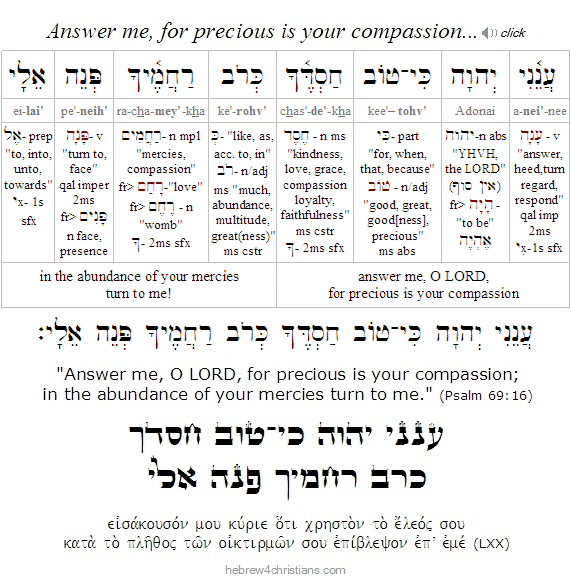
"But You, O GOD my Lord, do Thou for me for your own Name's sake; because your steadfast love is good, deliver me" (Psalm 109:21). "Do thou for me" is the confession that God alone has the power to help. Asking God to bring glory to His own Name -- to honor and magnify His Name -- is the theme of all true intercession.
Suffering has a way of focusing the heart and mind, reminding us that "today is the tomorrow of yesterday." Life is short, and our need is great to turn to the LORD and take hold His promises. We take comfort that God is for us the God of salvation: "Blessed be the Lord, who daily bears us up; God is for us our salvation. Selah. Our God is a God of salvation (יְשׁוּעָה), and to GOD, the Lord, belong deliverances from death" (Psalm 68:19-20).
Be encouraged, brothers and sisters in the Lord. All those who are "fathered by God" conquer the world, since God imparts to us the victory of faith by means of His powerful Spirit (1 John 5:4). Therefore the heart of faith steadfastly affirms, "In all these things [afflictions, tribulations, etc.] we are 'more than conquerors' (lit., "hyper-conquerors," i.e., ὑπερνικῶμενfromὑπέρ, "hyper" + νικάω, "to overcome") through Him that loved us (Rom. 8:37).
|
Essential Healing...
04.04.24 (II Adar 25, 5784) The Hebrew word for "healing" is refuah (רְפוּאָה), from rapha (רָפָא), meaning to repair, restore, or make whole. Some of the sages have said that the root letters indicate the meaning or essence of healing itself, namely, confessing the truth of the LORD. This can be seen when we consider that the letter Resh (ר) refers to the head (i.e., rosh: ראשׁ), or that which is first -- suggesting that thinking and exercising the will to do teshuvah is primary (Psalm 90:2-3); the letter Pey (פּ) refers to the mouth (i.e., peh: פֶּה), that is, to speech, confession, and therefore to prayer; and the letter Aleph (א) refers to faith in the LORD (i.e., ehyeh: אֶהְיֶה), the One and only true God, the Master of the universe (Exod. 3:14).
So the Hebrew word for healing is connected first with changing our thinking by turning to God, confessing our sin, and trusting the LORD for life, as it says, "confess your sins to one another and pray for one another, that you may be healed" (James 5:16), and "I considered my ways, and turned my feet unto Thy testimonies" (Psalm 119:56). Refuah shleimah (רְפוּאָה שְׁלֵמָה), or a complete healing, is ultimately found when we turn to God with all our hearts and find shalom (שָׁלוֹם), as it says, "the Torah of the LORD is perfect, returning the soul" (Psalm 19:7). The Hebrew word for sickness (i.e., choleh: חוֹלֶה), on the other hand, comes from a root (חלה) that stands for blocked (חָסום) or profane (חל) learning (לִמוּד) regarding matters of the Holy Spirit (ה). The LORD comes to seek and to save those who are lost, saying "I am your Healer" (אֲנִי יְהוָה רפְאֶךָ). Therefore confess your confidence that the LORD forgives all your iniquities and heals everything that blocks you from his blessing. Amen.
Note further the connection between forgiveness and healing, as it says in James 5:16, "Confess your sins to one another and pray for one another, that you may be healed (i.e., ἰαθῆτε, you will be made whole)," and 1 John 1:9, "If we confess our sins, he is faithful and just to forgive us our sins and to cleanse us from all unrighteousness."
Hebrew Lesson
Psalm 103:3 reading (click):
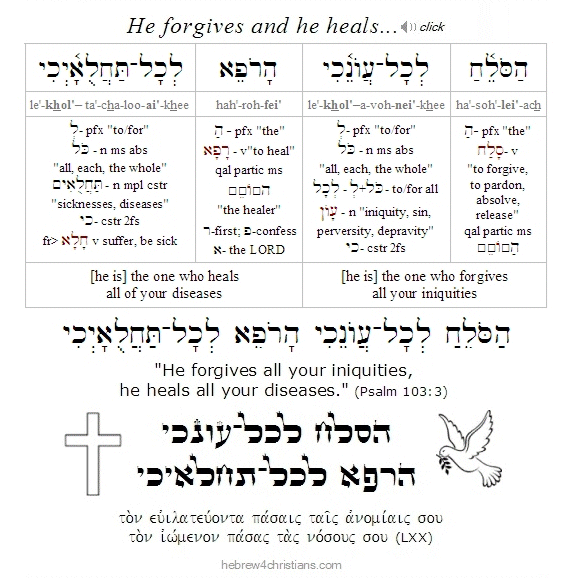 |
Healing from hidden faults...
04.04.24 (II Adar 25, 5784) All of us have unhealed parts, "hidden faults" (נסתרות) of which we are not fully aware. "Blind spots." Therefore king David prayed, "Who can discern his errors? cleanse me from secret faults" (Psalm 19:12). We are cleansed by confession (וִדוּי), that is, by looking within our hearts to uncover deeper motivations... If we are honest with ourselves we may discover, for example, that we are angry or fearful people, despite how we otherwise wish to regard ourselves. If you find yourself unable to let something go, for instance, some pain or failure of the past, remind yourself that you must do so if you want to move on with your life. Focusing on how things could have been different is to be enslaved to the past. The goal of teshuvah (repentance) is to turn us back to God for life, but to do this, we must be be willing to let go of what makes us sick.
Note that the Hebrew word translated "errors" (i.e., שְׁגִיאוֹת) comes from a root word (שָׁגָה) that means to wander, stray, or transgress. The question raised by David is rhetorical: "Who can discern his errors?" No one – apart from divine intervention... David asked to be cleansed from his "secret faults," which are not those that were performed by him "in secret," but rather those that were unknown, unseen, and unconscious to his own sense of awareness. These are "mindless" sins, unthinking offenses, hidden dispositions, character defects and actions that a person unwittingly performs, perhaps because of deep forces of which he was oblivious. These are the "secret sins" set in the light of God's face (Psalm 90:8); the "sluggish darkness" of the human heart that leads to death and ruin: "The heart is deceitful above all things, and incurably sick; who can understand it?" (Jer. 17:9). How many of us, after all, are fully aware of what we are doing when we are doing something? How many of us are completely transparent both to ourselves and before God, with no unclear motives, etc.? We must always be vigilant... There is always the force of habit, or the subconscious desires or conflicts of the inner life, that work on us, not to mention the trauma of our past and the present devices from the enemy of our souls. And may the LORD give us the willingness to be healed, even if there are parts of ourselves that seem to resist that healing. Amen.
Hebrew Lesson
Psalm 19:12 reading (click):
nivchan le'ahavah
Testing of the Reins...
04.04.24 (II Adar 25, 5784) The phrase "mitzvah haba'ah ba'aveirah (מִצְוָה הַבָּאָה בַּעֲבֵירָה) means a mitzvah that (indirectly) comes about by means of a transgression of another mitzvah. The sages cite the example of working on the Mishkan during the Sabbath day because even though working on the Sanctuary is indeed a blessing, it is not truly so if it violates God's will (Exod. 35:1-2). The sages liken this to making bread from stolen wheat -- and then reciting the "ha'motzi" blessing over the bread! (Bava Kamma 94). Likewise, giving tzedakah that has been gained through illicit means (such as stealing) is forbidden, as is the offering of any sacrifice that is defective or unwanted (Deut. 15:21).
Such considerations reveal that there are "weightier matters" of Torah, and therefore Yeshua warned against making a pretense of obedience at the expense of what is more important to God's heart. For example, tithing "mint and cummin" should not preempt the duty to care for the welfare of parents who are in need (Luke 11:42; Mark 7:9-13). Nor should "religious" activities be regarded as a substitute for surrender of the heart. On the other hand, working to pull a sheep that has fallen into a well on the Sabbath is more important than disregarding the suffering of the animal and the loss to the owner (Matt. 12:11). After all, what good is keeping a commandment in a selfish or self-serving way? Holiness is not about self-preservation as much as surrender. We must always remember that God looks upon the heart and "tests the reigns" (Psalm 7:9; Jer. 17:10).
The attitude of the heart (יַחַס לֵב) is essential. In ancient Hebrew, the "kidneys" (i.e., keliyot: כְּלָיוֹת) were thought to produce the "gut feelings" or "inner life" of a person, perhaps because they filtered the blood. Indeed your attitude and affections are foundational to the Torah of life. John Calvin wrote: "The Law is kept only when men are just and kind and true toward each other, for thus they testify that they love and fear God." In Jewish thinking, the basic respect for others is sometimes called "derekh eretz" (דֶּרֶך אֶרֶץְ).
We have to be careful not to miss the goal of our redemption, which is to become sanctified by embracing the heart, vision, and character of our Lord (Lev. 11:44). Yeshua is the pattern, and his life was unquestionably marked by qualities of mercy, forgiveness, and love. He overlooked our sins and transgressions by focusing on the weightier matters of our need for healing and reconciliation with God. On the other hand, he receives us as his children and therefore we will undergo "scourging" or testing of our "kishkas" (Deut. 8:5; Heb. 12:6). Indeed the Lord will allow "scorching" experiences by which our character defects are exposed and through which we may be refined by teshuvah. In the furnace of trials, God will separate us from our bad qualities, lifting off the dross to reveal the clear brilliance of his heart within us. As C.S. Lewis once said, "God does not love us because we are good, but God will make us good because He loves us." Amen.
Hebrew Lesson
Jeremiah 17:10 reading (click):
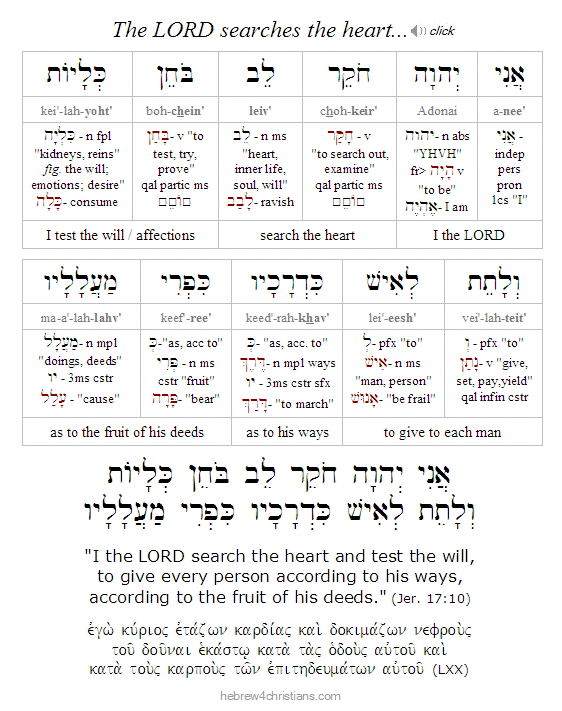 |
Hearing the Unsaid...
[ The following is related to our Torah reading for this week, parashat Shemini... ]
04.04.24 (II Adar 25, 5784) From our Torah portion this week we read: "Now Nadab and Abihu, the sons of Aaron, each took his censer and put fire in it and laid incense on it and offered strange fire (אֵשׁ זָרָה) before the LORD, that He had not commanded them" (Lev. 10:1). The sages note that while Aaron's sons Nadab and Abihu were godly people, they did not understand the phrase, "that He had not commanded them" (אֲשֶׁר לא צִוָּה אתָם), because they had assumed that since God did not explicitly tell them not to do something (i.e., not to burn incense in the Holy Place), then it was permissible to go ahead and do that thing. However, just because God does not say that we should not to do something does not mean that we are therefore at liberty to do it. All we can infer from silence is silence, not that the silence somehow communicates agreement with our desires.... Remember that it is not what God has not said that should be our concern, but rather what he has said (Deut. 29:29).
"A great many people think they are thinking when they are merely rearranging their prejudices." - William James
This sort of presumption is common today, where many make a pretense of ignorance, suppressing what they don't want to hear to justify their own religious perspectives and ideologies... It takes a genuine humility to confess that we often don't know why we are doing what we are doing, and then to back up and ask for God's help and direction.
Eclipses and Prophetic Signs...
04.03.24 (II Adar 24, 5784) As many of you likely know, on April 8th there will be a total eclipse of the Sun that can be seen in certain areas of the United States, and some people are making the claim that this eclipse is (or may be) a sign of a prophetically significant event. Now while it's true that April 8th does indeed mark a prophetically significant date this year, this is not because of a solar eclipse but rather because it marks the new moon of the first month of the Biblical calendar, called "Rosh Chodashim," and that date is significant because it signals the start of Chodesh ha'yeshuah (חודש הישועה), or the Month of Salvation, with Passover occurring exactly 14 days later under the full moon of the month...
A solar eclipse is an amazing event, of course, and it reveals God's glory in the heavens, but it is not to be used to foretell the prophetic calendar of Scripture, nor is to be confused with signaling the Great Tribulation or the End of Days prophecies. Indeed we are told in the Torah not to worship the sun or the moon or any of the heavenly host (Deut. 4:19; 17:3; Acts 7:42). The sun will be "turned into darkness" and the moon will appear as blood before the great and awesome Day of the Lord (יום יהוה הגדול), but that will occur later, after the Sixth Seal is broken as we stated in the Book of Revelation (Rev. 6:12-13, Matt. 24:29-31; Joel 2:30-31).
In all things we are to seek the Lord, but we must use discernment in our seeking. There are various general signs that the prophesied "end of days" draws near (Matt. 24:3-33), including the great sign of the return of the Jewish people to Israel (Ezek. 36:24; Hos. 3:5), the rise of militant Islam and the persecution of the Jewish people (Psalm 83), the apostasy or "falling away," of the institutional church and its flagrant disregard of the truth of Scripture (Matt. 24:4-5; 2 Thess. 2:3; 2 Tim. 3:1-9; Ezek. 13:6-9), the worldwide rise of skepticism, paganism, occultism, and "woke" ideological evils (Lev. 19:31), the increasing barbarity and lawless character of people (2 Tim. 3:1-5; Matt. 24:10-12). The world will experience increasing political and financial instability, there will be numerous wars and rumors of war; seismic activity will intensify in the earth, as will famines and worldwide diseases (man-made or otherwise). There also will be an upsuirge of persecution of sincere followers of Yeshua throughout the world.
In the midst of the moral and spiritual chaos, the "man of sin" (or anti-Christ) will arise who will at first appear to be a man of peace, allowing Israel to rebuild the Temple while somehow resolving the political unrest surrounding Jerusalem, but he will betray Israel and then openly persecute the Jewish people. The great tribulation will then befall the world in judgment from God (Matt. 24:21-22; Zech. 12:2-3) as a precursor to the second coming of Yeshua. The second half of Daniel's 70th week of years prophecy will be a time of surreal catastrophe for the world, with repeated judgments resulting in massive death and worldwide destruction. Thankfully, the followers of the Lord will be spared the wrath to come by being "taken away" to join the Lord for the heavenly wedding ceremony!
So let us be vigilant and look for the blessed hope, and the glorious appearance of our great God and Savior Yeshua the Messiah (Titus 2:13). If you set the LORD always before you and know Him in all your ways you will not be deceived by false teachers. Shalom chaverim.
Hebrew Lesson
Psalm 104:19 reading (click for audio):
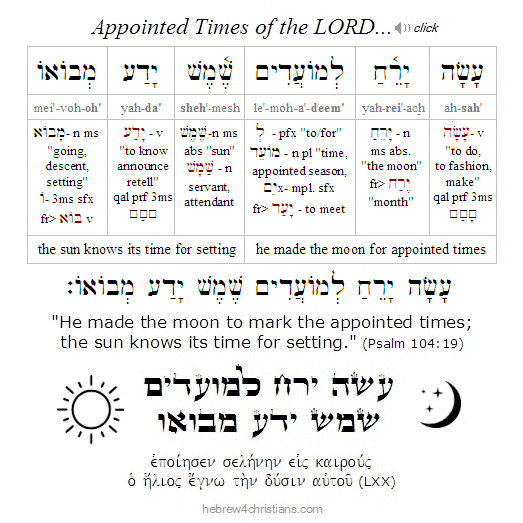 |
Note: In order to understand the "rapture" of the people of God, you have to do a careful study comparing statements about the "Day of the LORD" and the Second Coming with what Yeshua said to his disciples about preparing a place for them and then coming to take them away unexpectedly, as a groom who suddenly calls for the presence of his bride...
His Power to Heal...

04.03.24 (II Adar 24, 5784) There's an old story of the ancient philosopher Thales of Miletus who fell into a well while he was contemplating the heavenly bodies. All his grand intellectual aspirations resulted in a pratfall of humility. Kierkegaard likewise tells the tale of notable professor who, in the pontification of grand ideas of the cosmos, was oblivious to a drop of sweat that dangled from his nose. And there have been times in my life when I have meticulously studied Scripture and was so engrossed in theological matters that I somehow forgot that God was really present! In such moments, if I were suddenly interrupted, I would likely fall into a moment of peevishness and irritation. It would be comical if it weren't so sad and disappointing, and yet there is a message in the pain that should not be missed....
What do we do with our inconsistencies, those "lapses" of faith that expose what we are actually believing at the time? These are gaps or incongruities between what we might say is true and what our behavior otherwise reveals. For instance, we may say that we trust God with our lives, and aver that we believe that the Almighty works all things "together for our good," but inwardly we are filled with impatience, anxiety, and even dread. We are vaguely conscious of our dissimulation at times; we feel the tension that something is not right about us; we sense that we are not who we want to think we are. We may even suspect that we are inwardly divided, unstable, and afraid of what is hidden within our deepest hearts. But we tolerate our pretenses. We may ask ourselves "what would Jesus do?" and then find reasons to excuse ourselves; we may affirm: "When I am weak, then I am strong," and then "think twice" in fear over circumstances that we do not understand...
So how do we deal with this contradiction between what we are and what we ought to be? How do we reconcile what "is" with what "ought" to be? In other words, how do we "practice what we preach?" We all experience the "gap" between the real and the ideal not only in the social and political world around us, but also - and more profoundly - as duplicity within our own hearts. Alas, how can we no longer be "two-souled' or double minded? How can we be set free from the influence of the "shadow self"?
These are not questions about theology or doctrine, but about emotional and spiritual maturity, that is, they are matters of personal character. When Yeshua said that the truth would set you free, he didn't mean that you would find freedom by studying theology as much as by undergoing transformation of the heart. He was talking about reality - namely the reality of God's righteousness healing your sick life... Theology is important, of course, but primarily as a means to the greater end of knowing God "bekhol levavkah," with all your heart, "bekhol nafshekha," with all your soul, and "bekhol me'odekha," with all your might. The essential reason for learning about God is be in heartfelt relationship with him, after all, and that will lead to transformation of the way we live - that is, how we think, talk, and make decisions. Spiritual truth is "existential." How we live life reveals what we truly believe. But all of it comes from the miracle of God's truth that declares and makes us who we really are...
When we are born from above, we are given a new nature, and the "seed" of eternal life is implanted within the soul. Heart transformation, experientially speaking, comes through time, as a matter of undergoing "reproof" and "correction." This is sometimes called the process of "sanctification," which means walking uprightly in the way of holiness. The Lord is likened to a potter and we are as clay in his hand (Isa. 64:8). Life on the "potter's wheel" can be messy, unsettling, and sometimes excruciatingly hard, but it is God's sovereign work to form your life according to his design and purposes. From our perspective it seems so tedious and difficult, but from God's perspective it is "already done," it is the finished work of Christ that he sees.
God gives us the Scriptures to help us know his heart, as it is written: "All Scripture is inspired by God and profitable for doctrine, for reproof, for correction, and for training in righteousness" (2 Tim. 3:16). Here we note that the Hebrew word for "reproof" is tochechah (תּוֹכֵחָה), from a root (יכח) that means to test or judge the quality of something. God's reproof reveals the gap between our behavior and his standard of moral and spiritual truth, and when we are reproved by God, we understand how we fall short of his will. The Hebrew word for "correction" is mussar (מוּסָר), from a root (יָסַר) that means to chasten or punish, though always with the aim of developing godly character. God will sometimes allow us to undergo affliction, for instance, to teach us patience or humility. "Training in righteousness" means being instructed, as a child, in what is upright, true, and honorable. The life of faith is "education for eternity" where we "catch up" with the reality of God's power within us.
Narrowing the gap between what we say that we believe and how we actually live is therefore an ongoing process for us in this life. The world, the flesh, and the devil are forces that weigh us down to keep us profane and fallen, but God provides his Spirit and he instructs us to walk in the victory of faith. If we ignore or rationalize the gap, however, that is, if we allow the inner conflict and dissonance to become deeply rooted within our souls, we run the risk of becoming either self-deceived or embittered over the struggle. Bitterness is especially dangerous because it can result in abandoning the life of faith altogether (Heb. 12:15). We can fight against these temptations by affirming that what is "really real" about who you are is what God says and does on your behalf in Yeshua. We look to Him, not to ourselves...
The test of faith is a matter of the heart more than the head. Things such as fear, pride, or ungodly desire can overrule our profession of faith, and we "forget" our calling before the Lord. The battle is found within the heart. Courage and moral allegiance is more powerful than intellectual conviction regarding matters of temptation.
The inner conflicts are real. The battle is for our souls. Many of us have truly felt or experienced the glories of God's love, and we want to believe and to walk in the light of that love... So we try various things to know God or recapture our hope. We study, read, think hard, pray, attend services, and so on. But as we try again to be spiritual or religious or self-assured, we may become bound, weary, and feel like a failure... We suspect that we have failed God, failed ourselves, and failed others. We go dark, ashamed, and anxious, but we try yet again, and again, until we are distraught and in agony of heart.
Yet this cycle or undulation is part of the test of faith, this agony of trying and failing, encountering our shadowy duplicity of heart, descrying yet again what we really are on the inside, and crying out for deliverance from our faithlessness, our hypocrisy, our fecklessness, and our despair... Paradoxically, because we cannot help ourselves, we continue trying, lamenting, confessing, and persevering - despite ourselves - and in the lament of the struggle to be who God says we are, we begin to surrender to a deeper heart or way of being - broken, humbled, brought face to face with our powerlessness and need - and it is then that we discover the healing hand of God is at work... God alone saves us, not we ourselves.
"You do not know what spirit you are of..." (Luke 9:55). Yeshua's words imply that each of us has the responsibility to know ourselves (γνῶθι σεαυτόν), and to learn to endure (and overcome) the natural motives and focus of our hearts. We collide with the truth of our spiritual condition in the midst of our daily frustrations, as we experience conflict, opposition, and the inner groan that arises from pressures and disappointments. Spiritual growth means learning to transcend our negative reactions, to stop cursing our conflicts, and to awaken to the blessings that surround and pervade our way. It requires a miracle. It demands faith.
If we are able to find the courage, our failures and brokenness may be used by God to purify the intentions of the heart by helping us to be more honest with ourselves. We begin to realize that we are more vulnerable than at first we thought; that our faith is not as strong as we imagined, and that our motives are often mixed and unconscious. Illusions are striped away; idols crumble; deeper levels of selfishness are uncovered; and the gap between our words and our deeds is exposed yet again... It is one thing, after all, to intellectually think about faith or to idealize spirituality, but it is quite another to walk out faith in darkness. Yet it is only there, in the rawness of heart, that we discover what we really believe and how our faith makes traction with reality... And there we will discover, if we persevere, the truth that Paul affirmed: "I have been crucified with the Messiah. It is no longer I who live, but Messiah who lives in me. And the life I now live in the flesh I live by the faith in God the Son, who loved me and gave himself for me. I do not nullify the grace of God, for if righteousness (i.e., salvation) were through the law, then Yeshua died for no purpose" (Gal. 2:20-21).
There is a "hidden blessing" (ברכת סוד) that comes from our troubles. When we learn to accept that we are accepted despite ourselves, we find God's Presence and can breathe in his peace and love, despite the sorrows and grief of our lives. When we come to the light, and do not deny the truth about our condition, we can honestly confess the Lord is our healing (Heb. 4:16). When we seek the good - and even bless the struggle - we express our trust that God is using our trials to help us grow and to bring beauty from our ashes (2 Cor. 7:10). "O Lord, I need you for everything, every last thing. Please meet my great need for You, for without you I am nothing." Amen, "turn us back to you, O LORD, so shall we be turned..." (Lam. 5:21).
Contrary to the assumption that the life of faith should always be triumphant, we all will experience various setbacks, pratfalls, troubles and various challenges in our lives. This does not mean that God does not care for us however, because on the contrary, this is by his design; a plan supervised by God's love and blessing, and the afflictions we therefore encounter are part of his work for our good (Rom. 8:28; Heb. 12:6). We "descend in order to ascend"; we go down to go up (לרדת כדי לעלות). It seems counterintuitive to the flesh, but the heart of faith gives thanks for all things - the good as well as the evil (see Job 2:10). We affirm: "This too is for the good," yea, even in the midst of our struggle, no, even more -- precisely in the midst of our struggle -- for this, too, is for our good. Faith is the resolution to trust in the reality of God's goodness even during hard times when we feel abandoned or lost (see Isa. 50:10). The Lord uses the "troubles of love" (יִסּוּרֵי אַהֲבָה) for our good - to wake us up and cling to him all the more, since this is what is most essential, after all...
God forbid we should give up now, friends. Faith "sees the unseen" and believes that the day of our ultimate healing draws near. You are in good hands as the Lord forms your soul for the glory of his purposes... Stay strong and keep your hope alive. !מחיל אל חיל
Hebrew Lesson
Psalm 86:11 reading (click for audio):
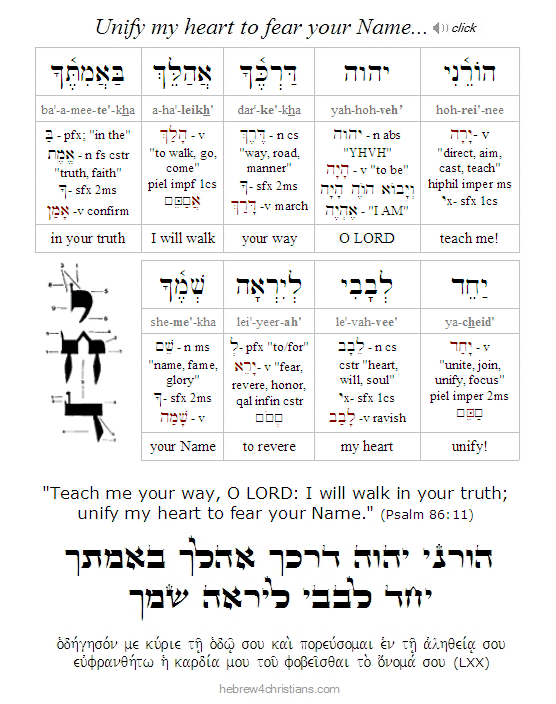 |
A Consuming Fire...
[ The following is related to our Torah reading for this week, parashat Shemini... ]
04.03.24 (II Adar 24, 5784) From our Torah portion for this week (i.e., Shemini) we read: "Now Nadab and Abihu, the sons of Aaron, each took his censer and put fire in it and laid incense on it and offered strange fire (אֵשׁ זָרָה) before the LORD, that He had not commanded them" (Lev. 10:1). The sages interpret "strange fire" (i.e., esh zarah: אֵשׁ זָרָה) as alien passion or illicit zeal stimulated by artificial means (in this case, drinking wine before their service). The experience of intoxication may seem to elevate the soul, but in reality it muddles the ability to discern spiritual realities: "Drink no wine or strong drink ... when you go into the tent of meeting, lest you die. You are to distinguish between the holy and the common, and between the unclean and the clean" (Lev. 10:9-10). Nadab and Abihu were highly honored in Israel, the first priests of God, and if they drank wine before entering the sanctuary it was surely not for crass purposes, but rather to "sanctify" their experience, or so they thought... They were severely judged, however, because they presumptuously sought to sanctify themselves by means of an artificial influence, and this made them "strange" before God. Likewise many people today seek "spiritual highs" and "signs" without undergoing the discipline of Torah study, prayer, meditation, and so on. God wants our hearts in service, but our hearts must soberly reverent before Him (1 Pet. 5:8; Eph. 5:15-18).
"Nadab and Abihu, the sons of Aaron ... brought strange fire ... and they died before the LORD" (Lev. 10:1-2). It is a fearful thing to fall into the hands of the Living God who is called esh okhlah, El kanna (אֵשׁ אכְלָה אֵל קַנָּא) - "a Consuming Fire, a jealous God (Deut. 4:24). Indeed, though atonement was provided under the law for every kind of sin and transgression, there was one exception: "But the soul that sins presumptuously (בְּיָד רָמָה) shall be out off from the midst of my people" (Num. 15:30). We must be careful not to casually regard God's truth with undue familiarity, lest we find ourselves under the influence of strange passions that lead to presumption....
Hebrew Lesson
Deut. 4:24 Hebrew reading (click):
Let us be sober and vigilant, friends. "Now these things happened to them as an example, but they were written down for our instruction, on whom the end of the ages has come" (1 Cor. 10:11). It is prophetically astounding that during the very time that the Tabernacle was inaugurated, tragedy struck and Aaron's two sons were killed. This should warn those teachers who speak casually of God from the pulpit, since they act profanely and encroach upon the Divine Presence. Let us be admonished, friends and honor the Living God. As the sages have wisely said: Da lifne mi attah omed: "Know before Whom you stand!"
Seeing the Sacred...
04.02.24 (II Adar 23, 5784) From our Torah reading for this week (i.e, parashat Shemini) we read: "This is the thing that the LORD commanded you to do, so that the glory of the LORD may appear to you" (Lev. 9:6). The sages here comment that if you wish to know if your action is something God wills, then see if leads to the revelation of the glory of God... In other words, "the thing" (זֶה הַדָּבָר) that God wants for us is to behold the Sacred Presence that pervades and upholds all things. Indeed the Hebrew word for seeing, ra'ah (רָאָה) is connected with the word "awe," yarah (יִרְאָה). When we really see life as it is, we will be filled with wonder over the glory of it all. Every bush will be aflame with the Presence of God and the ground we walk upon shall suddenly be perceived as holy (Exod. 3:2-5). Nothing will seem small, trivial, or insignificant. May it please you, O LORD, to so open our eyes... Amen.
Hebrew Lesson
Isaiah 6:3b Hebrew reading (click):
Readying for that Day...
[ Instead of focusing on a solar eclipse on April 8, prophetically we look at Israel and the turmoil that was prophesied to come. There will be celestial events during the time of the Great Tribulation, but we're not at that point yet. Above all, keep focused on Yeshua. ]
04.02.24 (II Adar 23, 5784) The last promise of Scripture is "I come quickly" (אֲנִי בָא מַהֵר) and the last prayer is, "Amen, come, Lord Yeshua" (אָמֵן בּאָה־נָּא הָאָדוֹן יֵשׁוּעַ) [Rev. 22:20]. Meanwhile we "inwardly groan" for the fulfillment of our redemption, since presently we are suspended between worlds, walking in hope yet subject to the vanities that befall all flesh... And though God may tarry, He declares, "I am the LORD; in its time I will hasten it" (Isa. 60:22). So we are made captives to hope, clinging to the promise of our ultimate healing and redemption. Our hearts therefore affirm that God is faithful "to keep you from falling, and to present you faultless before the presence of his glory with exceeding joy" (Jude 1:24). Amen. God will help us before He will help us, and may He come speedily, and in our day....
Hebrew Lesson
Isaiah 45:22 Hebrew reading (click):
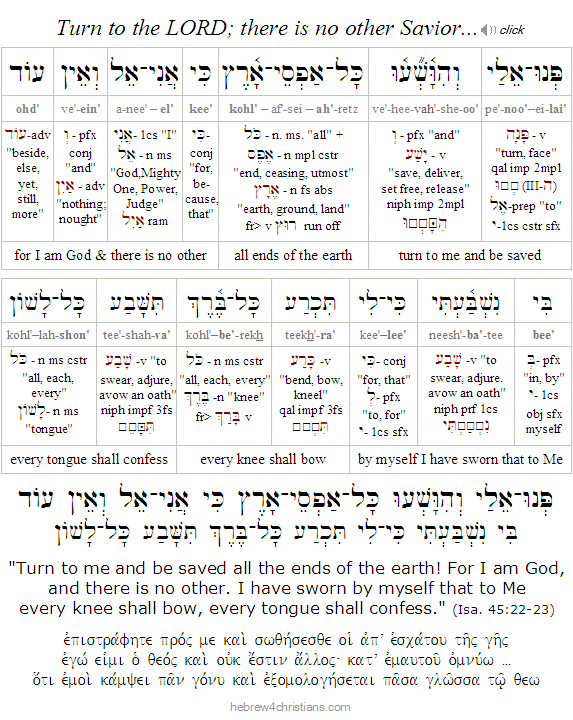 |
Note: March 2024 updates continue here.
Follow the site's progress:
Site Updates for 2024
Site Updates for 2023
Site Updates for 2022
Site Updates for 2021
Site Updates for 2020
Site Updates for 2019
Site Updates for 2018
Site Updates for 2017
Site Updates for 2016
Site Updates for 2015
Site Updates for 2014
Site Updates for 2013
Site Updates for 2012
Site Updates for 2011
Site Updates for 2010
Site Updates for 2009
Site Updates for 2008
Site Updates for 2007
Site Updates for 2006
Site Updates for 2005
Site Updates for 2004
Hebrew4Christians Forum
|






















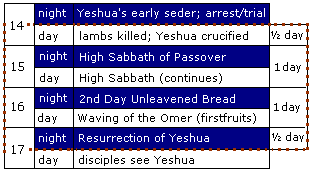


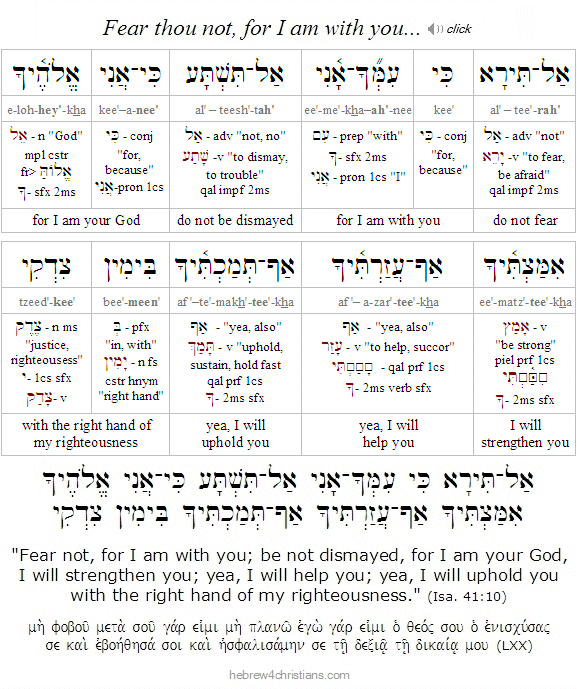
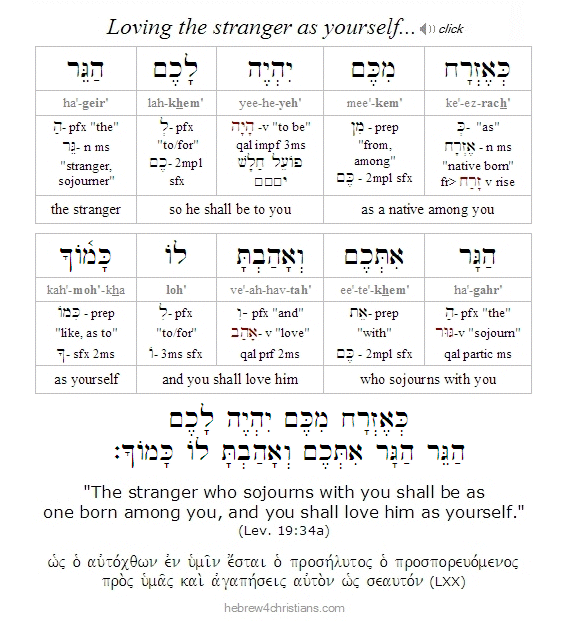
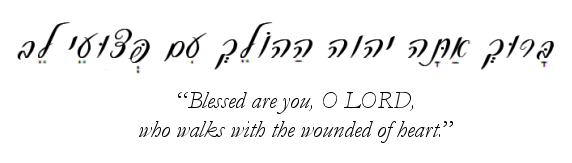
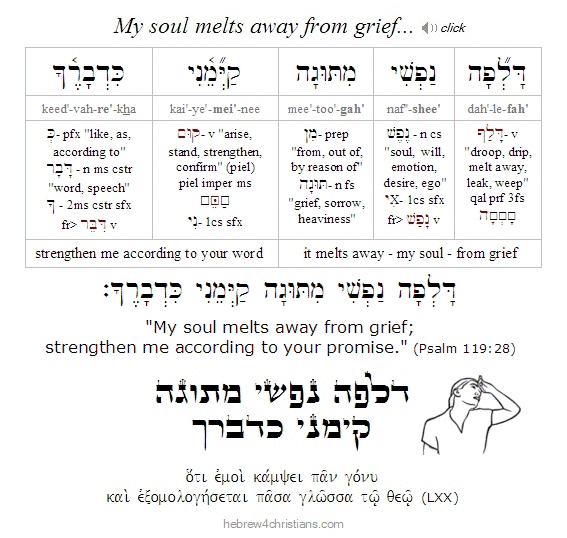
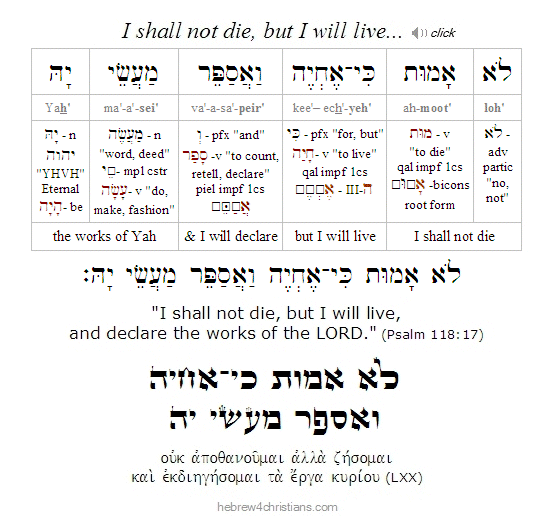
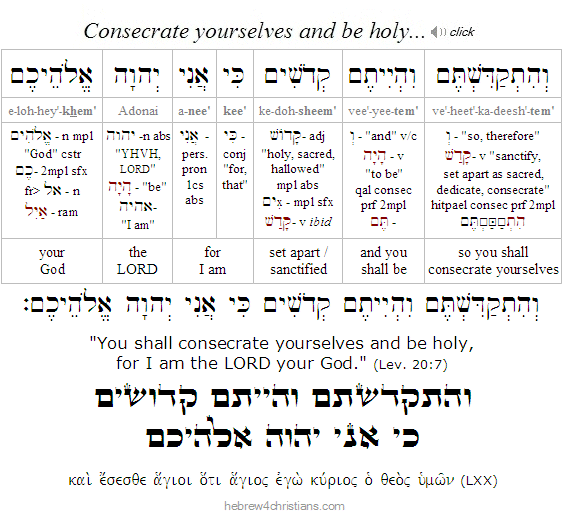
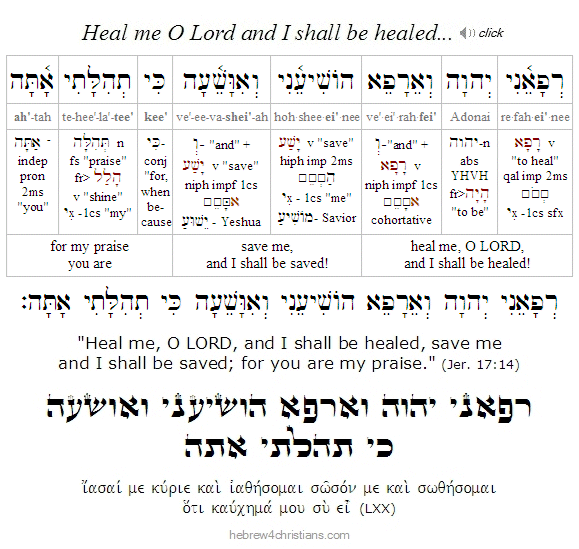
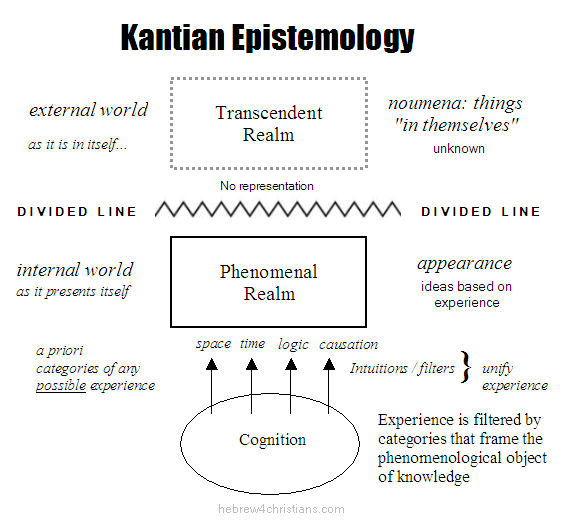
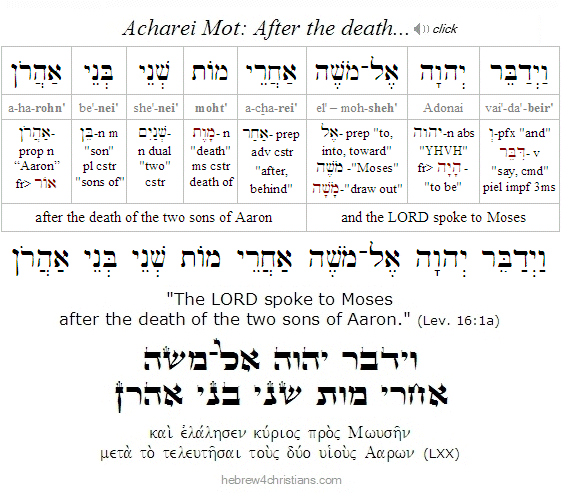
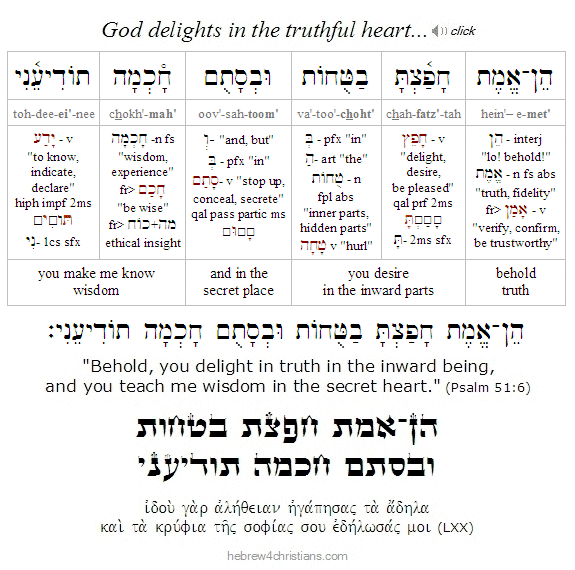
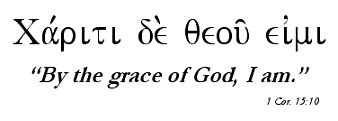
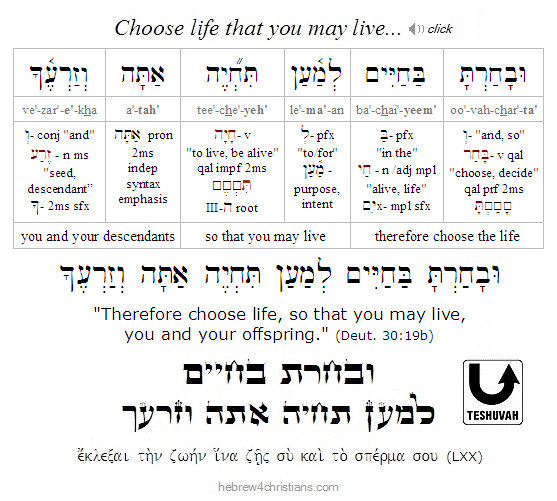
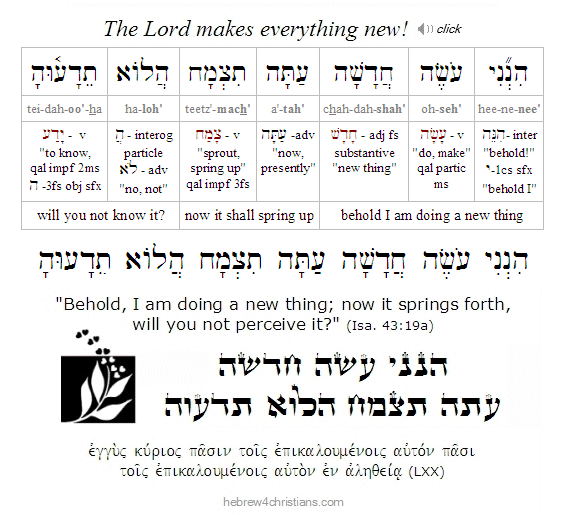
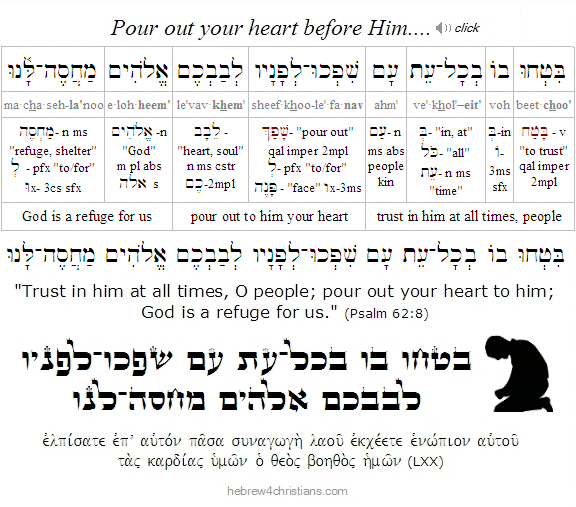
![Spring Holiday Timeline (H4C]](../../About_HFC/Site_News/pesachline.gif)