|
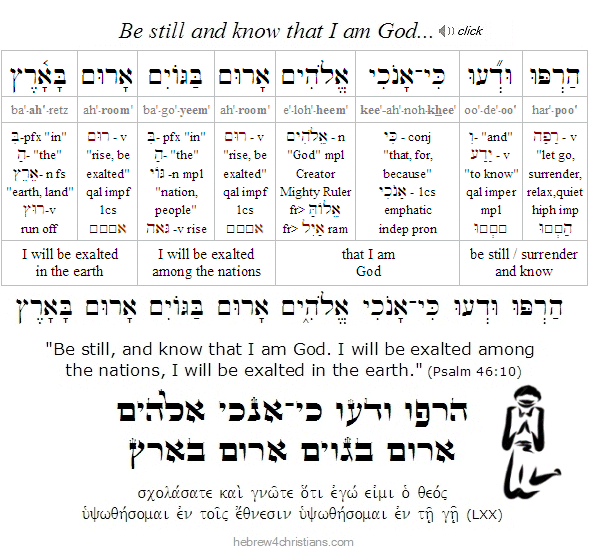
AS THE CLIMAX of Psalm 46, this verse is not so much about meditation as it is about the mediation of God's kingdom in the heart of faith. The command to "be still" comes from the Hiphil stem of the verb (רפה) rapha (meaning to be weak, to let go, to release), which might better be translated as, "cause yourselves to let go" or "let yourselves become weak" (in poetic contexts, the noun form rephai'im was sometimes used as a synonym for "the place of the dead").
But to what end are we to "be still," "let go," "surrender," and even to "die to ourselves"? In Hebrew grammar, the emphasis of coordinate imperatives ("be still!" and "know!") is on the second imperative. In other words, we surrender in order to know that God is in control as Ribbono Shel Olam – the Master of the Universe. We "let go" in order to objectively know the saving power of God in our lives. We give up trusting in ourselves and our own designs in order to experience the glory of God's all-sufficiency (Exod. 14:14).
When we surrender to the sure truth that the LORD God of Israel is in complete control of this world, we will find peace and be delivered from our temporal fears. Indeed, even though the present world be shaken (v 2), with the nations raging and the kingdoms of men tottering (v 6), we will not fear, since we know that God is our present help in time of trouble (v 1).
|