|
|
|
|
|
|||||||||||||||||
 |
|||||||||||||||||||||
|
|||||||||||||||||||||
 |
|||||||||||||||||||||
|
Learn Hebrew |
|||||||||||||||||||||
















|
|
||
 |
|||
 |
|||
|
|
 |
|
|

|
|
 |
|
|
||||||||||||||||
|
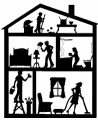
in the pockets of our coats and pants, on closet floors, and remove every trace. We also thoroughly clean our stove, oven, refrigerator, and freezer. It is a big job to clean the house so thoroughly, but doing so provides an important "object lesson" about the need to separate ourselves from corrupting influences in our lives. The traditional spring cleaning also helps us spiritually prepare for the coming new year. |
|
|
|
|
|
|
|
|
|
|
|
|
||
|
Removing Chametz |
|||||||||||||
|
The process for removing chametz from your house is very involved, and frankly very few people have the time and energy to perform a thorough cleaning in the traditionally prescribed manner. Nonetheless, the traditional steps include:
Once the house is thoroughly cleaned, chametz may still be eaten up until the morning of the day before Passover. That evening, however, the Bedikat Chametz ritual is performed to finally dispose of any remaing chametz. Only after this may the house be considered chametz-free and ready for Passover. |
|||||||||||||
|
Kosher for Passover |
|||||||||||||
|
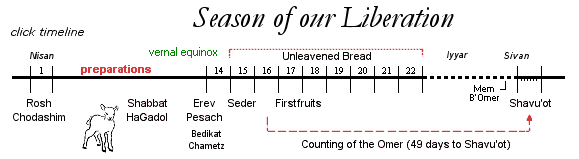
To celebrate a kosher Passover, you will need to ensure that you eat nothing with chametz during the entire seven days of the Feast of Unleavened Bread (i.e., from Nisan 15 through Nisan 22). According to the rabbis, if you intentionally eat even one molecule of chametz during the week of Passover, you are breaking a Torah prohibition. |
|||||||||||||
|
Chametz-Free Clothing |
|||||||||||||
|
Any clothing that you are going to wear to the Passover table must likewise be entirely free from any trace of chametz. Many people buy new outfits or send their clothing out to the dry-cleaners in time for the Seder. |
|||||||||||||
|
Clean Haggadot |
|||||||||||||
|
Finally, any book at the Seder table must be "chametz-free." Since this is difficult to accomplish, many Orthodox Jews will wrap their Haggadah (i.e., the liturgical book containing the story of the Passover that is read during the Seder) in plastic and put it away all year long so that it is completely clean for the Seder table (if you want to study the Haggadah before Passover, you must read from a different one than the one you will bring to the Seder table). |
|||||||||||||
|
Search me, O God... |
|||||||||||||
|
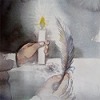
The search for chametz is not unlike the soul searching we do before the fall High Holidays, when we perform chesbon hanefesh (חֶשְׁבּוֹן הַנֶּפֶשׁ) by taking inventory of our spiritual condition before the LORD. In other words, we are commanded to search and remove sources of inner impurity so that we might experience the truth that we area "new lump" - that is, a new substance that is untainted by the sour and rotting influences of our past lives. Since Yeshua has been sacrificed as your Passover Lamb, you are indeed a new creation (בְּרִיָּה חֲדָשָׁה) and are made "unleavened" by the power of the Holy Spirit (2 Cor. 5:17). Therefore we are likewise commanded put away the "old nature" - the yetzer ha'ra - and purge from your life the old influences that inwardly canker you and make you sick. Walk without hypocrisy in the truth of the love of God for your soul. חָקְרֵנִי אֵל וְדַע לְבָבִי chok·rei·nee · el · ve'da · le·va·vee "Search me, O God, and know my heart! Note: On the night before Passover, a final "ceremonial search" for chametz is performed by candlelight by the entire family. You can learn more about this here.
|
|||||||||||||
|
Hebrew for Christians |
|||||||||||||
 |
|||||||||||||
|
|||||||||||||